
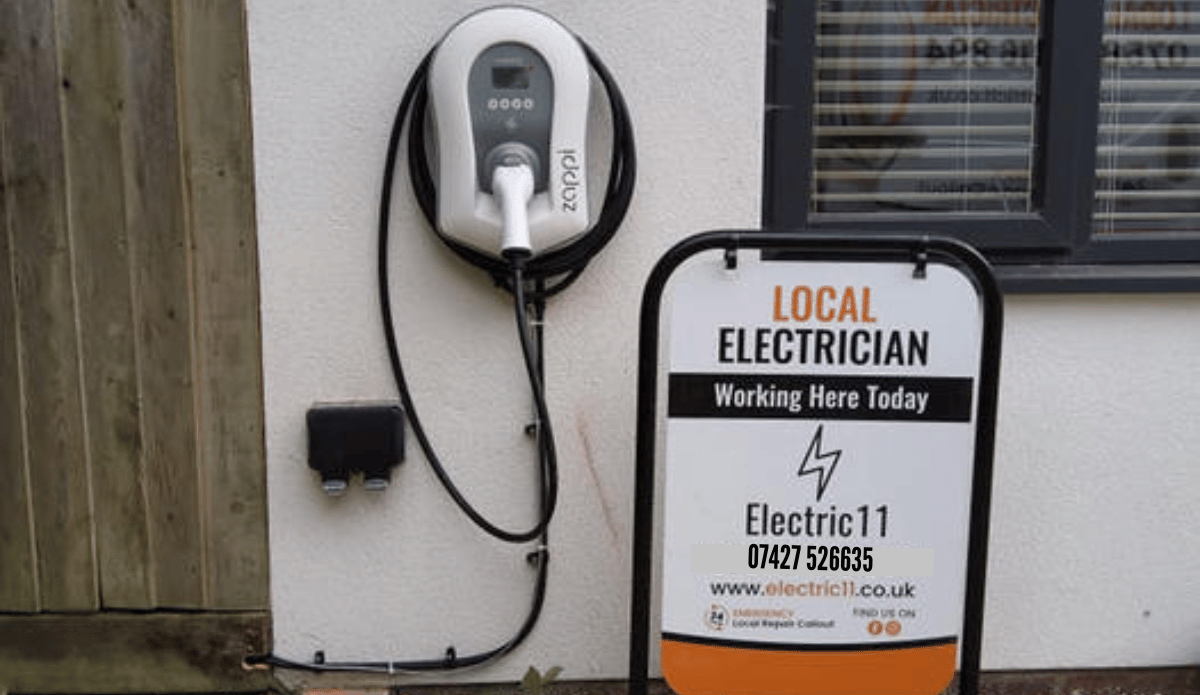




The best EV charger for home use in Norfolk is typically a 7kW smart charger like the Ohme Home Pro, myenergi zappi, Hypervolt Home 3 Pro or Tesla Wall Connector, depending on your tariff, solar setup and vehicle. Finding the best EV charger for home Norfolk drivers can rely on comes down to more than choosing the most expensive unit. The right charger needs to match your vehicle, electricity tariff, daily mileage, parking arrangement and plans for solar panels or battery storage.
For most Norfolk homes, a 7kW smart charger offers the best balance of charging speed, installation cost and compatibility. Our strongest all-round options are the Ohme Home Pro, myenergi zappi, Hypervolt Home 3 Pro and Tesla Wall Connector.

What Is the Best Home EV Charger in Norfolk?
The Ohme Home Pro is our leading all-round recommendation for homeowners who want straightforward overnight charging and strong electricity tariff integration.
However, another charger may be better for your particular property:
| EV charger | Best for | Typical home output | Standout feature |
| Ohme Home Pro | Smart tariffs and everyday charging | 7.4kW | Automated tariff integration |
| myenergi zappi | Solar panel owners | 7kW or 22kW | Surplus solar charging |
| Hypervolt Home 3 Pro | App control and premium design | 7.4kW | Long cable options and energy monitoring |
| Tesla Wall Connector | Tesla and mixed-EV households | Up to 22kW | Type 2 compatibility and Tesla app control |
The charger itself is only one part of the decision. Your installer must also consider the electrical supply, consumer unit, cable route, parking position and maximum charging rate supported by your vehicle.
Best Overall: Ohme Home Pro
The Ohme Home Pro is one of the best choices for Norfolk homeowners who want to charge primarily overnight using a time-of-use electricity tariff.
It is a tethered 7.4kW charger with a built-in display, smartphone app and 5-metre Type 2 cable. Its smart charging system can schedule charging around lower-cost periods based on your electricity tariff and required departure time.
Unlike chargers that depend entirely on home Wi-Fi, the Ohme Home Pro uses a multi-network mobile connection. This can be helpful at detached garages, rural properties or parking areas where Wi-Fi coverage is unreliable.
The Ohme Home Pro is a strong choice when you:
- Regularly charge overnight
- Use or plan to switch to an EV electricity tariff
- Prefer a permanently attached charging cable
- Want to control the charger from both the unit and an app
- Need a reliable connection away from your home router
- May add solar panels in the future
For most households with a standard single-phase electrical supply, its 7.4kW output is sufficient to replenish an EV during an overnight charging session.
Best for Solar Panels: myenergi zappi
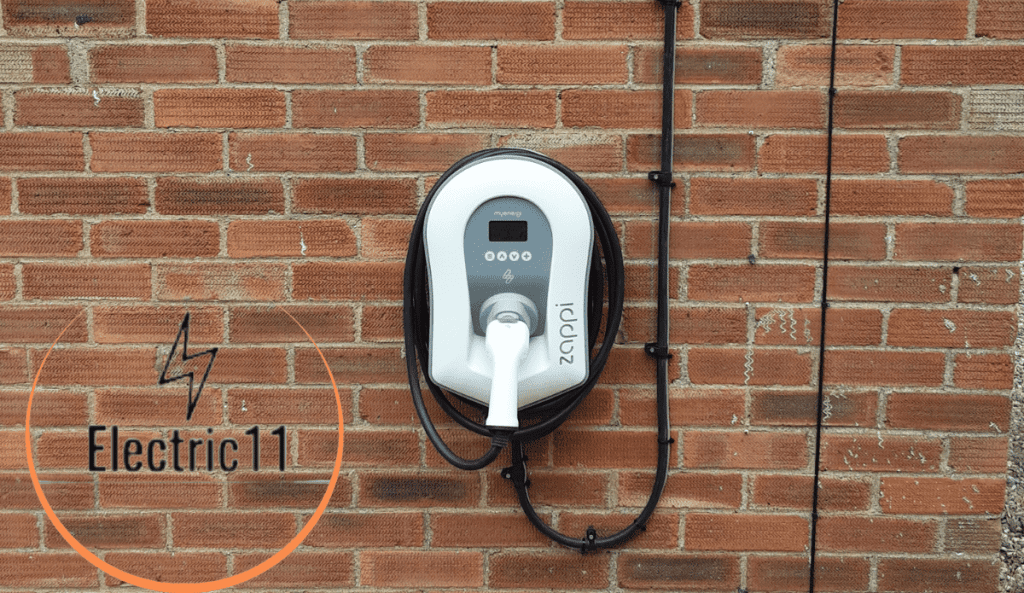
The myenergi zappi is our leading recommendation for homeowners who already have solar panels or intend to install them.
The charger can prioritise surplus solar electricity that would otherwise be exported to the grid. Depending on your settings and available generation, it can charge entirely from surplus renewable energy or combine solar electricity with grid power.
Its different charging modes give you control over how renewable energy is used:
Fast mode charges at the fastest available rate using solar and grid electricity.
Eco mode adjusts the charging rate according to the amount of surplus renewable electricity available.
Eco+ mode pauses or reduces charging when there is insufficient surplus generation, helping maximise the proportion of solar electricity used by the vehicle.
This makes zappi particularly suitable for households combining EV charging with solar panel installation in Norfolk or home battery storage.
The zappi is also a practical future-facing option for rural homes, farms and properties with larger renewable energy systems. It can form part of a wider home energy setup rather than operating as an isolated appliance.
Best Premium Charger: Hypervolt Home 3 Pro
The Hypervolt Home 3 Pro is a good fit for drivers who want a modern tethered charger with detailed app controls and flexible cable options.
It delivers up to 7.4kW on a single-phase supply and is available with 5, 7.5 or 10-metre cables. A longer cable can make a significant difference when the charger cannot be positioned directly beside the vehicle or when more than one parking space is used.
The Hypervolt app provides charging schedules, energy usage records and remote control. The unit also supports automatic load management, which adjusts its demand according to the electricity being used elsewhere in the property.
Solar charging modes allow the charger to use a mixture of grid and solar energy or prioritise available solar generation. This makes the Hypervolt a credible alternative to zappi for homeowners who want solar functionality with a different design and app experience.
Consider the Hypervolt Home 3 Pro when you:
- Need a longer tethered cable
- Want detailed charging and energy records
- Prefer a more customisable external design
- Have solar panels or intend to add them
- Want automatic load management
- Have multiple parking positions
Best for Tesla Drivers: Tesla Wall Connector
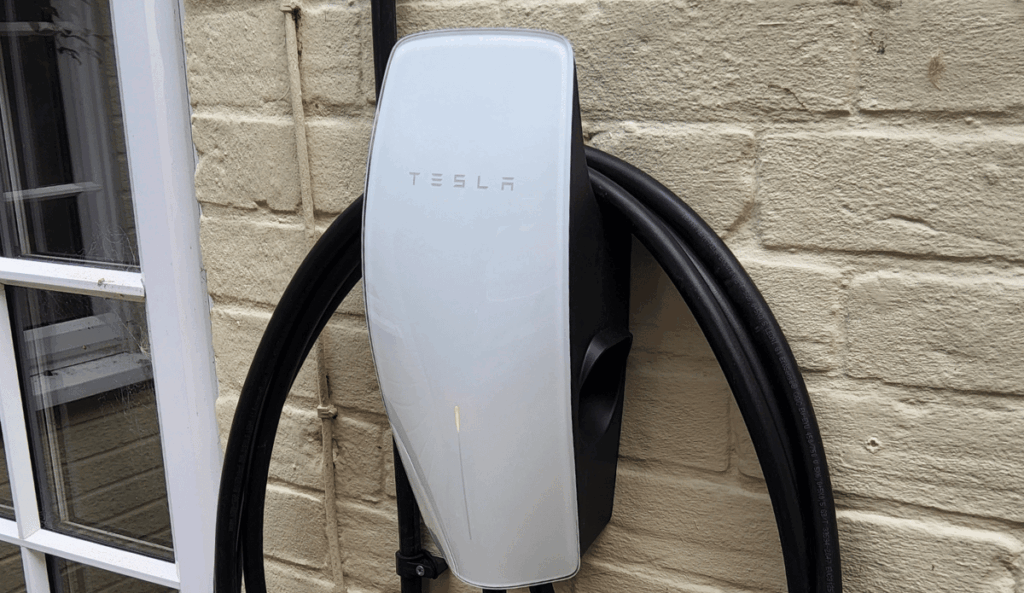
The Tesla Wall Connector is the most natural choice for a Tesla owner who wants charging controls inside the Tesla app. It is also compatible with most other electric vehicles using a Type 2 charging connection.
The unit includes a 7.3-metre tethered cable and supports scheduled charging, usage tracking, Wi-Fi updates and power management. Its connector also includes the button used to open a Tesla charging port.
Although the Wall Connector can provide up to 22kW with a suitable three-phase supply, many domestic installations operate at 7.4kW on single-phase power. Your vehicle’s onboard charger may also limit the maximum AC charging rate, even when the charger can supply more power.
The Tesla Wall Connector is best suited to:
- Tesla owners who want app-based integration
- Homes with more than one Tesla
- Mixed-EV households using Type 2 connections
- Properties that may add a second Wall Connector
- Drivers who want a long tethered cable
It is worth comparing its tariff and solar functionality against Ohme, zappi and Hypervolt before making a final decision.
Is a 7kW or 22kW Home Charger Better?
A 7kW charger is the practical choice for most domestic installations. It normally requires a single-phase electrical supply and can add a substantial amount of charge during an overnight session.
A 22kW charger requires three-phase power. Three-phase supplies are more common in commercial buildings, workshops, farms and some larger residential properties, but they are not standard in every Norfolk home.
Installing a 22kW unit will not automatically make your vehicle charge three times faster. The vehicle must also support 22kW AC charging. Many electric cars limit AC charging to 7.4kW or 11kW.
Before paying for a higher-powered charger or supply upgrade, compare:
- Your vehicle’s maximum AC charging rate
- How many miles you normally drive each day
- How long the vehicle remains parked overnight
- Whether the property already has three-phase power
- The cost of any supply or electrical upgrades
- Whether you expect to charge multiple vehicles
A property assessment will establish whether a 7kW or higher-powered installation represents better value.
Tethered or Untethered EV Charger?
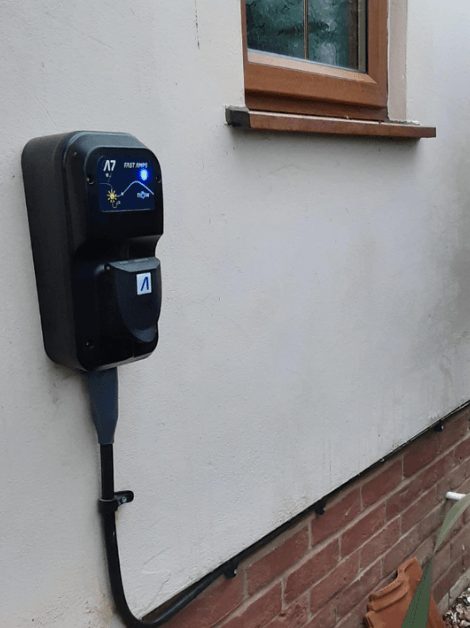
A tethered charger has a permanently attached cable. It is usually the most convenient arrangement because you can park, plug in and begin charging without retrieving a separate cable.
The downside is that the cable remains visible and must be stored neatly around the charger. You will also need to select a cable length that reaches the vehicle comfortably without being stretched across a walkway.
An untethered charger has a socket rather than a fixed cable. It creates a cleaner appearance when the charger is not being used and allows the charging cable to be replaced separately. However, you must take the cable out and put it away after charging.
Choose a tethered unit for maximum convenience. Choose an untethered charger when appearance, cable flexibility or compatibility with different connector types is more important.
Smart Charging and Electricity Tariffs
New private domestic charge points sold in Great Britain generally need smart functionality under the Electric Vehicles Smart Charge Points Regulations.
A smart charger can delay or schedule charging for periods when demand and electricity prices are lower. Some chargers connect directly to compatible EV tariffs, while others use schedules that you configure manually.
The Energy Saving Trust’s EV charging guidance also recommends considering off-peak charging and the charging rate available from the vehicle and charge point.
Before selecting a charger, check:
- Whether it integrates directly with your preferred tariff
- Whether the charger requires Wi-Fi, Ethernet or a mobile connection
- Whether smart features require an ongoing subscription
- How charging schedules are controlled
- Whether it can monitor electricity costs
- How it behaves when the internet connection is unavailable
Do not choose a charger solely because it supports one current tariff. Electricity products and integrations can change, so broader compatibility gives you more freedom to switch suppliers later.
Can Your Electrical System Support an EV Charger?
A home EV charger needs a dedicated electrical circuit and suitable protection. The installer must assess your incoming supply, earthing arrangement, existing demand and consumer unit before completing the work.
Older fuse boards may lack the capacity or protective devices needed for an EV charging circuit. In that situation, a consumer unit replacement in Norfolk may be recommended before or alongside the charger installation.
Dynamic load management can reduce the likelihood of overloading the supply. It monitors household electricity use and temporarily lowers the charger’s output when high-demand appliances are operating.
Properties with electric heating, heat pumps, induction hobs, electric showers, solar inverters or battery systems require a coordinated assessment. Looking at the property as a complete energy system produces a more reliable installation than treating the charger as a standalone appliance.
How Much Does a Home EV Charger Cost in Norfolk?
A typical home EV charger installation in Norfolk generally costs between £999 and £1,499, depending on the charger and property setup.
The final quote can be affected by:
- Charger brand and model
- Tethered or untethered configuration
- Distance from the consumer unit to the parking area
- Groundworks or armoured cable requirements
- Consumer unit condition
- Earthing and bonding arrangements
- Surge protection
- Load management equipment
- Wi-Fi or mobile connectivity
- Electrical supply upgrades
A charger mounted beside the consumer unit with a short, accessible cable route will normally cost less than an installation serving a detached garage or distant parking space.
Eligible renters, flat owners, landlords and businesses may also be able to access government support. Electric11 is an OZEV-approved EV charger installer in Norfolk and can check which requirements apply to your installation.
Choosing a Charger for a Norfolk Property
Local property conditions should influence the final recommendation. A Norwich driveway beside the main house may need a different setup from a rural property with a detached garage, workshop or long private drive.
Consider the following before requesting a quote:
Charger position: The unit should be easy to reach without creating a trip hazard or forcing the cable across a public walkway.
Cable length: Measure the distance to the charging port when the vehicle is parked in its normal position. Remember that the port may be located at the front, rear or side of a future vehicle.
Internet connection: Confirm whether reliable Wi-Fi reaches the installation location. A mobile-connected charger may be more dependable for outbuildings.
Weather protection: Choose equipment rated for permanent outdoor installation and position it away from areas vulnerable to impact.
Solar plans: Select a solar-compatible charger now when panels or battery storage are likely to be added later.
Future vehicles: Consider whether a second EV, company car or different charging-port position could change how the space is used.
Homeowners in and around the city can also read our guide to EV charger installation in Norwich for more location-specific advice.
Frequently Asked Questions
Can I install any EV charger at my home?
The charger must be compatible with your vehicle, electrical supply and parking arrangement. Your installer also needs to confirm that the property has appropriate earthing, circuit protection and available electrical capacity.
How long does a home EV charger installation take?
A straightforward installation can usually be completed within one working day. Longer cable routes, groundworks, consumer unit upgrades or supply alterations may extend the project.
Can a home EV charger work with solar panels?
Yes. Chargers such as the myenergi zappi, Ohme Home Pro and Hypervolt Home 3 Pro can work with solar generation. The level of control and the way surplus energy is handled varies between models.
Do I need off-street parking?
A private driveway or allocated parking space creates the simplest installation. Properties without off-street parking may require permission and an approved cross-pavement charging solution rather than placing a loose cable across the pavement.
Can a Tesla Wall Connector charge a non-Tesla vehicle?
The current Type 2 Tesla Wall Connector is compatible with most non-Tesla EVs that have a Type 2 charging inlet. Vehicle-specific charging rates and some access-control features may differ.
Will my charger work during a power cut?
A standard grid-connected EV charger will stop operating during a power cut. Solar panels alone do not normally keep it running unless the property has a compatible battery backup system specifically designed to provide power during an outage.
Get the Right EV Charger for Your Norfolk Home
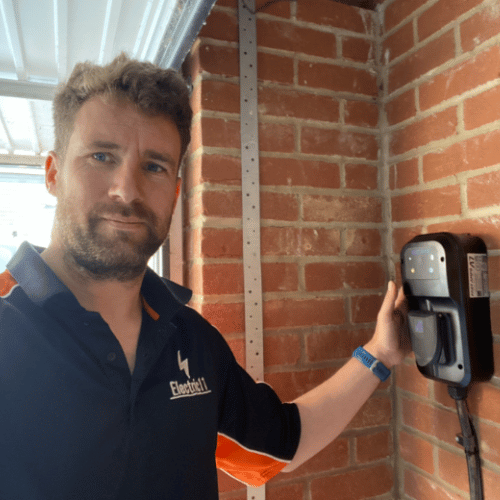
The Ohme Home Pro is the strongest all-round option for smart-tariff charging, while the myenergi zappi leads for solar integration. Hypervolt is well suited to homeowners who value app controls and longer cables, and the Tesla Wall Connector remains a convenient option for Tesla and Type 2 vehicles.
Electric11 installs smart EV chargers across Norfolk and can assess your electrical supply, parking arrangement and charging requirements before recommending a model. Contact Electric11 for a free quote and a home EV charger recommendation based on your property and vehicle.
Send us a message
"*" indicates required fields

