
Commercial PAT Testing in Wicklewood, Near Wymondham



Electric11 carried out commercial PAT testing for an ice cream and mobile catering business in Wicklewood, near Wymondham. Refrigeration units, catering appliances, power supplies and extension leads were visually inspected and electrically tested, producing several passes and one recorded failure. The visit gave the business clear evidence about appliance condition and identified equipment requiring further attention.
Project Overview
This was a commercial appliance-safety visit rather than an installation or energy-saving project. The available job record confirms the service and location but does not provide a reliable appliance total, so no item count is stated in this case study.
| Project detail | Information |
| Location | Wicklewood, near Wymondham, Norfolk |
| Property type | Ice cream and mobile catering business |
| Service | Commercial Portable Appliance Testing |
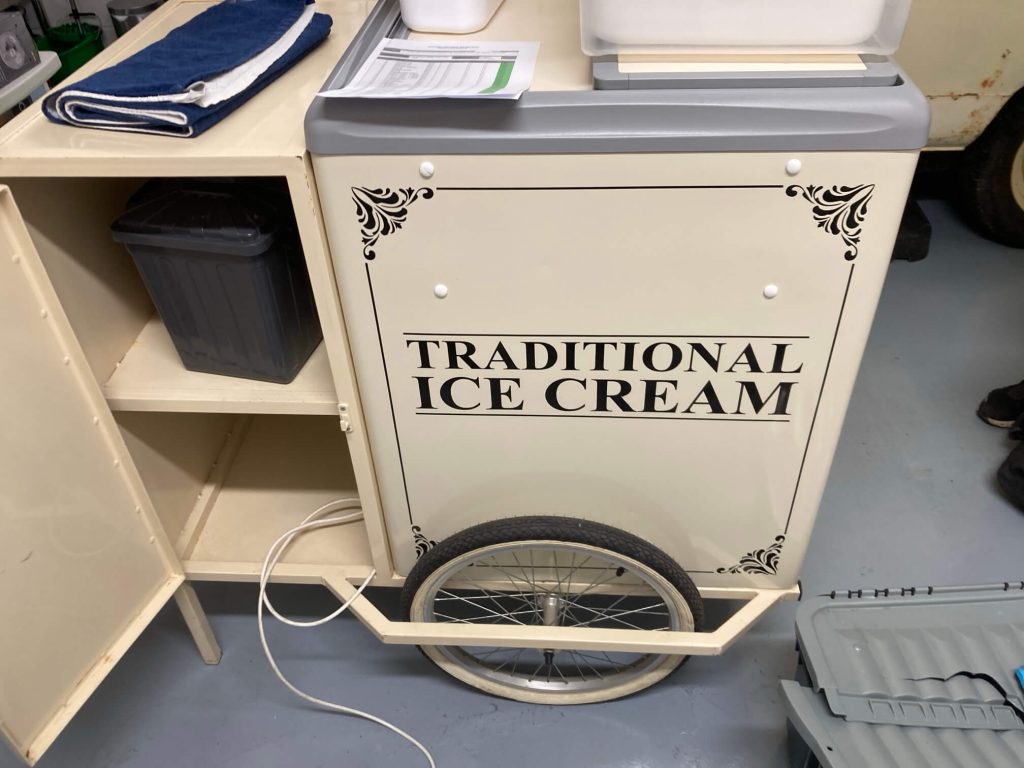
| Equipment pictured | Ice cream cart, mobile service vehicle, freezers, hot-water urn, kettle, power supplies and extension leads |
| Test equipment | Seaward PrimeTest 100 |
| Recorded outcome | Multiple pass results and one photographed failed result |
| Energy impact | Safety-led work with no claimed energy or carbon saving |
Businesses in this part of Norfolk can learn more about PAT testing in Wymondham or arrange support from an Electric11 electrician in Wicklewood.
The challenge: testing a varied commercial appliance collection
An ice cream and mobile catering business can rely on very different types of electrical equipment. Refrigeration may remain powered for long periods, smaller catering appliances may be moved and cleaned regularly, and extension leads can be exposed to frequent handling, winding and transport.
The equipment shown at this site included:
- A traditional mobile ice cream cart
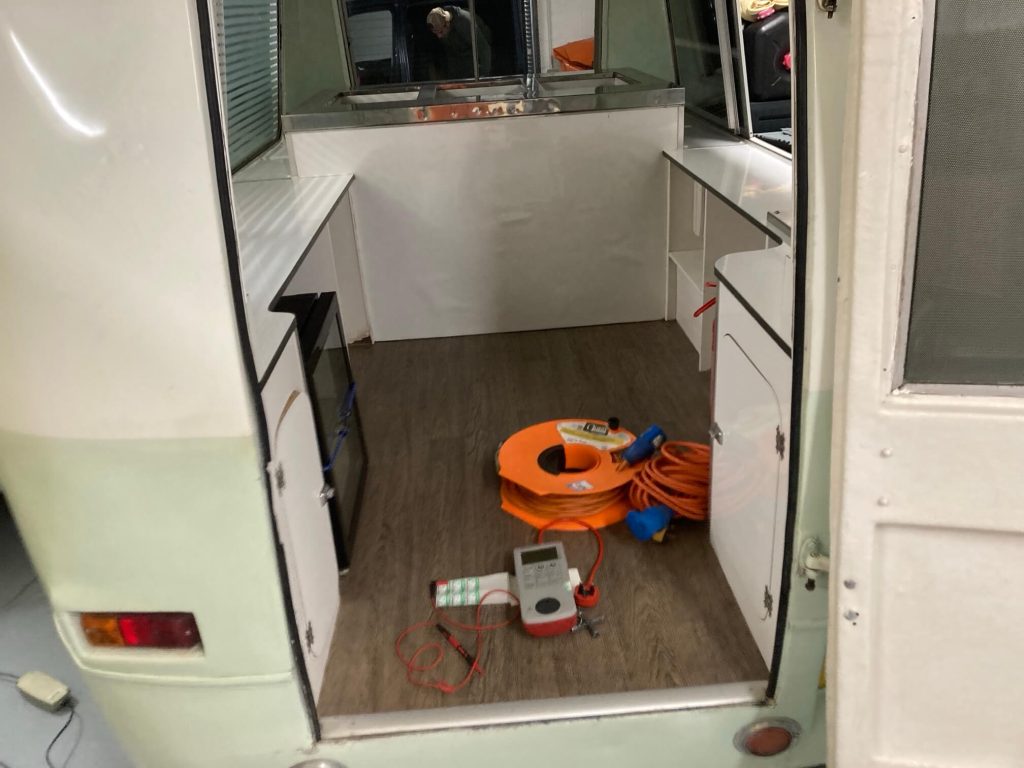
- Equipment inside a mobile ice cream van or service vehicle
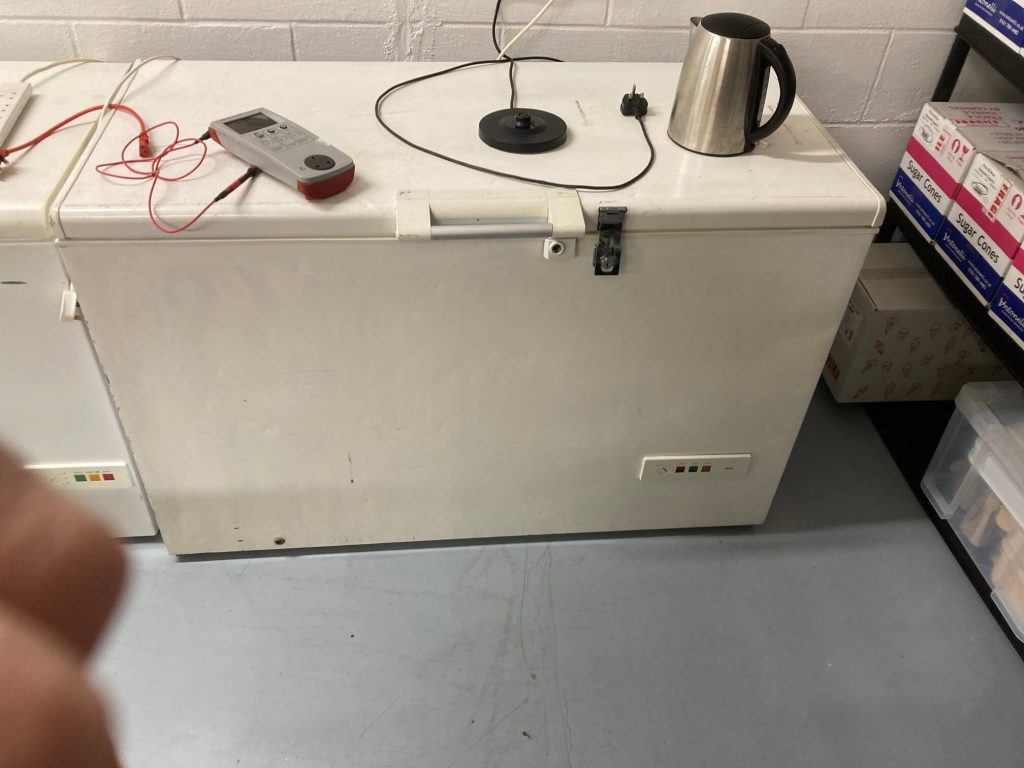
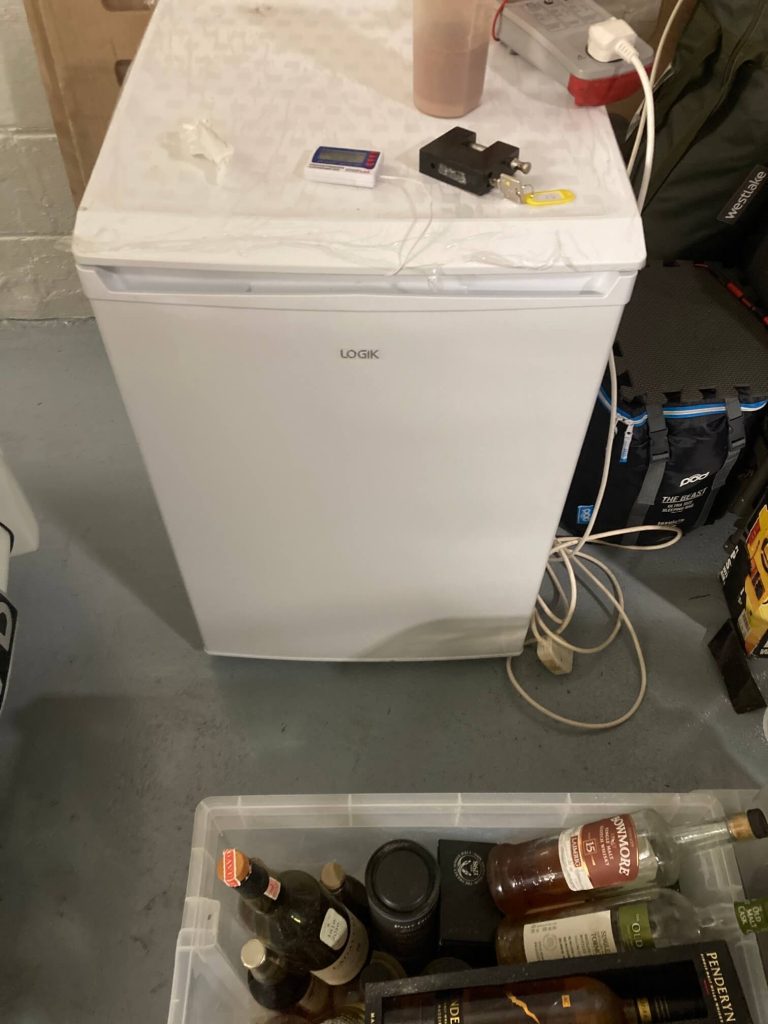
- A commercial chest freezer and an undercounter freezer
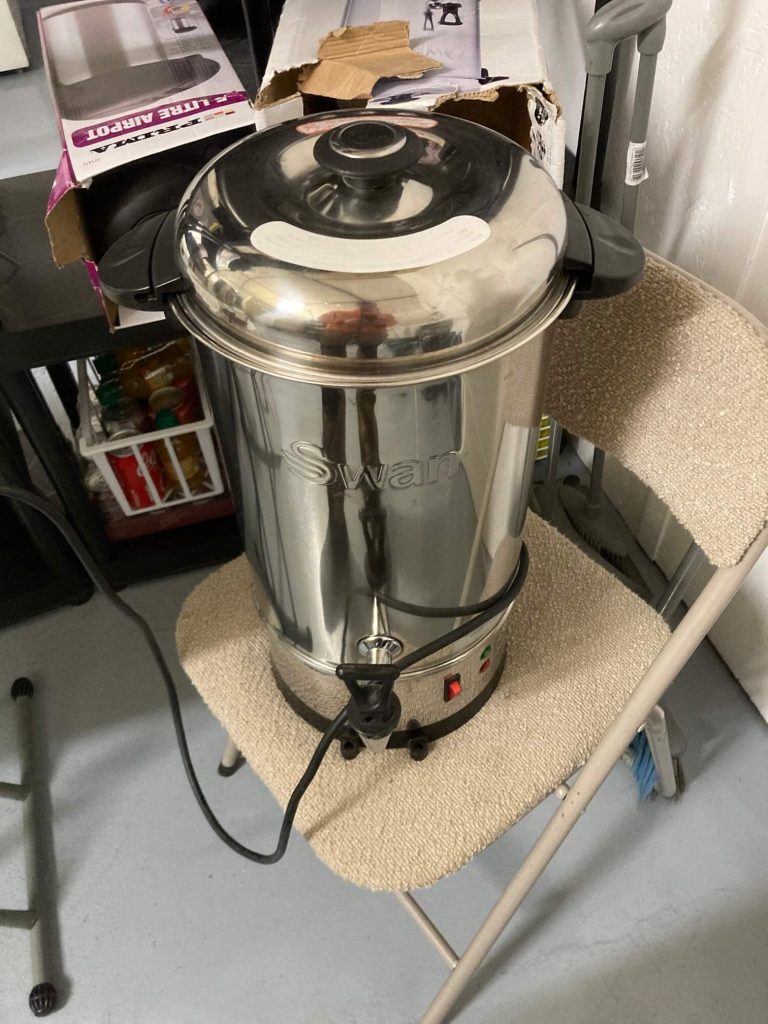
- A stainless steel hot-water urn and a kettle
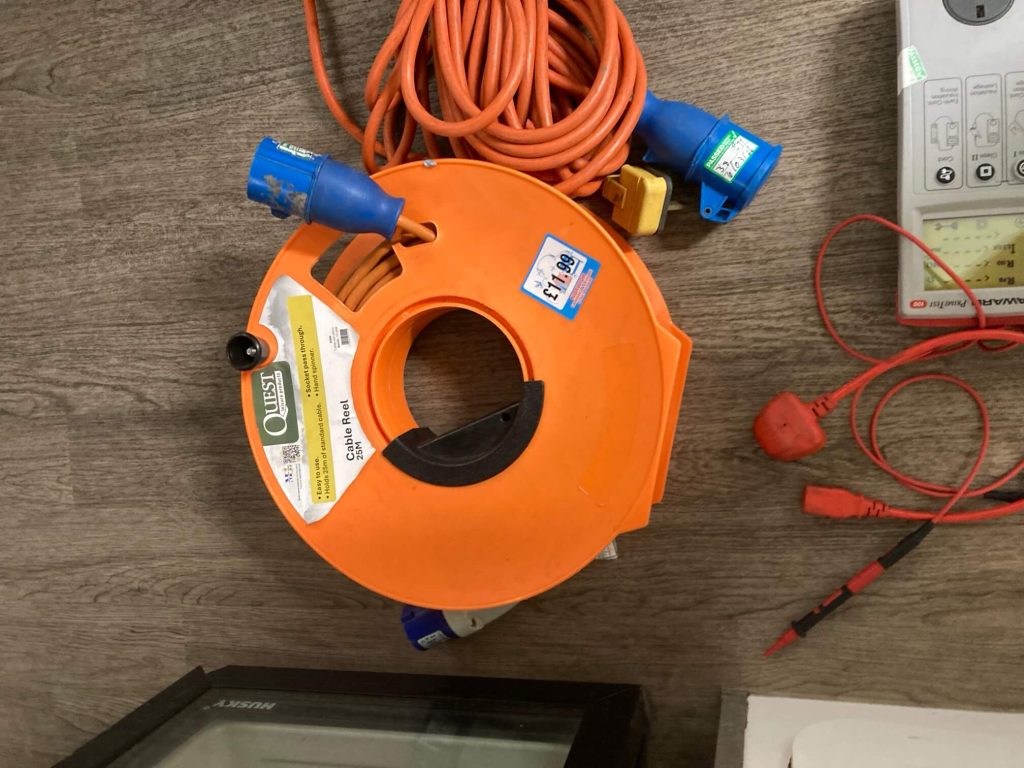
- Extension reels and industrial-style leads
- Plug-in power supplies and smaller accessories
That range called for more than a quick visual label check. Each item needed to be considered according to its construction, plug, lead, environment and normal use so the correct test sequence could be selected.
The photographs also show the difference between satisfactory and unsatisfactory results. Several items achieved clear pass readings, while a separate lead produced a failed result. The source material does not state what happened to that lead afterwards, so this account does not claim it was repaired, replaced or returned to service.
The solution: structured PAT testing with recorded results
Electric11 approached the visit as a practical inspection of equipment used in daily commercial activity. Testing was carried out with a Seaward PrimeTest 100, and the photographed readings show a combination of visual assessment and electrical measurements appropriate to the appliance class.
Equipment identification and visual inspection
Before an instrument test, the condition of the appliance, plug, flexible cable and accessible casing should be assessed. This stage can reveal damage, loose parts, unsuitable repairs, cable strain or signs of overheating that a numerical test alone may not explain.
The variety of equipment at this site made correct identification important. Refrigeration equipment and earthed catering appliances are commonly treated differently from double-insulated power supplies, and extension leads require attention to both the cable and their connections.
Testing matched to the appliance class
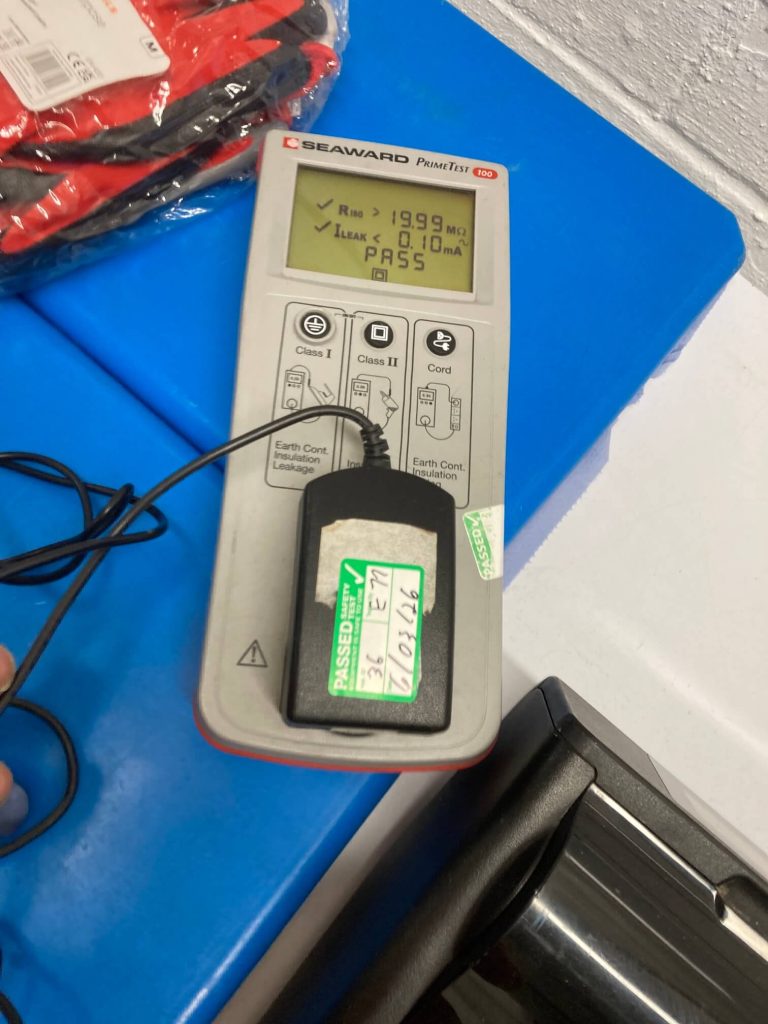
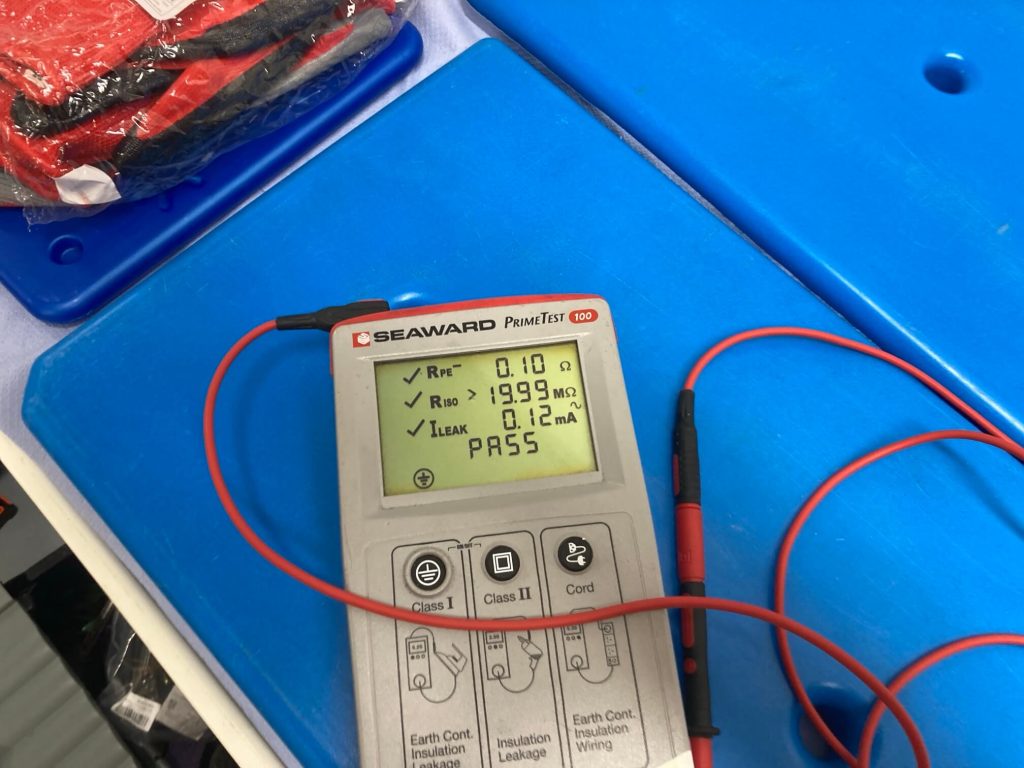
The photographs show clear Class I and Class II pass results. Class I equipment relies on protective earthing as part of its safety measures, while Class II equipment uses double or reinforced insulation and does not depend on an earth conductor in the same way.
For businesses that need broader support beyond portable appliances, Electric11 also provides commercial electrical services in Wymondham and electrical services for Norfolk homes and businesses.
Selected readings visible in the project photographs
These are examples captured in the supplied images, not a complete appliance register.
| Photographed test | Visible reading | Displayed status |
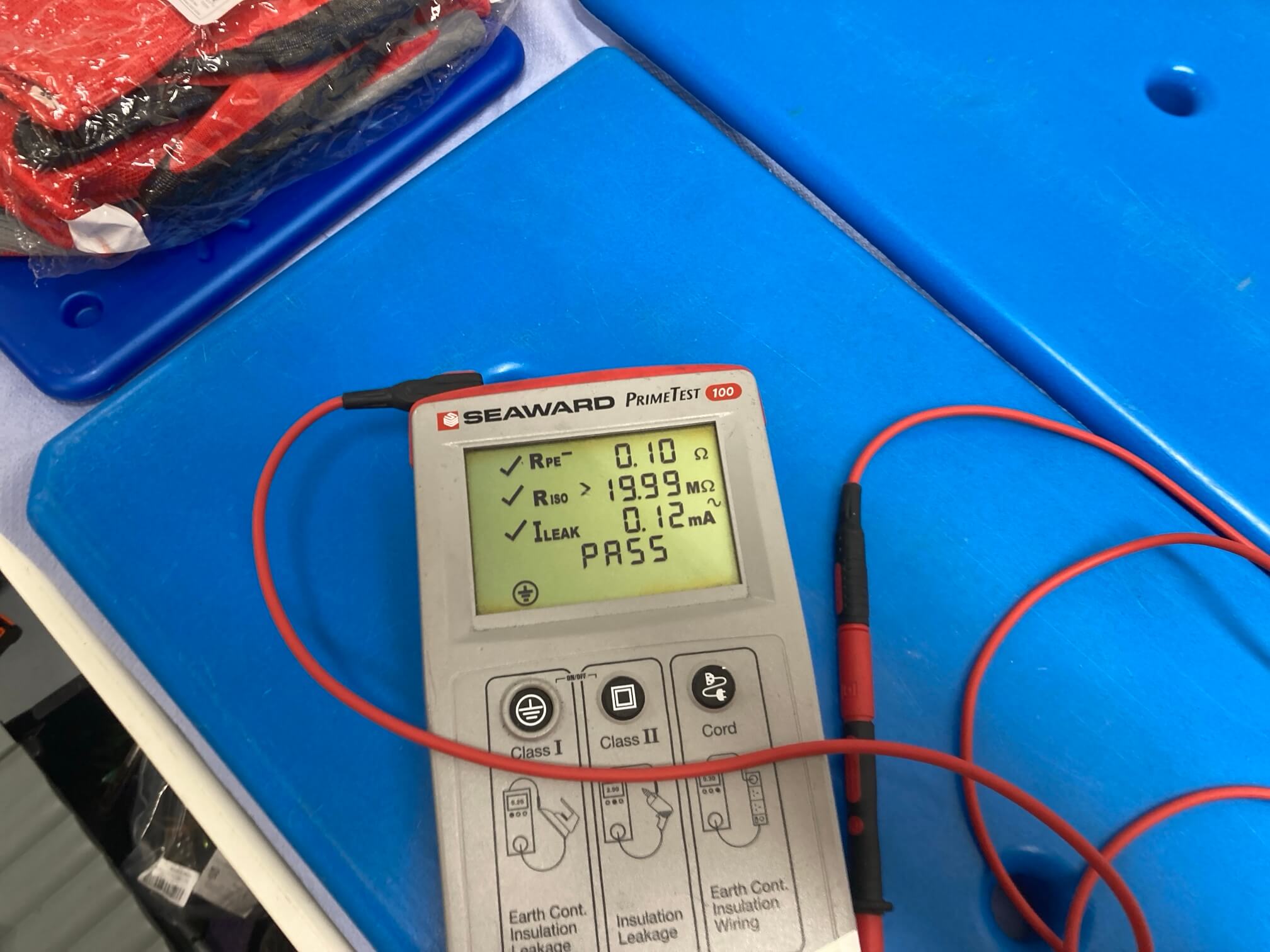
| Class I appliance | Protective conductor resistance 0.10 Ω; insulation resistance above 19.99 MΩ; leakage 0.12 mA | Pass |
| Class II appliance | Insulation resistance above 19.99 MΩ; leakage below 0.10 mA | Pass |
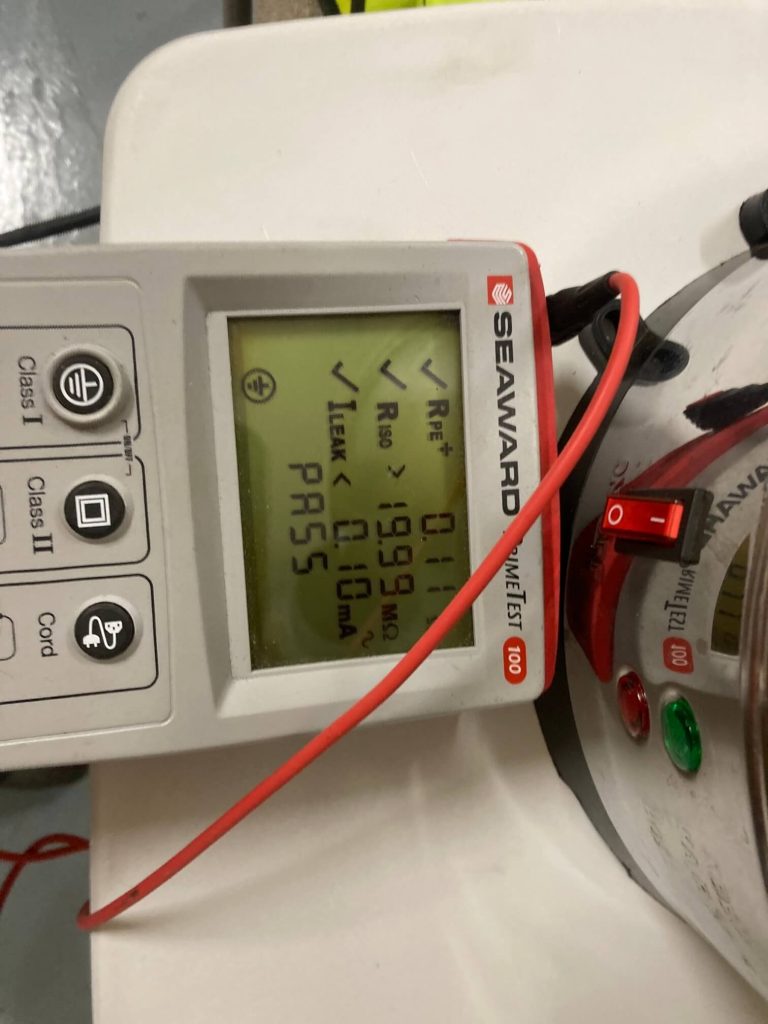
| Separate Class I test | Protective conductor resistance 0.11 Ω; insulation resistance above 19.99 MΩ; leakage below 0.10 mA | Pass |
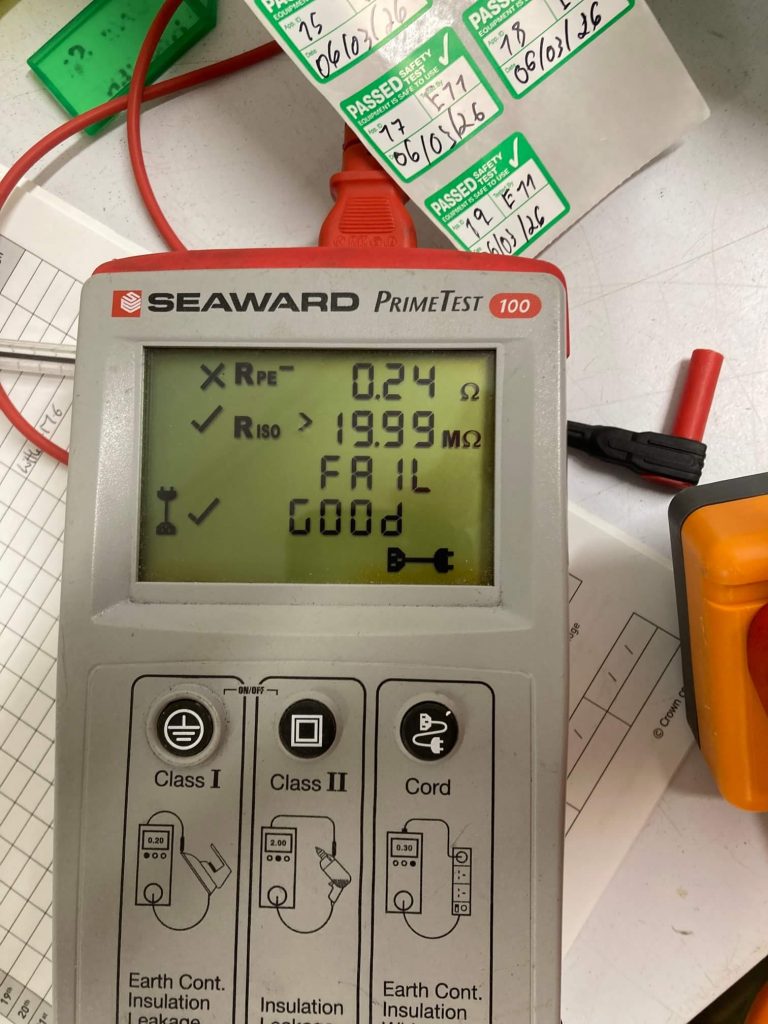
| Tested commercial lead | Tester displayed a failed result | Fail |
The readings provide useful supporting evidence, but a photographed number should never be interpreted without the equipment class, inspection findings, test method and competent judgement behind it.
Pass labels and failed-item identification
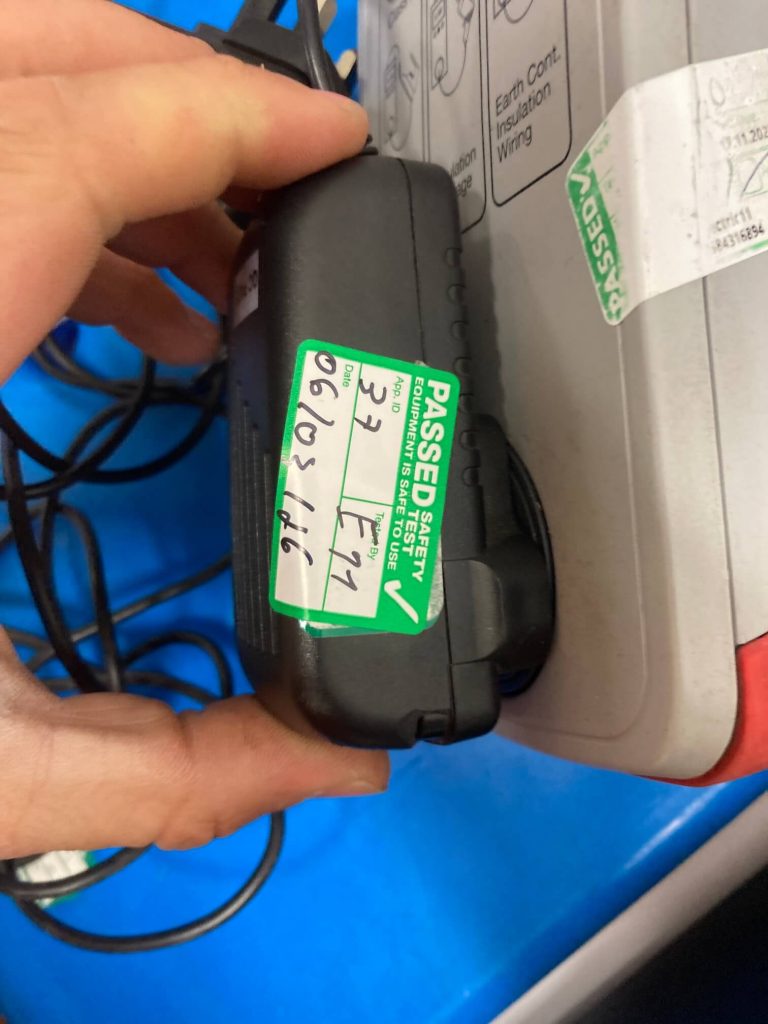
Green safety labels are visible on tested power supplies and extension equipment. These labels help users identify items that achieved a satisfactory result at the time of testing, but they do not replace routine user checks for new damage.
The failed screen is equally important. A failed result creates a clear point for action and prevents an item from being presented as satisfactory without further investigation. The final decision on repair, replacement, isolation or retesting should be recorded by the responsible duty holder and competent person.
The outcome
The visit gave the business evidence about the condition of a mixed collection of commercial appliances rather than relying on appearance alone. Multiple photographed pass readings support continued management of satisfactory equipment, and the failed result demonstrates that the process was capable of distinguishing a problem item.
Key benefits of the work included:
- A consistent safety check across refrigeration, catering appliances, power supplies and leads
- Measured pass or fail outcomes rather than assumptions based on age or appearance
- Visible status labelling on equipment shown in the photographs
- Identification of a failed item requiring a documented next step
- A clearer basis for risk-led maintenance and future retest planning
PAT testing covers portable and plug-in equipment; it is not a substitute for assessment of the fixed electrical installation. Businesses that also need their distribution equipment, fixed wiring and protective devices assessed can read about an EICR certificate in Wymondham.
Why PAT testing matters for mobile catering and refrigeration equipment
Appliances used in a commercial setting can experience more movement, cleaning, plugging and unplugging than equipment kept in one place at home. Extension leads and power supplies may also be transported between a workshop, vehicle, event space and storage area.
UK health and safety law does not prescribe one automatic annual PAT interval for every appliance. The Health and Safety Executive advises that maintenance and inspection frequency should reflect the equipment, environment and previous faults. Its portable electrical equipment guidance supports a risk-based approach rather than testing every item on the same calendar schedule.
For a business such as this, sensible planning can consider:
- How often an item is moved or handled
- Exposure to damp, dirt, impact or temperature changes
- The appliance class and construction
- Any history of damage or failed tests
- Manufacturer instructions and insurer requirements
- Checks completed by users between formal inspections
Electric11 can help businesses plan commercial PAT testing in Norfolk around the equipment they actually use.
Book Commercial PAT TestingElectric11 is composed of a team of local electricians based in Attleborough, offering coverage to the entire Norfolk region. Moreover, through our extensive network, we have forged strong connections with quality tradesmen representing various disciplines in our area.

The Electric11 commercial PAT testing process
PAT testing in a working food or mobile catering environment needs clear equipment identification and an orderly sequence that limits disruption. This four-stage version is tailored to the work shown in Job 3840.
Site and equipment assessment
We review how the premises operate, identify the plug-in equipment within the agreed scope and note items used in vehicles, preparation areas, stores and customer-facing work. Appliance totals, access arrangements and any critical equipment are confirmed before testing starts.
Visual inspection and appliance classification
Each item is checked for visible damage to the plug, flexible cable, casing and accessible parts. The appliance class is identified so the selected instrument test matches the safety measures built into the equipment.
Instrument testing and status decision
Appropriate tests are completed with calibrated equipment, with readings assessed alongside the visual inspection. Items receive a pass or fail decision based on the complete result, not on a sticker or a single number viewed in isolation.
Labelling, records and next actions
Tested items are labelled according to their recorded status, and the result record gives the duty holder a practical basis for maintenance and retest planning. Failed equipment requires a clearly documented action before it is considered for further use.
The supplied photographs show refrigeration equipment, a hot-water urn, a kettle, extension equipment, power supplies, an ice cream cart and equipment inside a mobile catering vehicle. The source record does not provide a dependable item total, so the case study does not state one.
No. Several images show clear pass results, while one tester display records a failed result for a lead. The available record does not confirm the item’s later repair, replacement or retest, so no final disposition is claimed.
The images show examples of protective conductor resistance, insulation resistance and leakage measurements. The required test and acceptable outcome depend on the appliance class, construction, visual condition and competent interpretation of the full test sequence.
There is no universal legal rule that every workplace appliance must receive a PAT test once a year. The duty is to maintain electrical equipment so it does not present danger, with inspection and test intervals selected according to risk, use, environment and fault history.
No. PAT testing concerns portable and plug-in equipment. An EICR is used to assess the condition of the fixed electrical installation, including circuits, protective devices and distribution equipment.
Yes. Electric11 provides PAT testing for businesses, landlords and organisations in Wymondham and nearby villages. Use the Electric11 contact page to describe the premises and approximate equipment quantity before booking.

