
FOX ESS Home Battery Storage Installation in Norwich




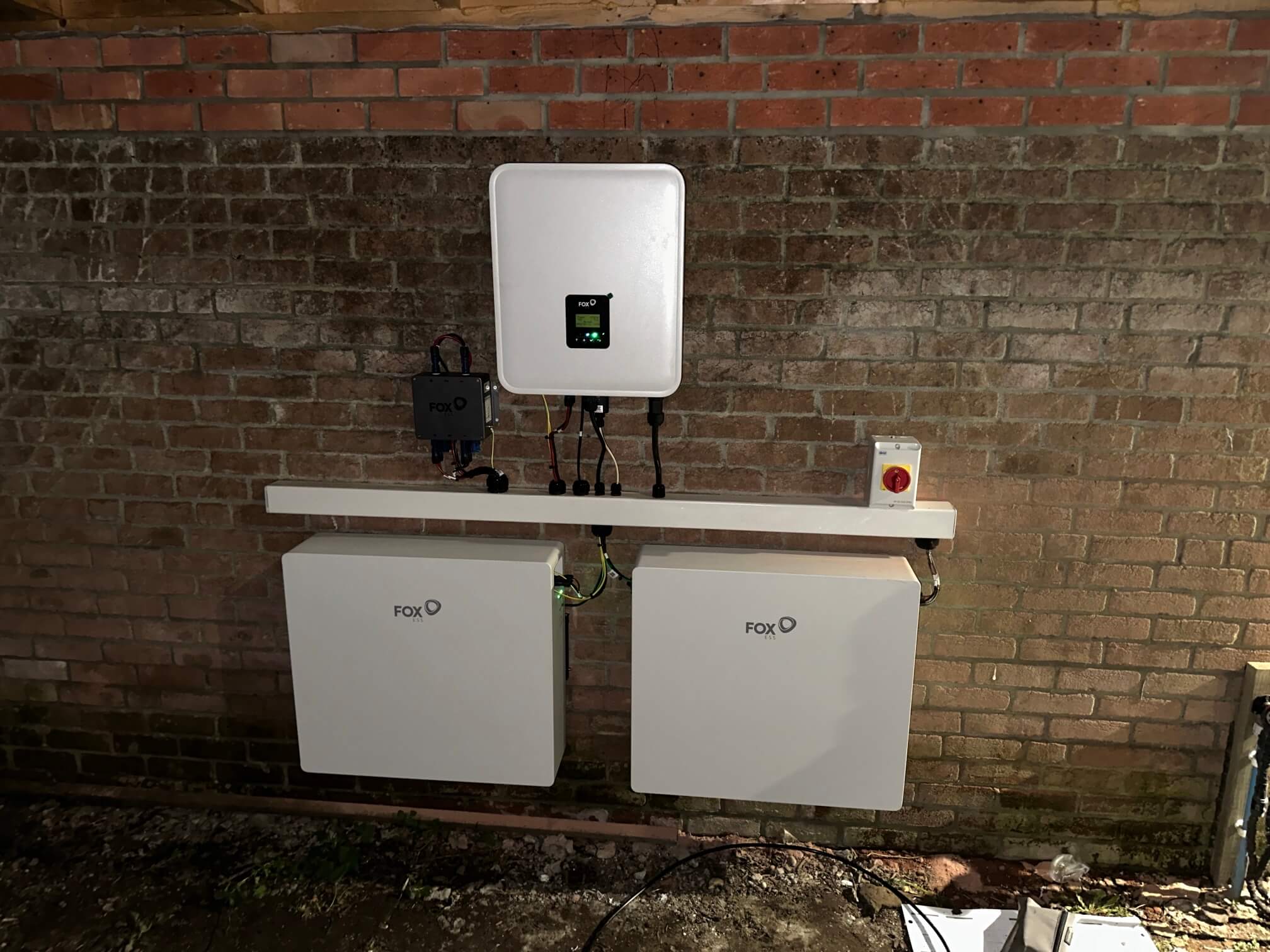
Electric11 installed a 23.04 kWh Fox ESS battery storage system at a residential property in Norwich. Two 11.52 kWh EP12 Plus batteries were connected to a Fox hybrid inverter and integrated with the home’s consumer unit through protected cabling and local isolation. The system gives the household greater control over surplus solar power and lower-cost off-peak electricity.
Project Overview
| Project detail | Information |
| Project type | Domestic battery storage system installation |
| Location | Norwich, Norfolk |
| Property type | Residential |
| Battery equipment | 2 × FOX ESS EP12 Plus batteries |
| Nominal battery capacity | 11.52 kWh per battery |
| Combined nominal storage | 23.04 kWh |
| Inverter | FOX hybrid inverter; job notes indicate 8 kW |
| Battery chemistry | Lithium iron phosphate, or LFP |
| Additional electrical work | Consumer-unit integration and cabling to the main house |
| Certification | Electrical Certificate scheduled in line with BS 7671 |
Adding High-Capacity Battery Storage to a Norwich Home
Home energy demand rarely follows the same pattern as electricity generation or lower-cost tariff periods. A household may have its highest usage in the morning and evening, while surplus solar generation or cheaper grid electricity is available at different times.
Battery storage helps close that gap. Electricity can be stored when it is available and released later when the home needs it, subject to the system’s operating mode and charge settings. Electric11 designed the installation around the property’s electrical layout, equipment location and connection route to the main house.
Homeowners considering a similar system can learn more about Electric11’s home battery storage installations in Norwich, including battery sizing, solar integration and backup-power options.
Installing Two FOX ESS EP12 Plus Batteries
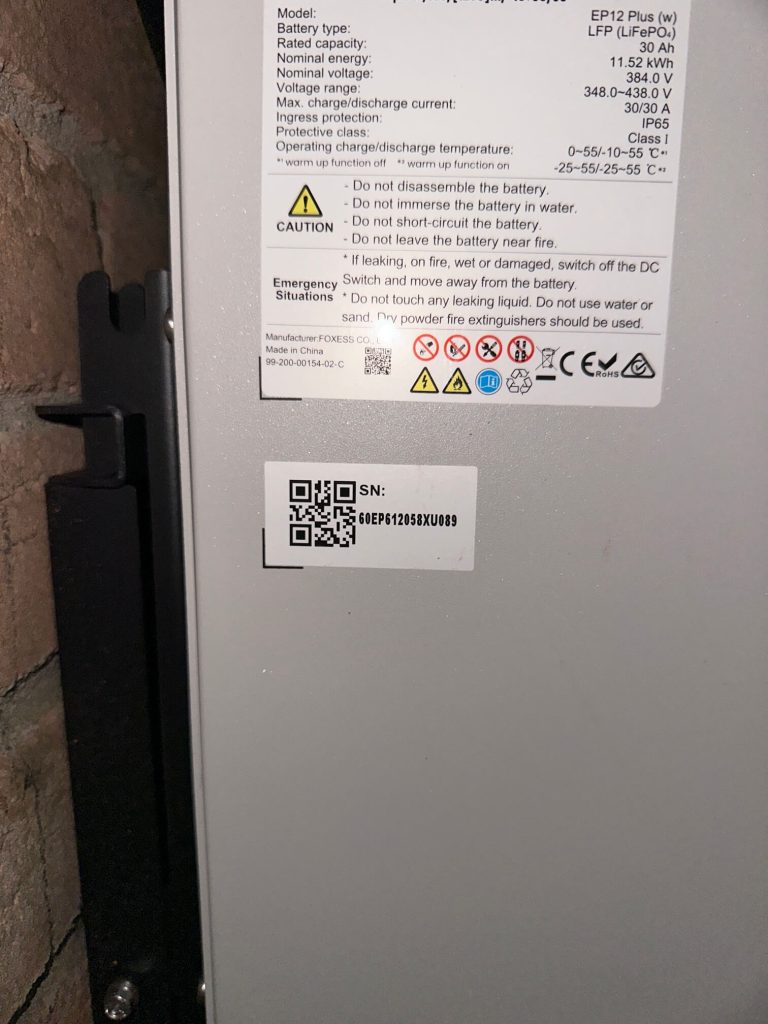
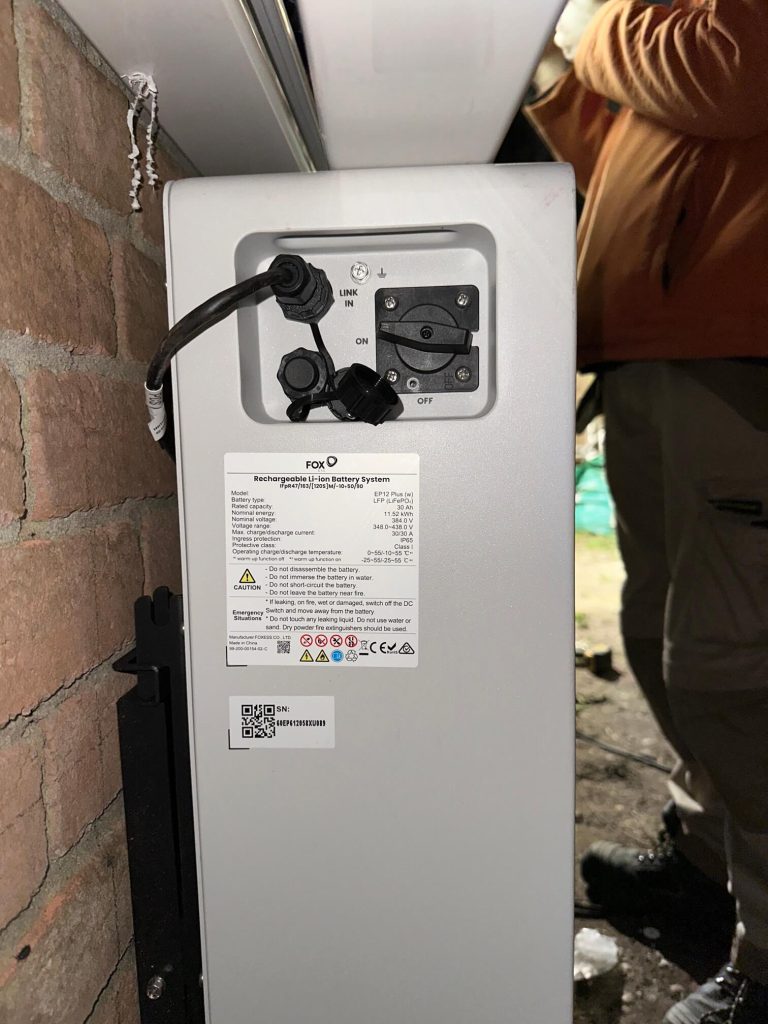
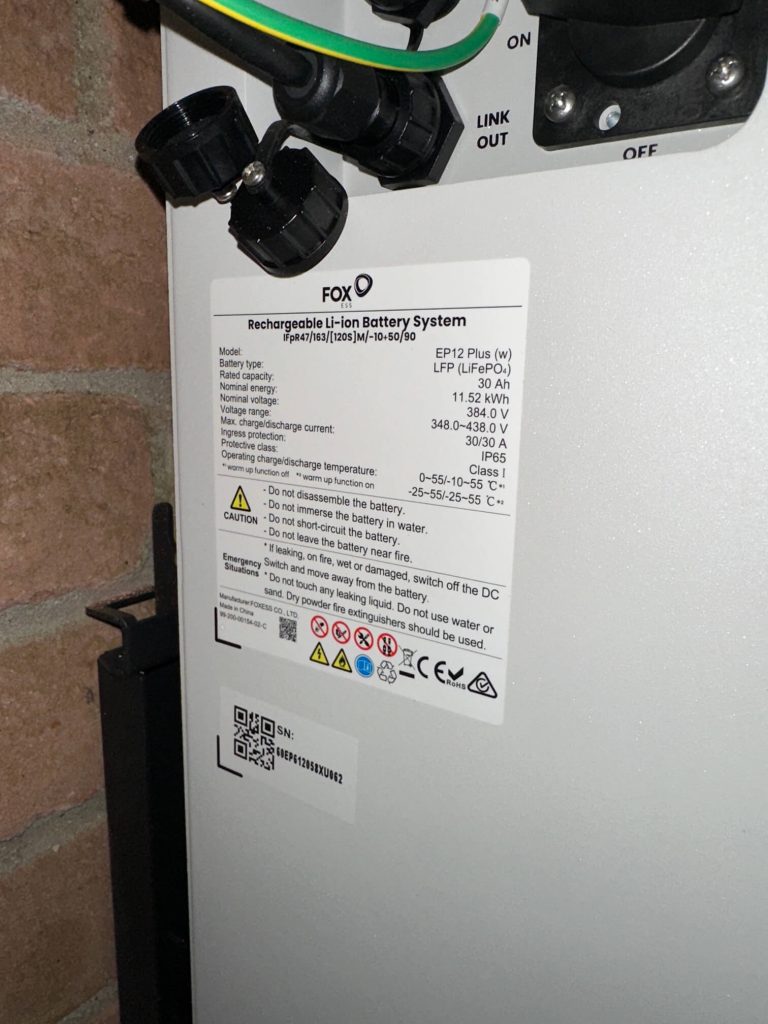
Electric11 installed two FOX ESS EP12 Plus high-voltage battery units. The equipment labels confirm a nominal energy rating of 11.52 kWh per battery, giving the property 23.04 kWh of combined nominal storage.
The EP12 Plus uses lithium iron phosphate battery chemistry and carries an IP65 ingress-protection rating. Its label also records a nominal voltage of 384 V and a maximum charge and discharge current of 30 A. These specifications help define how the batteries must be matched, connected and configured with compatible equipment.
The two units were positioned together on a brick wall beneath the hybrid inverter. Grouping the related equipment in one area created a compact installation while retaining access to the battery isolators, communication links and cable connections.
FOX Hybrid Inverter and Battery Integration
The hybrid inverter manages the movement of electricity between the battery system, household loads and grid connection. Depending on the wider system configuration, it may also coordinate electricity generated by solar panels.
The job notes refer to an 8 kW hybrid inverter, while the photographs confirm FOX-branded equipment but do not show a readable model label. The exact inverter model and rated output should therefore be checked against the commissioning records before the page is published.
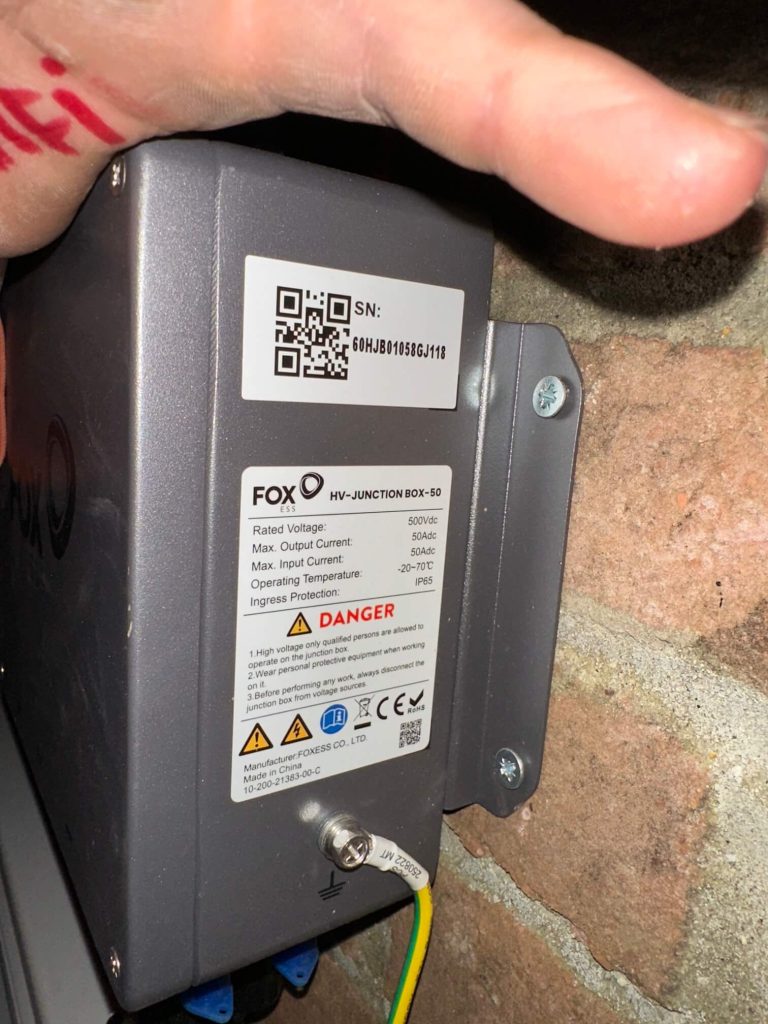
Keeping the inverter and batteries within the FOX ESS ecosystem supports compatible communication and coordinated control. The installation also includes a FOX ESS high-voltage junction box, with its equipment label showing a 500 VDC rating, 50 A maximum input and output current, and IP65 protection.
Electric11 also provides home battery storage services across Norfolk for new installations, compatible retrofits and system-capacity upgrades.
Consumer-Unit Integration and Circuit Protection
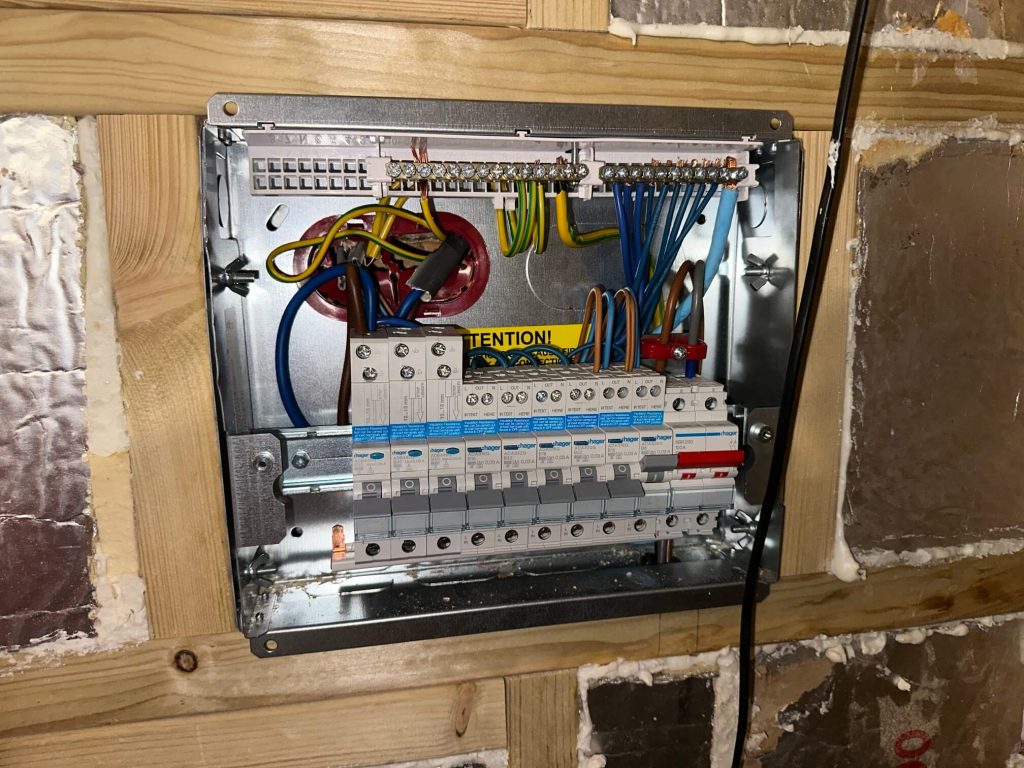
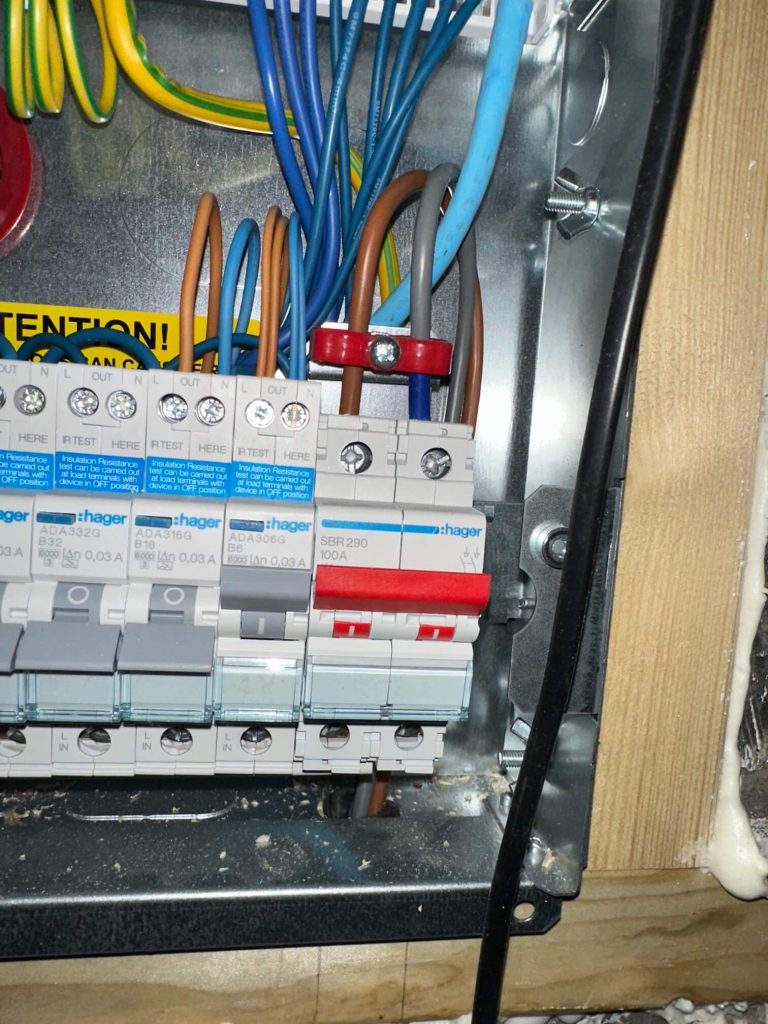
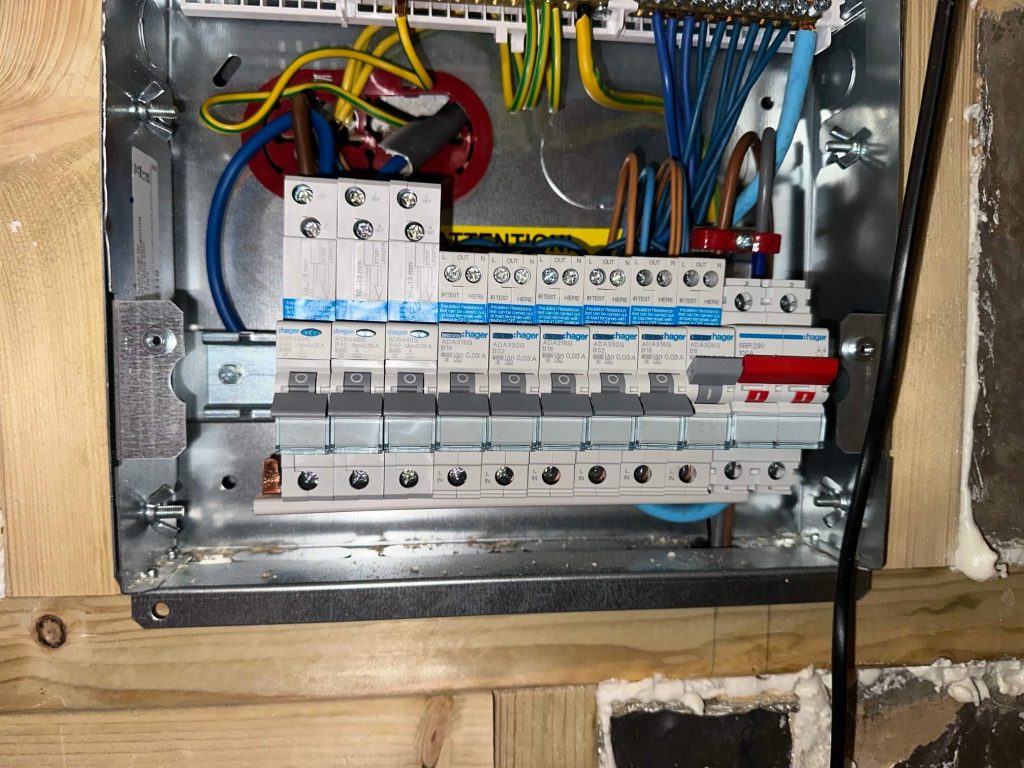
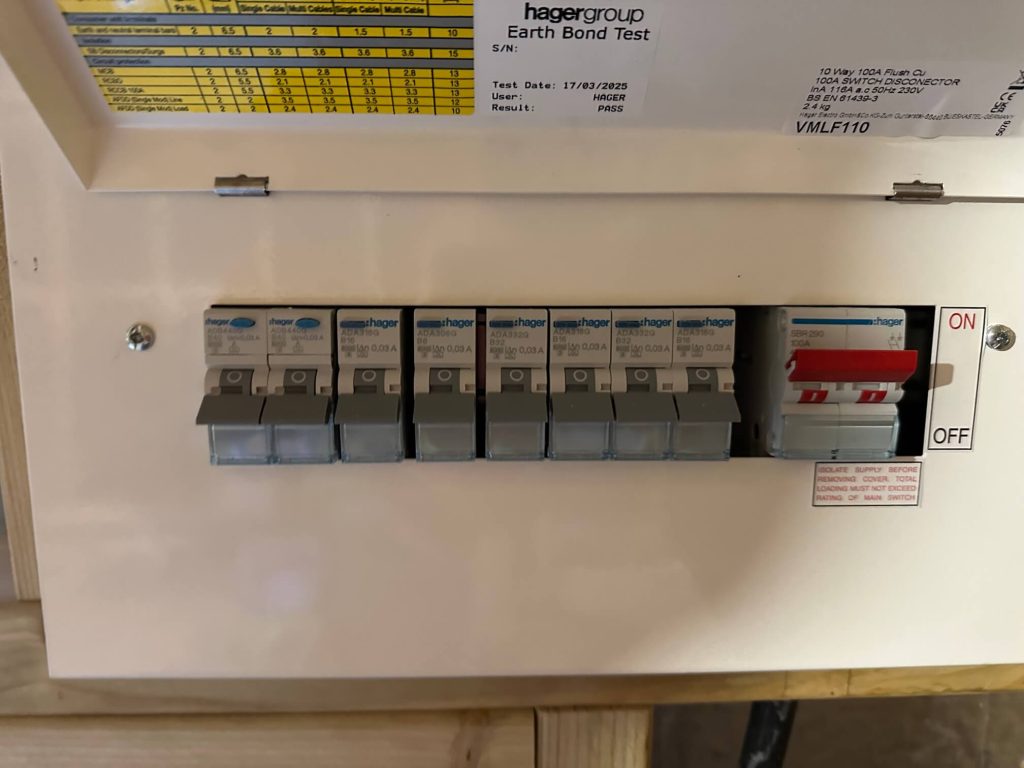
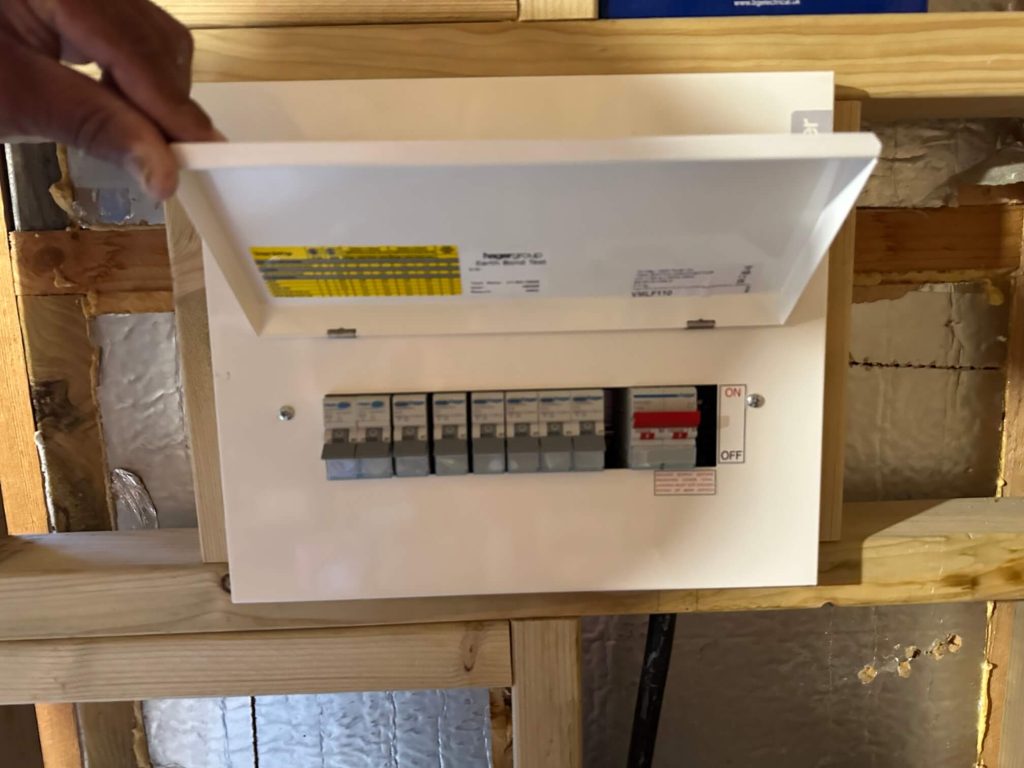
The battery system had to be incorporated into the property’s wider electrical installation. Project photographs show a Hager consumer unit with individual protective devices, a 100 A main switch, labelled circuits, earthing conductors and organised neutral connections.
Appropriate protection and clear circuit organisation are important when adding new energy equipment to a home. The available electrical capacity, protective devices, cable routes and earthing arrangements must all be reviewed as part of the design and commissioning process.
Properties that need broader distribution upgrades can also explore Electric11’s consumer-unit replacement service in Norwich. A qualified electrician in Norwich can assess the existing installation before recommending battery storage or other higher-demand equipment.
Connecting the System to the Main House
Additional cabling connected the battery equipment with the main house. The supplied project information refers to armoured Cat 6 cable runs, but the exact cable count and final specification should be confirmed before publication.
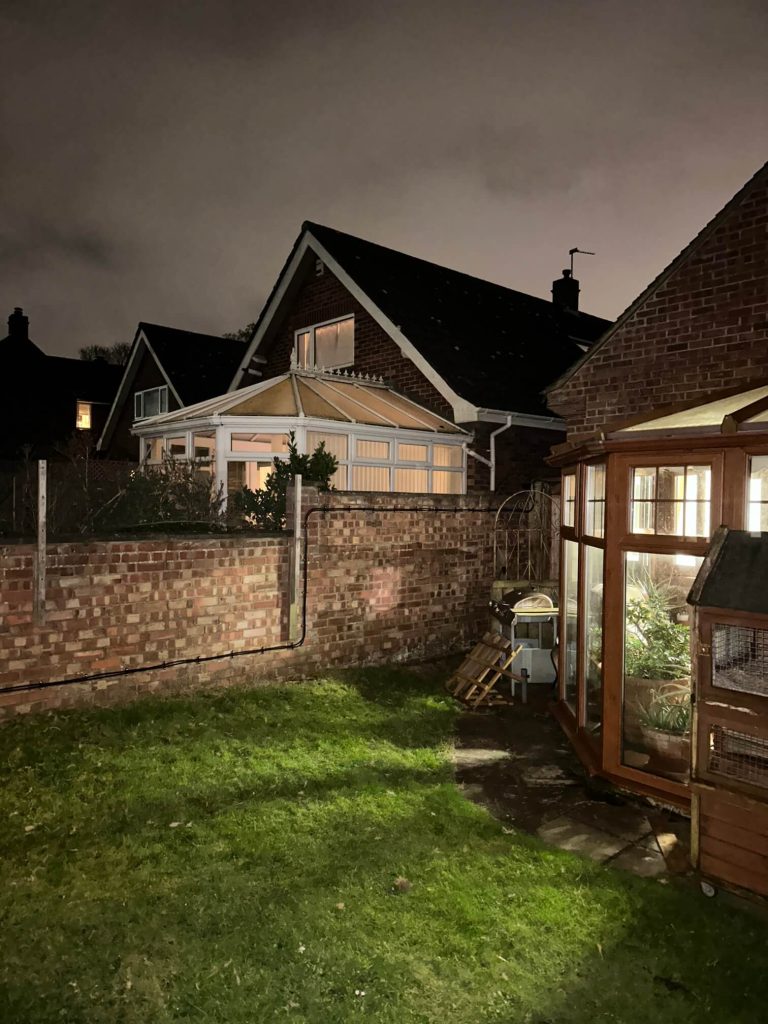
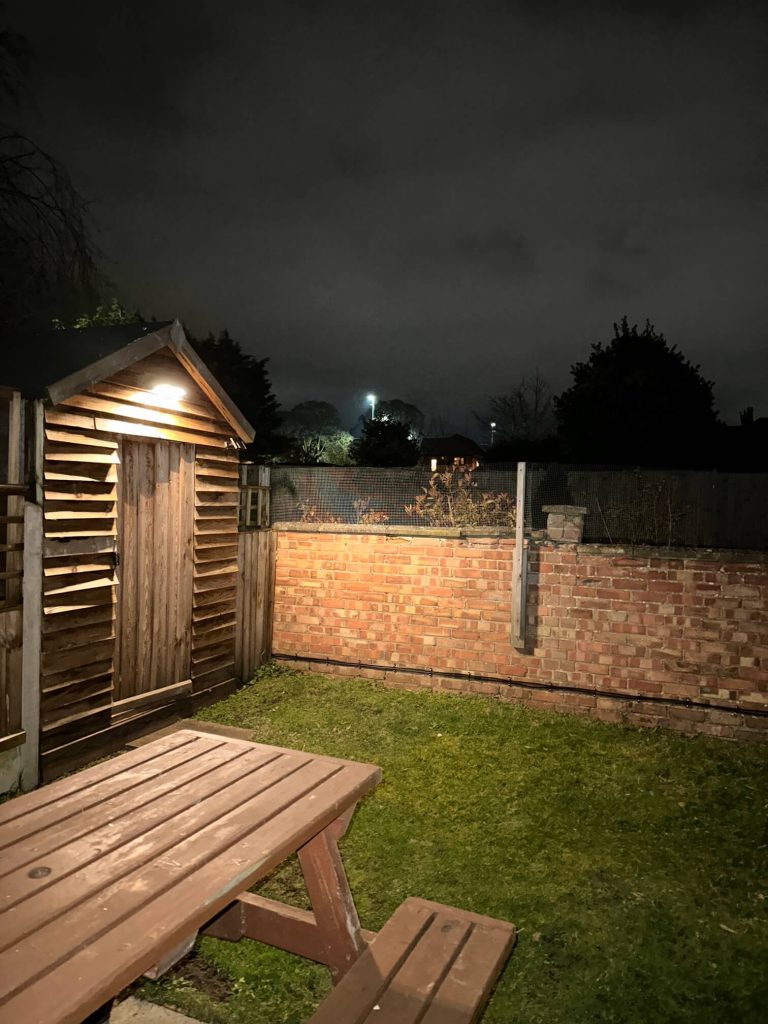
The exterior photographs show neatly routed black cabling fixed along the garden wall and returning towards the house. Planning this route helped keep the connection contained while working around the property’s outdoor layout and established structures.
The finished garden photographs also show the external lighting in operation. Its inclusion within Electric11’s confirmed scope should be checked before the page attributes the lighting work to this project.
Work Completed
Installed two FOX ESS EP12 Plus high-voltage batteries.
Added 23.04 kWh of combined nominal battery storage.
Installed and connected a FOX hybrid inverter, subject to final model confirmation.
Installed the FOX ESS high-voltage junction box and local isolation equipment.
Integrated the battery system with the property’s electrical distribution arrangement.
Routed additional cabling between the battery equipment and main house.
Prepared the electrical work for testing, commissioning and certification.
Expected Energy and Cost Benefits
Battery storage does not create electricity. Its value comes from changing when available electricity is used. The system can retain surplus solar generation for later household demand or charge during suitable lower-cost tariff periods, depending on the final setup.
For the Electric11 case-study template, a working estimate of 7,200 kWh of electricity shifted per year has been applied. This represents approximately 312.5 equivalent full-capacity cycles across the 23.04 kWh battery system.
At an indicative benefit of 18p for each shifted kilowatt-hour, the estimated yearly saving is £1,296. An indicative carbon displacement factor of 0.18 kg per kilowatt-hour gives an estimated annual reduction of 1,296 kg CO₂.
These figures are scenario estimates rather than guaranteed performance claims. Actual outcomes depend on the home’s electricity consumption, tariff difference, charging source, solar availability, usable battery capacity, efficiency losses and programmed charge windows. Carbon savings may be lower if the batteries are charged mainly from the grid rather than surplus renewable generation.
Testing, Certification and Handover
The job information states that Electric11 will issue an Electrical Certificate in line with BS 7671. The final certificate type, testing date and commissioning status should be checked before publication so the case study reflects the completed handover accurately.
The consumer-unit photographs include a Hager earth-bond test label recording a pass result. This supports the visual project record, but it should not be treated as a substitute for the complete Electric11 certification pack.
For broader fixed-wiring inspections, Electric11 also provides EICR certificates in Norwich for homeowners, landlords and businesses.
The Result
The Norwich property gained a substantial 23.04 kWh FOX ESS battery storage system with two matched EP12 Plus units, hybrid inverter control and protected electrical integration. The wall-mounted arrangement keeps the core energy equipment together and provides accessible local isolation and connection points.
The installation gives the household more control over when stored electricity supports demand. It also creates a platform for increased solar self-consumption or time-of-use tariff management, depending on the final energy source and operating configuration.
Readers comparing storage projects can view Electric11’s FOX ESS battery retrofit in Barnt Green or browse the company’s wider collection of electrical case studies.
Considering Home Battery Storage in Norwich?
Electric11 installs domestic battery systems for homeowners who want to store more solar electricity, use suitable time-of-use tariffs or improve control over grid reliance. The team can review the property, existing electrical equipment and energy profile before recommending a system size.
To discuss a new installation or compatible battery upgrade, contact Electric11 for a battery storage assessment.
Book a Free Solar SurveyElectric11 is composed of a team of local electricians based in Attleborough, offering coverage to the entire Norfolk region. Moreover, through our extensive network, we have forged strong connections with quality tradesmen representing various disciplines in our area.

The Electric11 Battery Storage Installation Process
Electric11 approaches home battery projects through four defined stages. Each stage considers the existing electrical installation, equipment compatibility, household energy goals and practical installation requirements.
Energy and Electrical Assessment
An electrician reviews the property’s electricity use, existing solar or inverter equipment, consumer unit, available electrical capacity and suitable installation space. This assessment helps determine the appropriate battery size, inverter arrangement and cable route.
System Design and Clear Quote
The customer receives a proposed system design and transparent quotation covering the batteries, inverter, protective devices, cabling and installation work. Capacity, operating options and any required electrical upgrades are explained before work begins.
Battery Installation and Integration
The batteries, hybrid inverter, high-voltage junction box, isolation equipment and electrical connections are installed in the agreed positions. The system is integrated with the consumer unit and connected to the main house through the planned cable route.
Testing, Configuration and Handover
The completed installation is tested and configured for its intended operating strategy. Monitoring access, basic operating guidance and the applicable electrical documentation are provided during handover once commissioning is complete.
Electric11 installed two FOX ESS EP12 Plus batteries rated at 11.52 kWh each. Together, the batteries provide 23.04 kWh of nominal storage capacity.
Yes. Some battery systems can charge from the grid during suitable lower-cost periods and release electricity when tariffs are higher. The financial and carbon benefits depend on the tariff, system efficiency, charging times and source of the electricity.
A hybrid inverter manages electricity moving between the batteries, household loads, grid connection and compatible solar panels. It controls charging and discharging according to the system settings and available energy.
The job information states that Electric11 will issue an Electrical Certificate in line with BS 7671. The final certificate and commissioning details should be confirmed before this case study is published.

