
Solar Panel and FOX Battery Installation in Attleborough




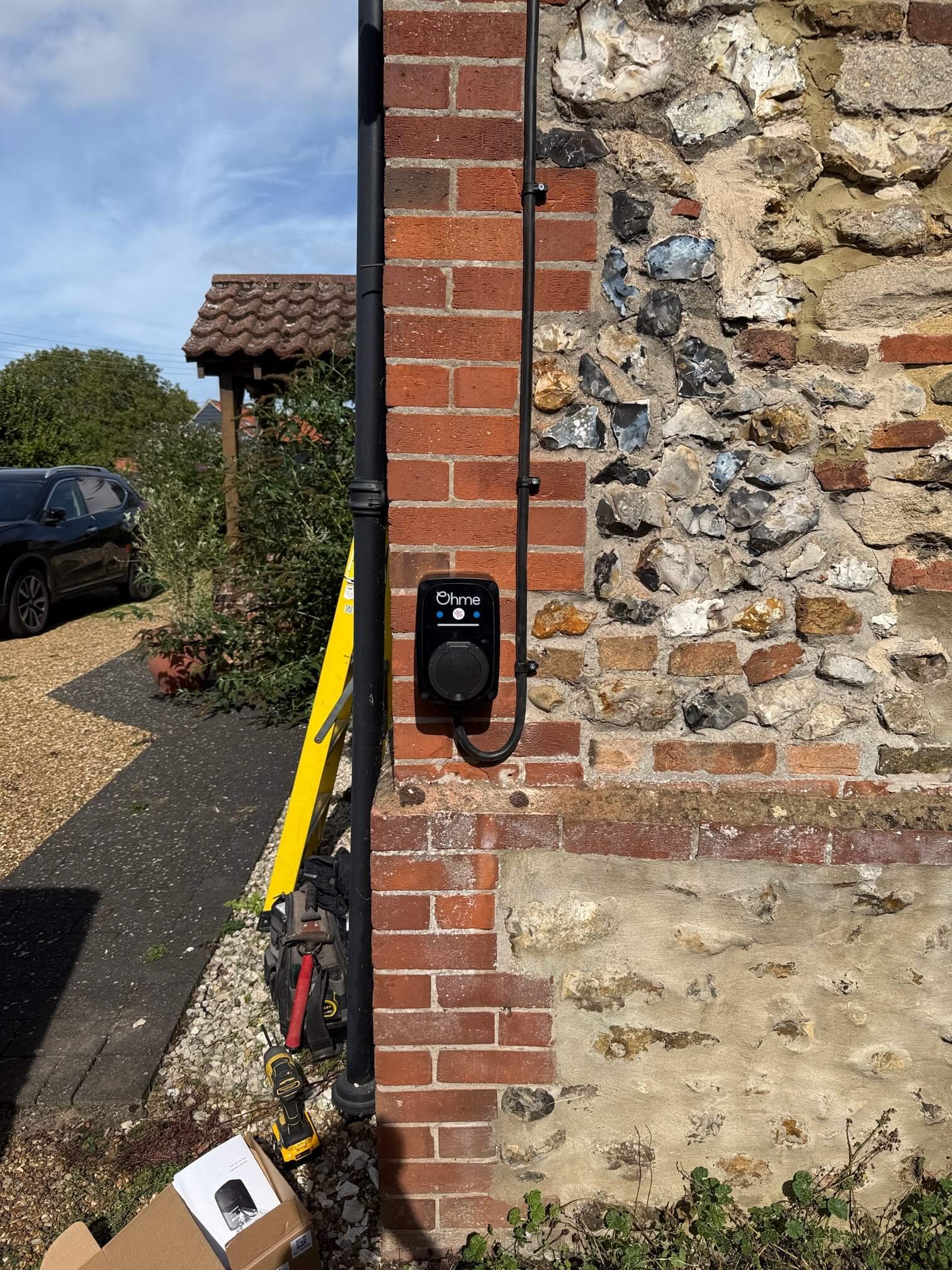
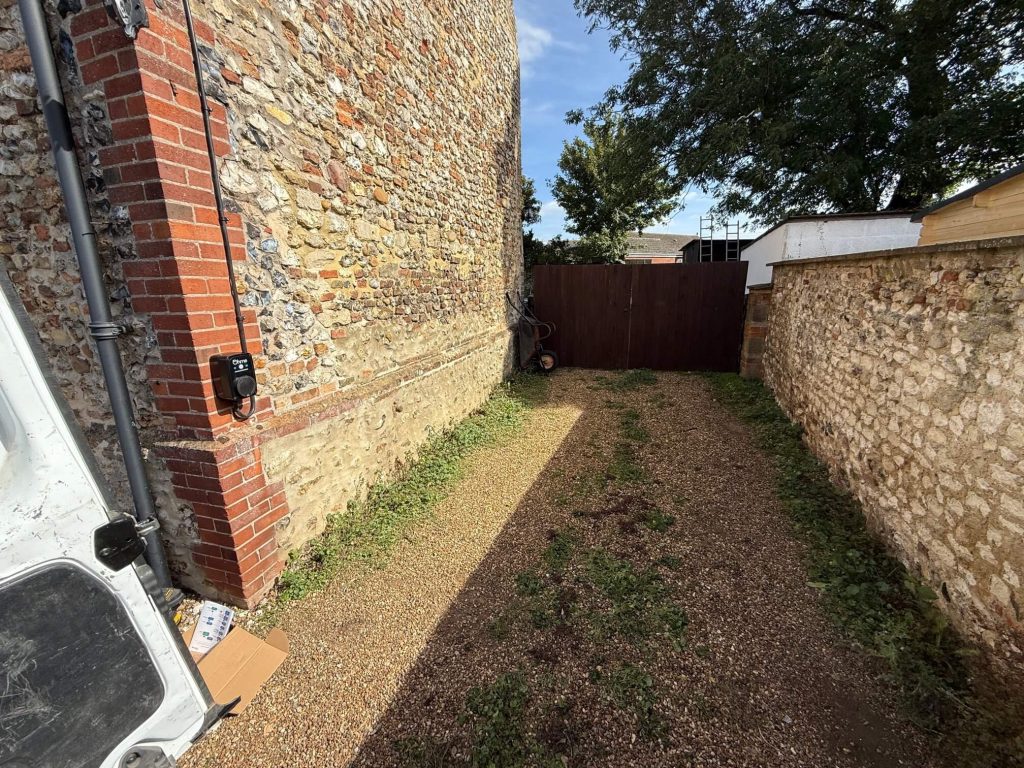
A brick mounting position beside a flint wall gives this EV charger installation in Feltwell its distinctive setting. Electric11 installed an Ohme ePod at the property near Thetford, with an external cable route linking the charging point to the building’s electrical installation.
The brief was to install a dedicated EV charging point. The scope covered installation and associated electrical works, with charger supply and civil works excluded. Photographs show the mounted unit, while the project records document electrical test readings.
Project Overview
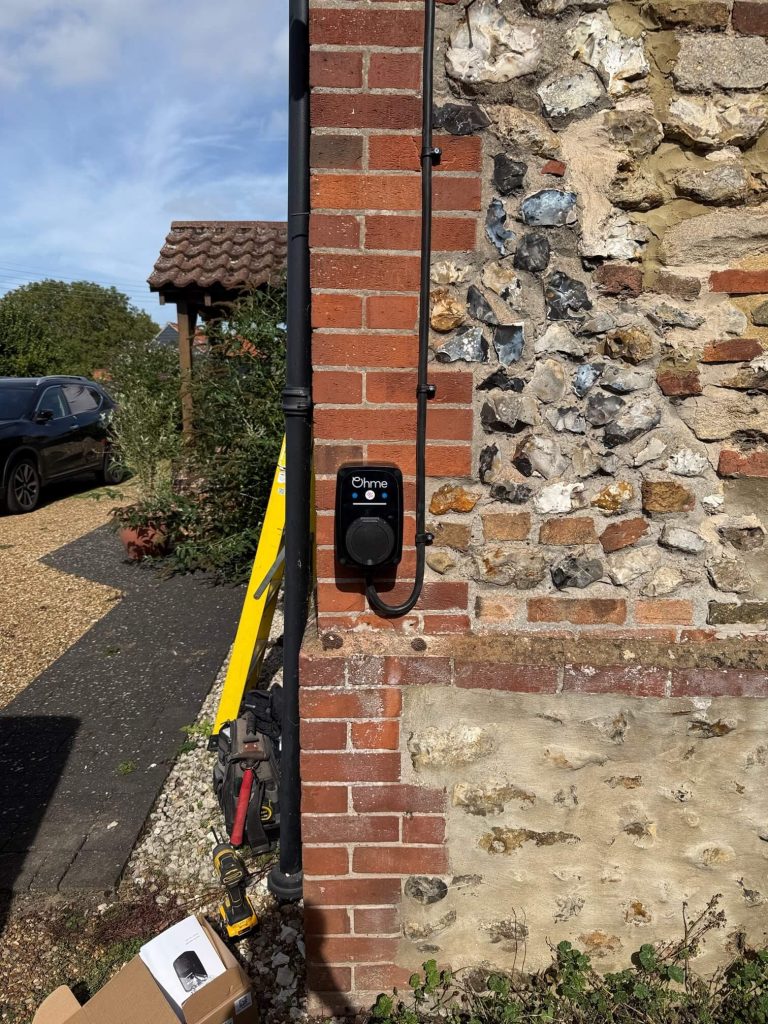
The Ohme ePod was mounted on the property’s brick corner beside a gravel courtyard. Its supply cable runs vertically along the brickwork and curves into the underside of the unit.
The recorded scope allowed up to 15 metres of cabling from the main meter position. This describes the allowance for the job, rather than a measured final cable length.
For help planning an installation at your own property, explore Electric11’s home EV charger installation service.
The Customer’s Challenge
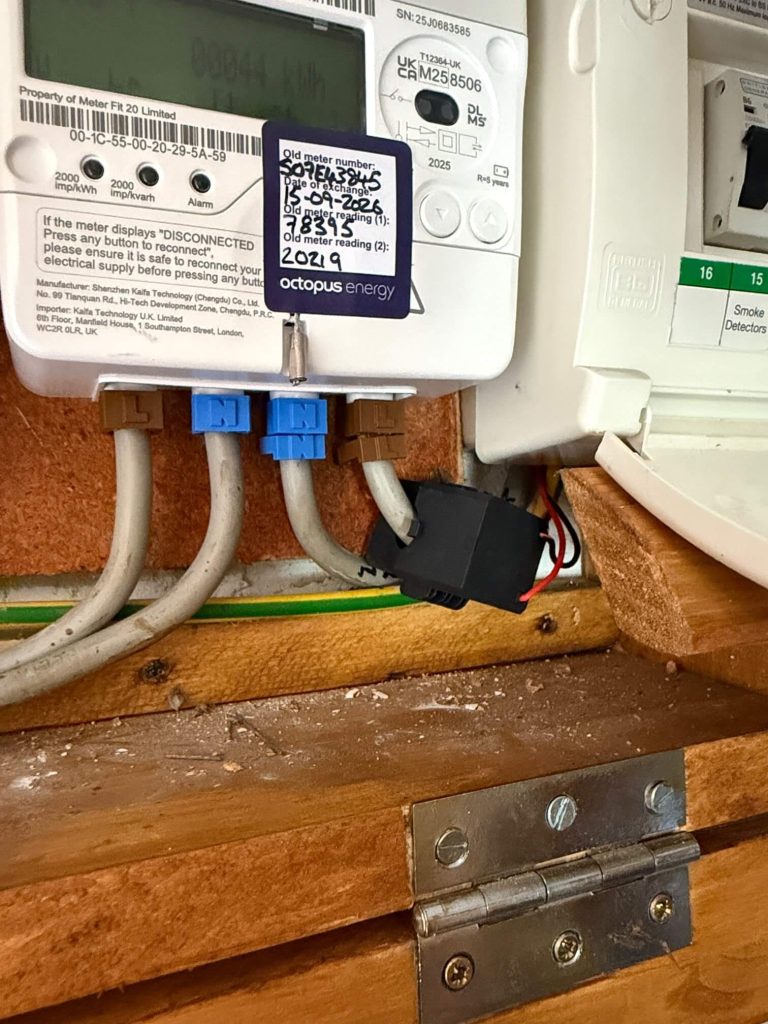
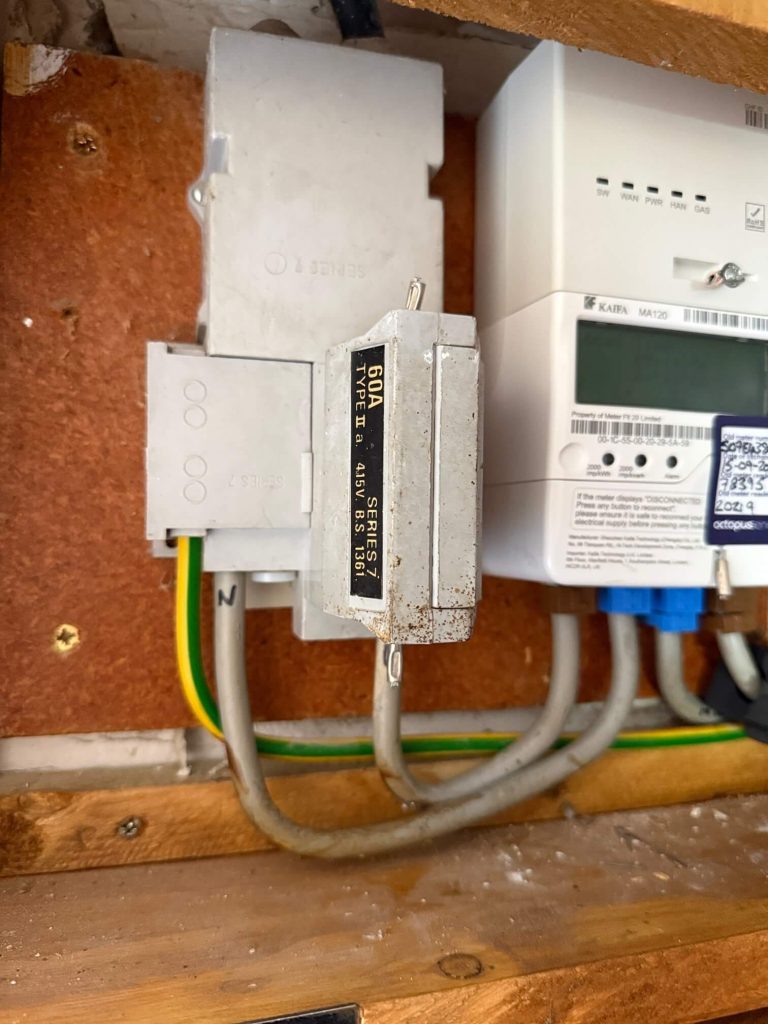
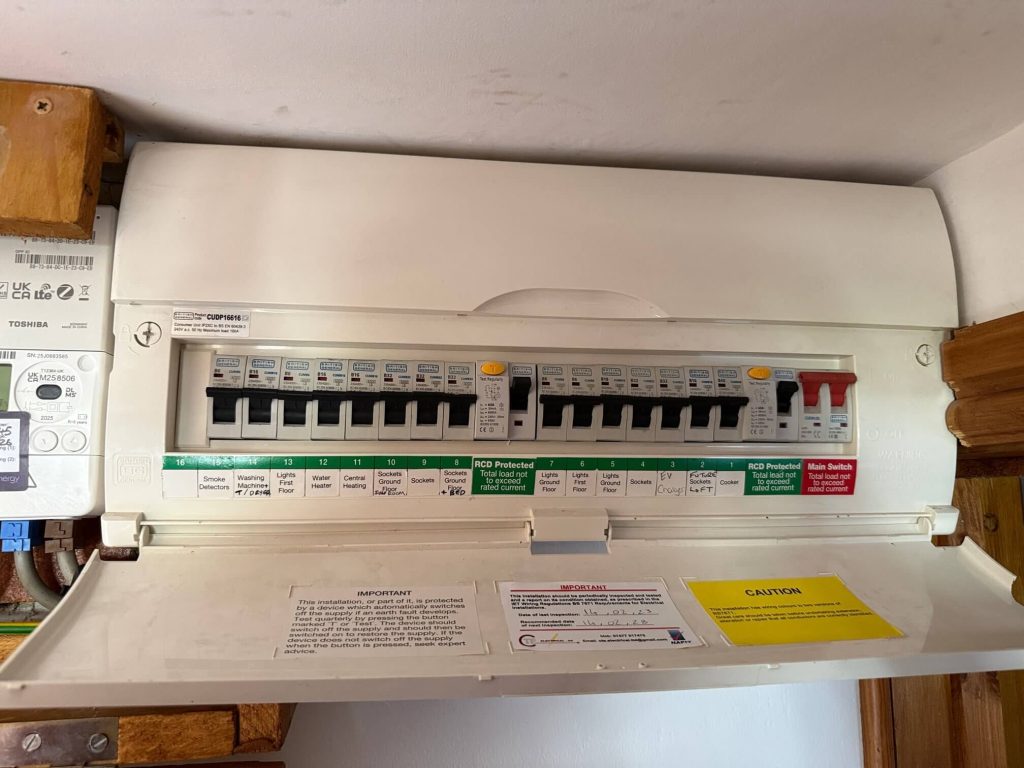
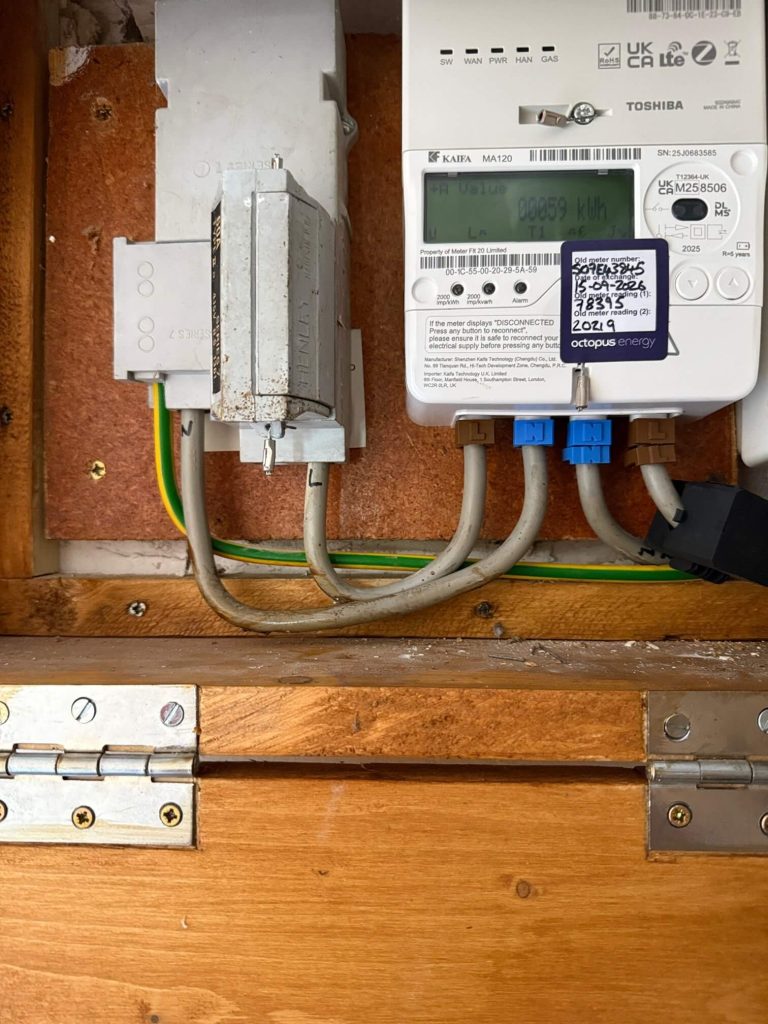
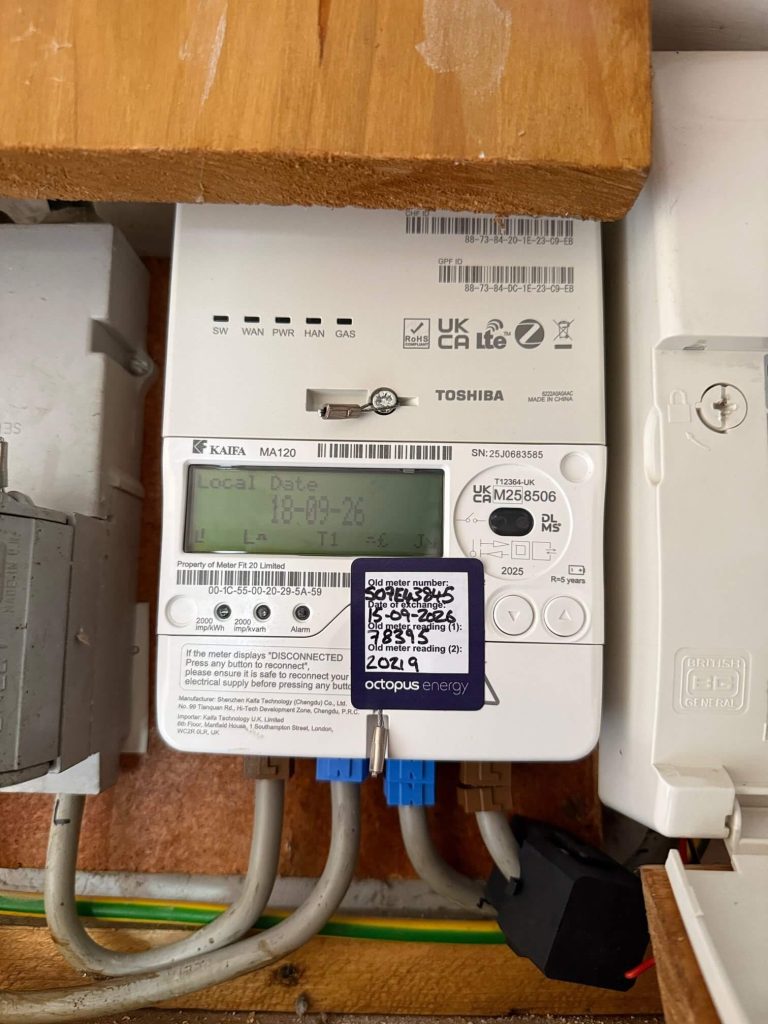
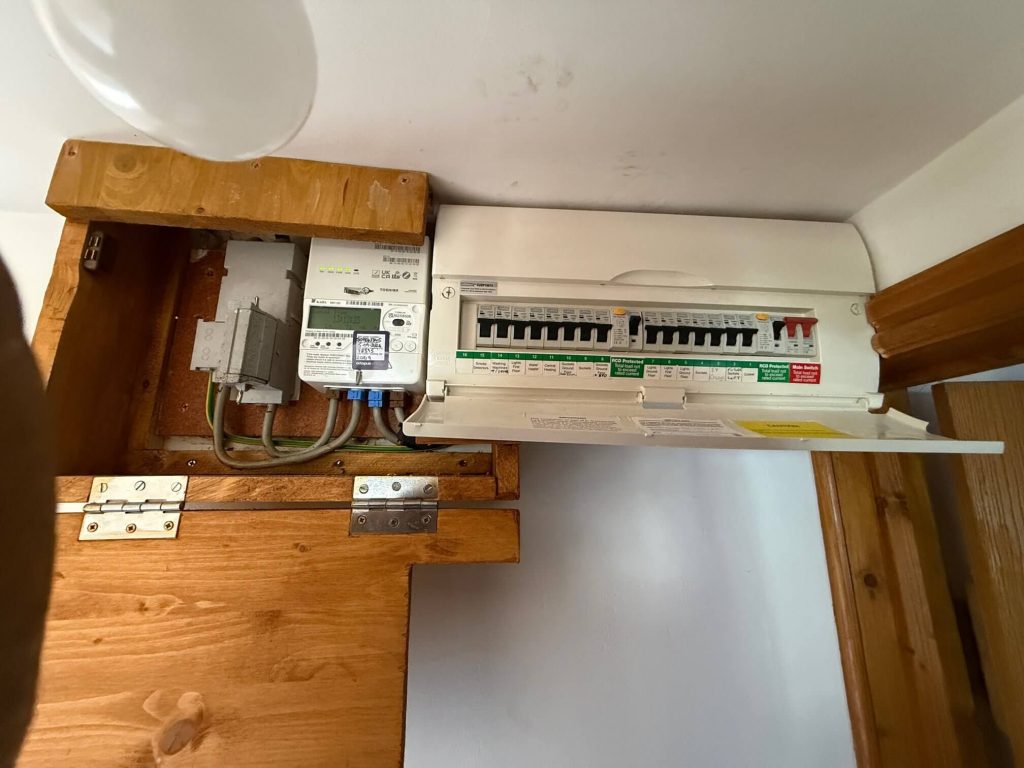
The project required an electrical connection between the main meter position and an outdoor charging point. The site photographs show the meter and consumer unit indoors, with the charger positioned on exterior brickwork alongside the flint wall.
That layout makes the connection between the building’s existing electrics and the charging position an important part of the work. The documented requirement was installation of the charger; no vehicle model, daily mileage or charging schedule was supplied.
The installation-only scope also matters. It defines the electrical work separately from purchasing the charger or undertaking civil works.
The Solution
Electric11 installed an Ohme ePod on the brick section at the corner of the building. The photographs show the compact unit secured to the wall, with surface-mounted supply cabling following the brickwork.
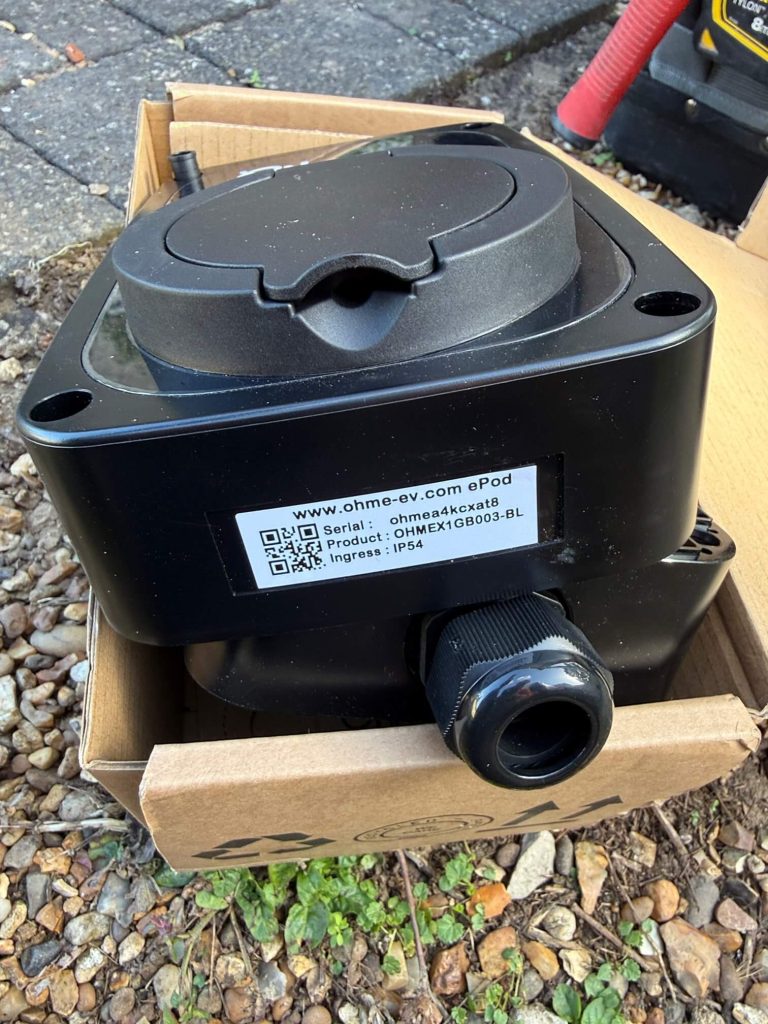
The ePod is an untethered charger, meaning the vehicle charging cable is separate from the unit. POD Energy explanation of tethered and untethered chargers describes how this arrangement works.
The project concerned EV charging. No solar panels or battery storage formed part of the documented installation, and no electricity generation is attributed to the work.
System Specifications
| Component or detail | Specification or evidence |
|---|---|
| Charger | Ohme ePod, identified in the photographs |
| Quantity | One |
| Mounting arrangement | Wall-mounted on exterior brickwork |
| Charging format | Untethered, using a separate vehicle charging cable |
| Earthing arrangement | TN-C-S, as recorded in the project notes |
| Circuit overcurrent protective device | 32 A, as recorded |
| Supply cabling | Scope allowance of up to 15 metres |
The protective-device rating and the charger’s actual operating output are different details. The supplied records do not establish a measured charging rate.
Estimated Annual Performance and Savings
No annual financial or emissions saving is claimed for this project.
A meaningful charging-cost comparison would need annual electricity use, the customer’s charging tariff and a defined alternative, such as their previous charging arrangement. Relevant charging losses and any additional costs would also need to be included.
An emissions comparison would require its own baseline and appropriate emissions factors. Installing a charger alone does not establish a particular reduction in vehicle emissions.
Annual generation is not applicable: the ePod transfers electricity to the vehicle rather than producing it.
Verified Results
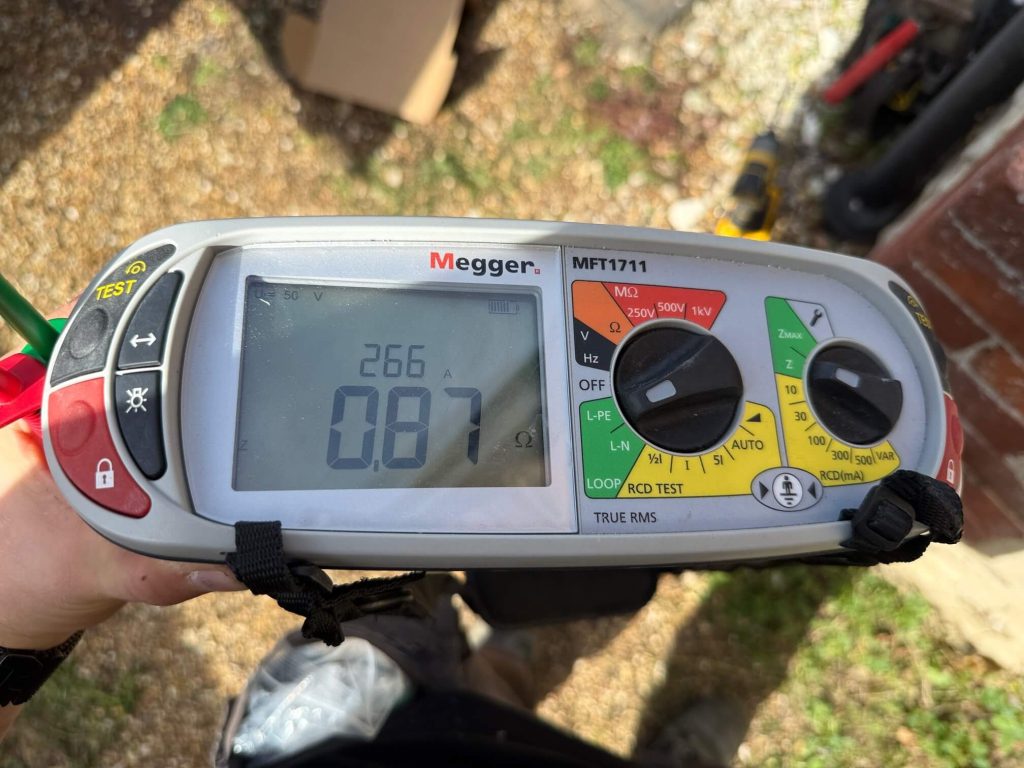
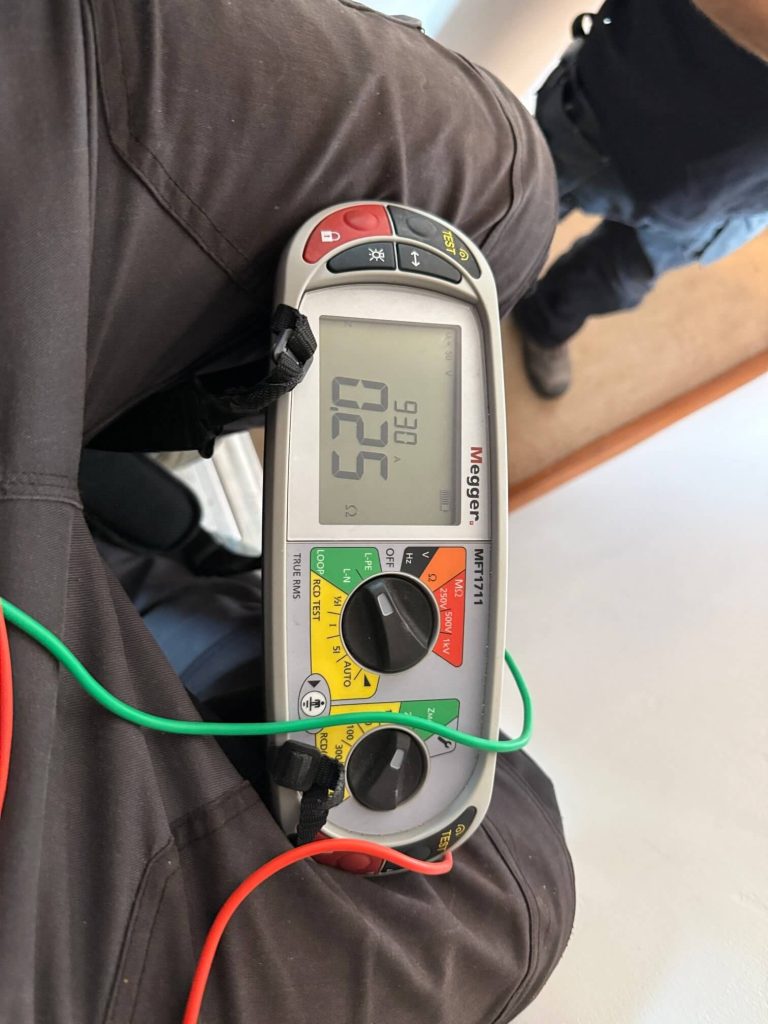
The photographs document the installed Ohme ePod and its external cable route. The project notes record these electrical test values:
Earth fault loop impedance: 0.25 Ω.
Maximum measured earth fault loop impedance: 0.87 Ω.
These are recorded installation test results, not measurements of charging efficiency, annual consumption or savings. No monitoring period, charging-session data or customer feedback was supplied.
What This Project Shows
This project illustrates the physical arrangement of a wall-mounted charging point at a brick-and-flint property. It also shows why the cable route and electrical connection deserve attention alongside the charger itself.
For someone considering similar work, the useful starting points are the intended parking position, the distance to the electrical supply and the work needed to connect the unit. Another property may require a different route or scope.
Discuss a Similar Project
Planning an EV charging point in Feltwell or near Thetford? Tell Electric11 where you park, which charger you are considering and where your meter and consumer unit are located. These details help establish the proposed scope.
Contact Electric11 about your EV charger installationElectric11 is composed of a team of local electricians based in Attleborough, offering coverage to the entire Norfolk region. Moreover, through our extensive network, we have forged strong connections with quality tradesmen representing various disciplines in our area.

The Electric11 EV Charger Installation Process
Electric11 describes an approach based on assessment, quotation, installation and testing. The four stages below connect that approach to the available Feltwell project evidence. Where a particular activity is not documented, the accompanying guidance explains a consideration for similar installations rather than presenting it as completed work on this job.
Site and Energy Assessment
For a similar project, assessment should establish the available electrical supply, suitable circuit protection, parking position and practical cable route. Vehicle charging needs would also inform the proposal; no usage assessment was supplied for this installation.
System Design and Clear Quote
The installed unit is identifiable as an Ohme ePod. No quotation price or comparison of alternative chargers was provided. For a comparable enquiry, the quote should identify the cable route, required electrical work and any exclusions.
Coordinated Electrical Installation
The records identify a 32 A circuit overcurrent protective device. They do not establish that the consumer unit or electricity meter was replaced as part of this job, so neither replacement is included in the described scope.
Testing, Setup and Handover
No app configuration, charging demonstration or customer handover record was supplied. For a comparable installation, handover should explain operation, cable use and relevant documentation. Ohme’s product manuals provide model-specific operating information.
The supplied photographs identify one Ohme ePod mounted on exterior brickwork. The project notes record a 32 A circuit overcurrent protective device, but they do not confirm the charger’s configured output or a measured vehicle charging rate.
No. The Ohme ePod is an untethered charger, so it uses a separate cable to connect to the vehicle. A suitable vehicle charging cable is needed; the project information does not confirm whether one was supplied separately.
No. The supplied scope describes an installation service and excludes charger supply and civil works. It includes an allowance of up to 15 metres of cabling from the main meter position, rather than confirming the actual installed cable length.
There is no supported annual saving for this project. A useful estimate needs your charging demand, electricity tariff and a baseline charging cost, with relevant losses and additional costs considered. Another customer’s savings would not establish what you will save.
No. An EV charger supplies electricity to a vehicle’s battery; it does not generate electricity. No solar installation was included in this project, so annual energy generation is not an applicable performance measure for the work.

