
Garage Socket and LED Lighting Installation in Bressingham




Electric11 completed a practical garage electrical upgrade for a property in Bressingham, Norfolk. The work combined additional power outlets, relocated sockets, integrated USB charging points and a new LED lighting system, with related electrical alterations inside the main house.
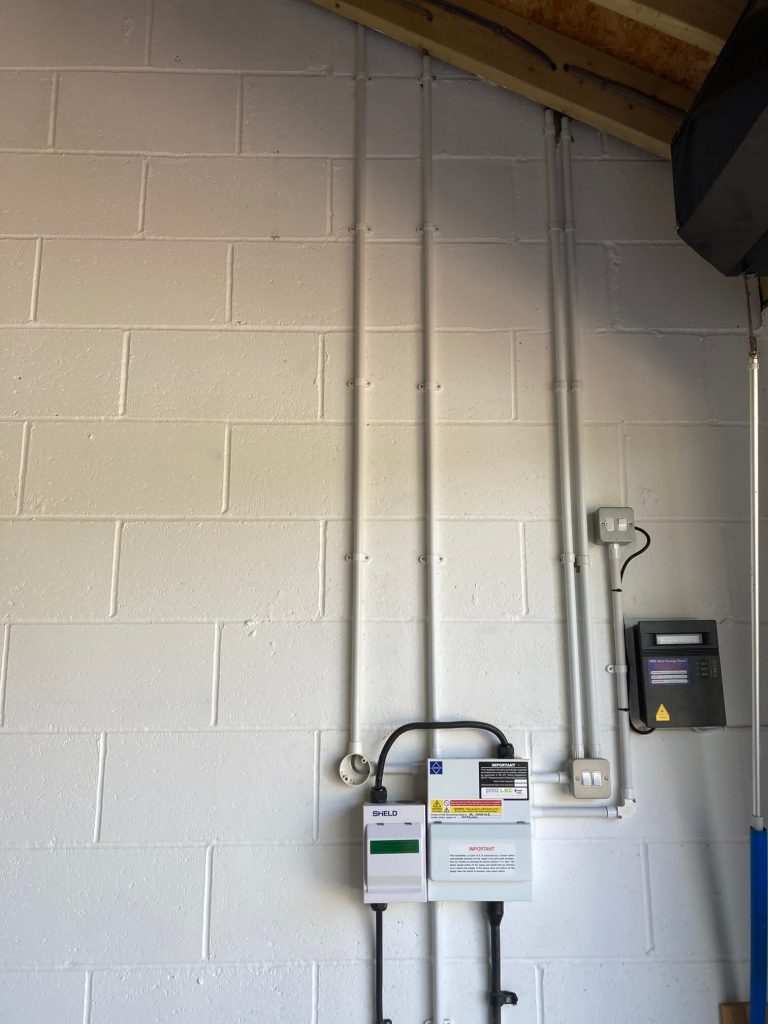
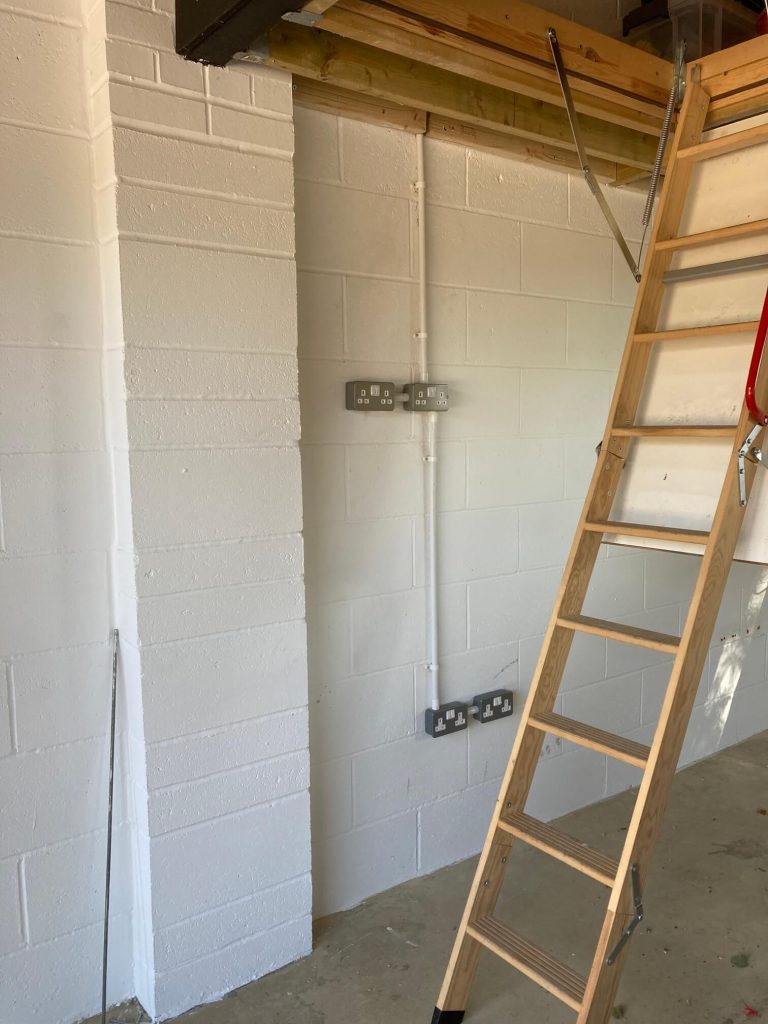
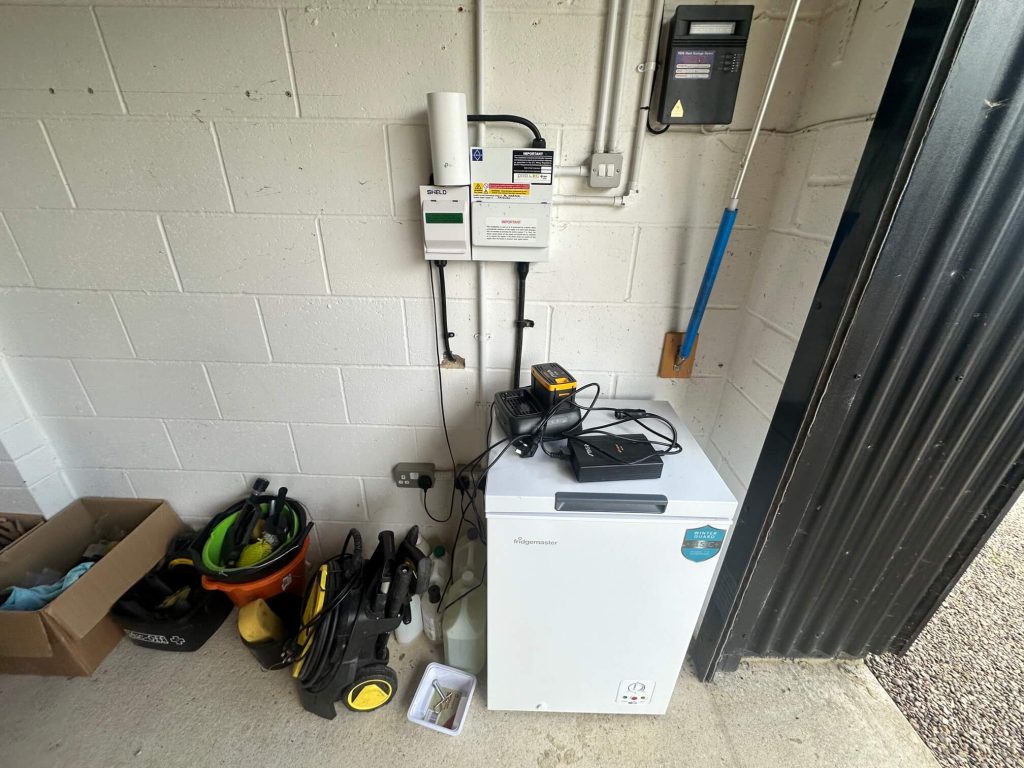
The garage needed more useful access to power without concealing cables inside the blockwork. Galvanised accessories and white surface-mounted conduit provided a robust, organised solution suited to the space. The photographs show the new cable routes following the walls and ceiling line, keeping the installation accessible while maintaining a tidy finish.
All new and altered wiring was inspected and tested before a Minor Electrical Installation Works Certificate was issued in accordance with the project records.
Project Overview
| Project detail | Recorded information |
| Job type | Installation works |
| Property area | Bressingham, Norfolk |
| Main garage work | New and relocated double sockets with surface conduit |
| New accessories | Six galvanised double sockets, including two with USB-A/C ports |
| Lighting | Approximately 12 metres of LED strip lighting in track |
| Garage circuit cable | 2.5 mm² conductors |
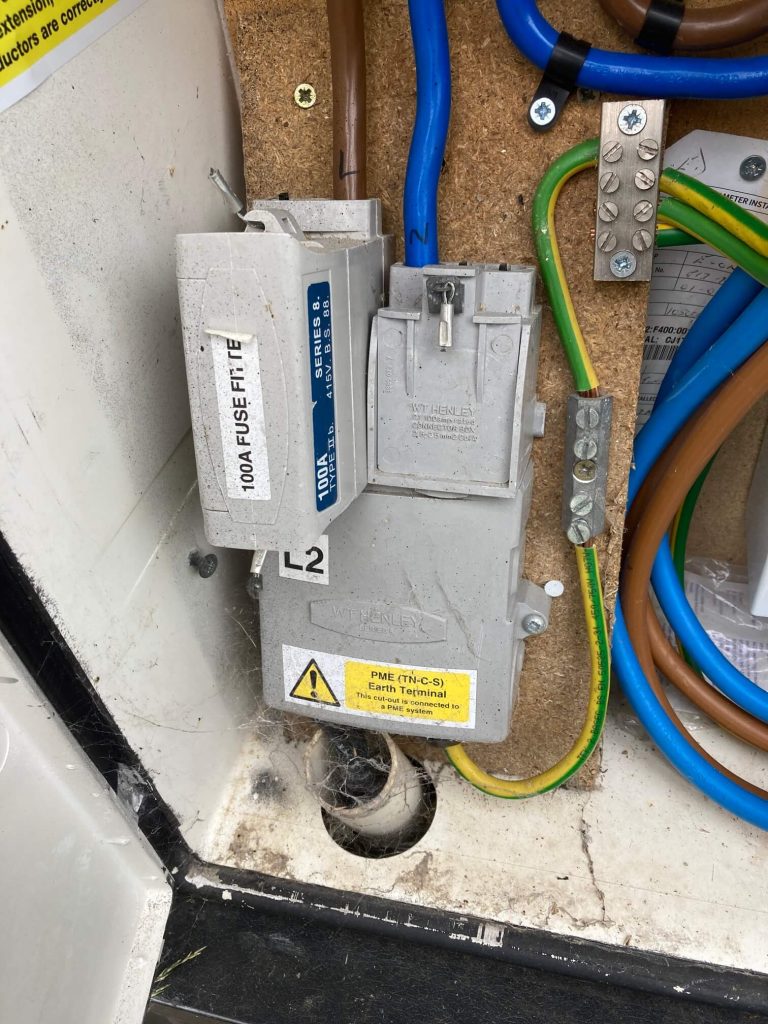
| Supply point | Existing garage distribution board |
| Earthing arrangement | TN-C-S |
| Recorded insulation resistance | 999 MΩ |
| Certification | Minor Electrical Installation Works Certificate |
The Customer’s Requirements
The customer wanted the garage to work better as a practical storage and activity space. The existing socket positions did not provide convenient access to power, while additional equipment would have increased reliance on extension leads. The scope therefore included a combination of new outlets and relocated accessories.
The work notes record six new galvanised double sockets, two of which incorporated USB-A and USB-C charging connections. These accessories give the customer standard 230 V outlets alongside convenient charging for compatible devices, without occupying both socket positions with plug-in adaptors.
Lighting was another important part of the project. Approximately 12 metres of LED strip was installed in track along the lower-floor garage ceiling to provide a more continuous spread of light. The wider job also included relocating sockets in the house, preparing wiring for customer-supplied wall lights and repositioning selected controls.
Customers planning a similar collection of improvements can combine socket, switch and fitting changes through Electric11’s small electrical tasks service.
New Galvanised Sockets for the Garage
According to the work records, Electric11 installed six new galvanised double sockets in the garage and relocated two existing double sockets. The metal finish is well suited to a functional garage environment and creates a consistent appearance across the new accessory positions.
Two of the new sockets included USB-A and USB-C connections. This provides a flexible charging point for phones, lights, tools or other compatible equipment while leaving the standard outlets available for garage appliances.
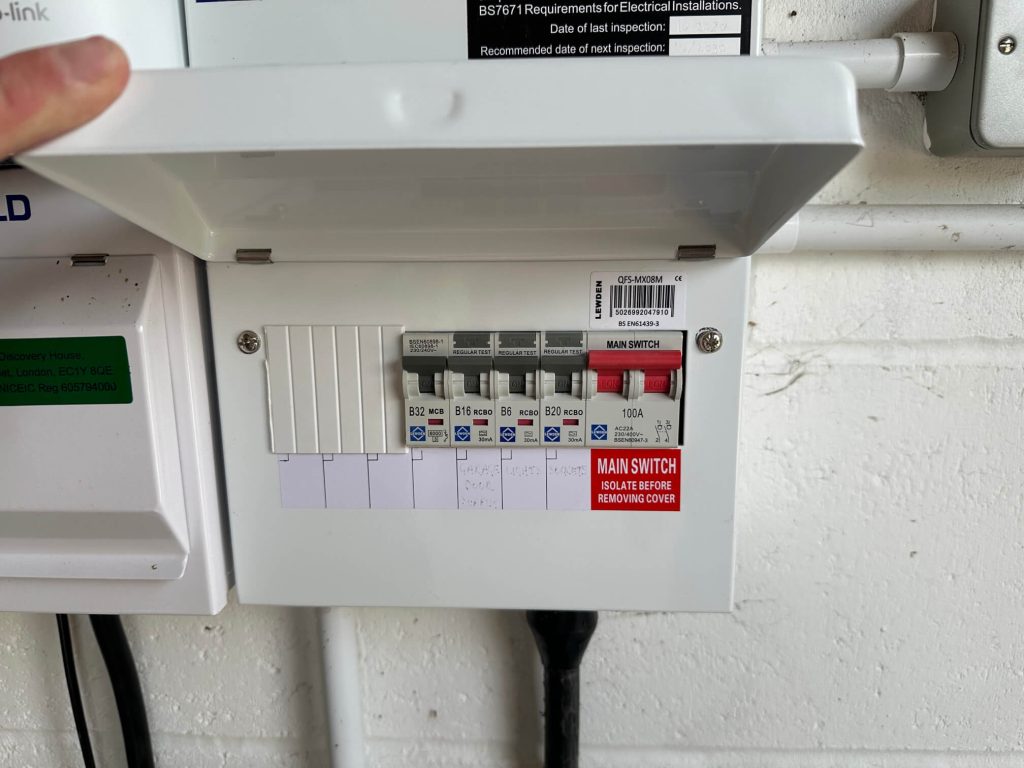
The sockets were supplied from the garage distribution board using 2.5 mm² cable. Before installation, the team considered the existing board, circuit arrangement, proposed accessory positions and practical cable routes. The finished locations were selected to make power easier to reach while avoiding unnecessary disruption to the block walls.
For projects involving additional circuits or power to garages and outbuildings, Electric11 also provides dedicated power-supply installation services.
Surface-Mounted Conduit and Cable Routing
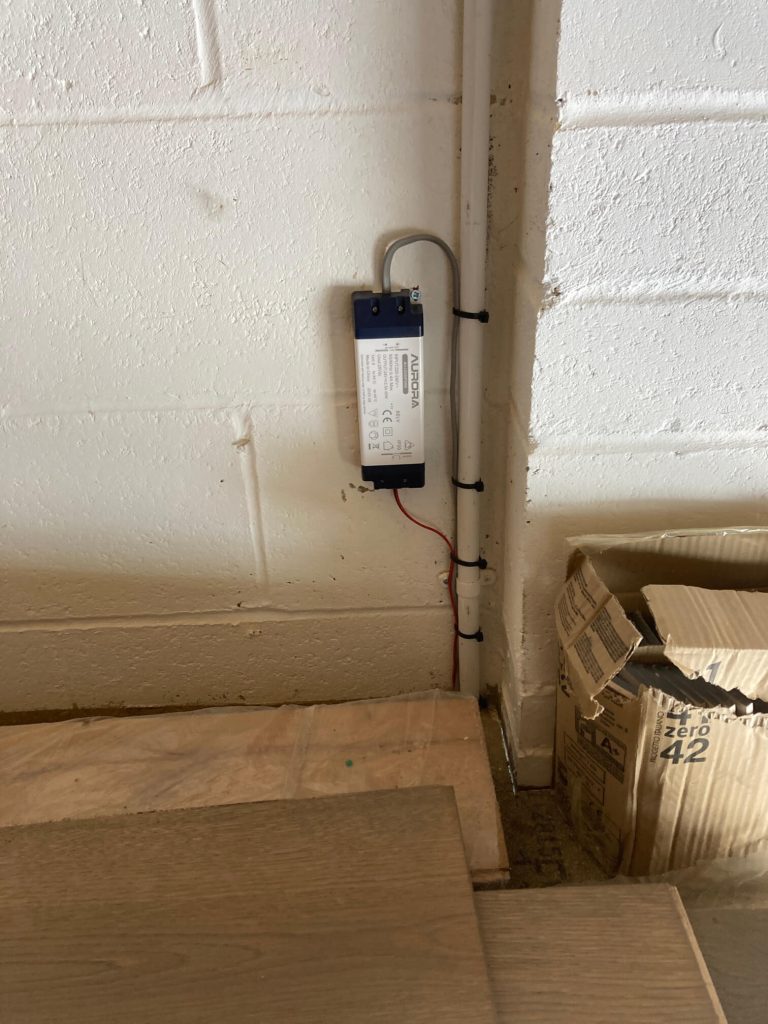
Because the garage walls were constructed from painted blockwork, surface-mounted wiring offered a practical installation method. White conduit was installed to contain and support the cables between the distribution board, sockets and lighting equipment.
The photographic record shows vertical conduit drops aligned with the new accessories and longer routes following wall and ceiling lines. This approach keeps the wiring mechanically supported and makes the route clear for future inspection or alteration. Bends, entries and accessory positions were planned to create a neat overall layout rather than a collection of disconnected cable runs.
Surface containment can be particularly useful in garages, workshops and utility spaces where chasing walls would add avoidable repair and decorating work. It also allows future electrical changes to be planned around a visible, accessible installation.
LED Strip Lighting Installation
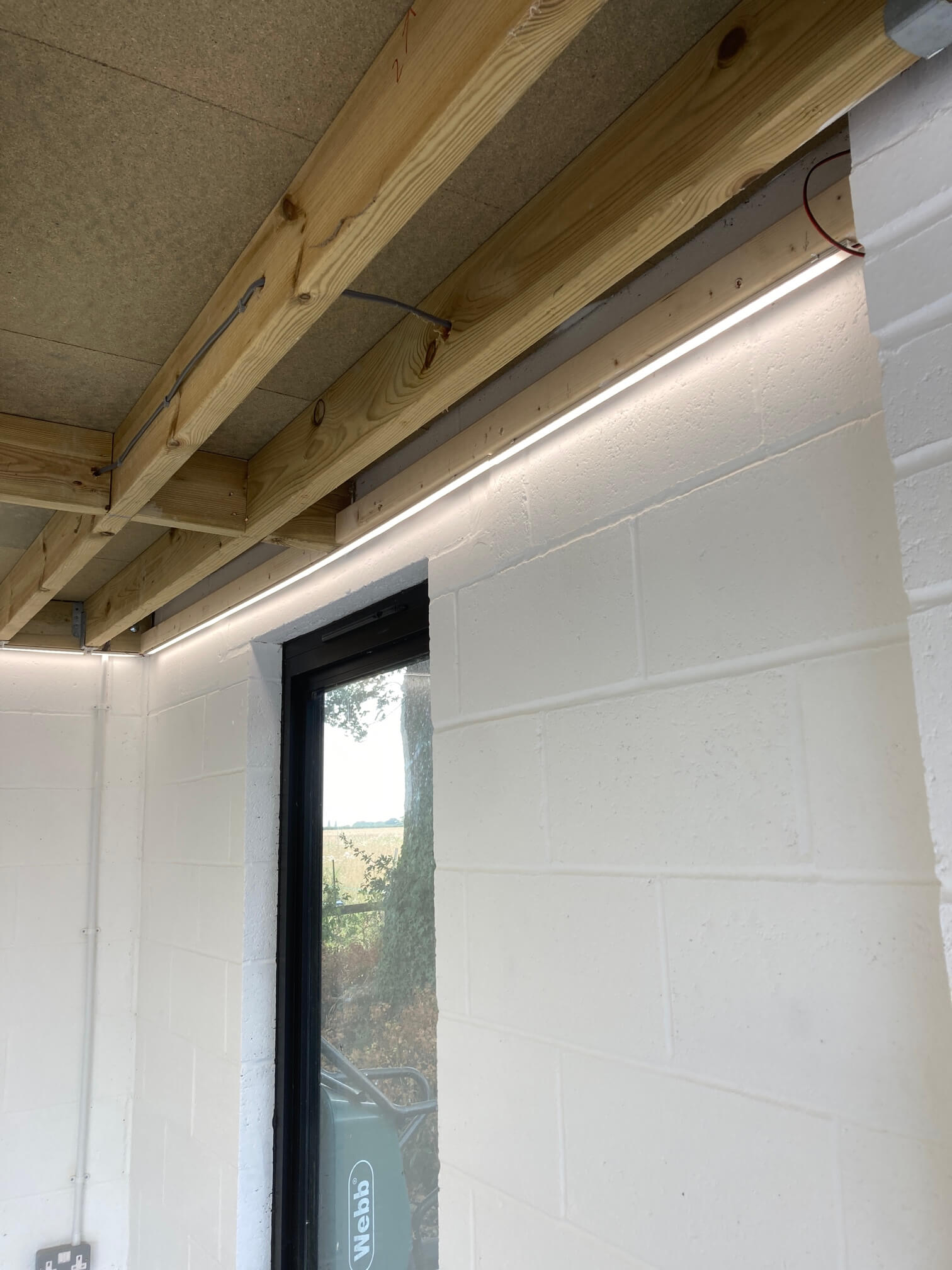
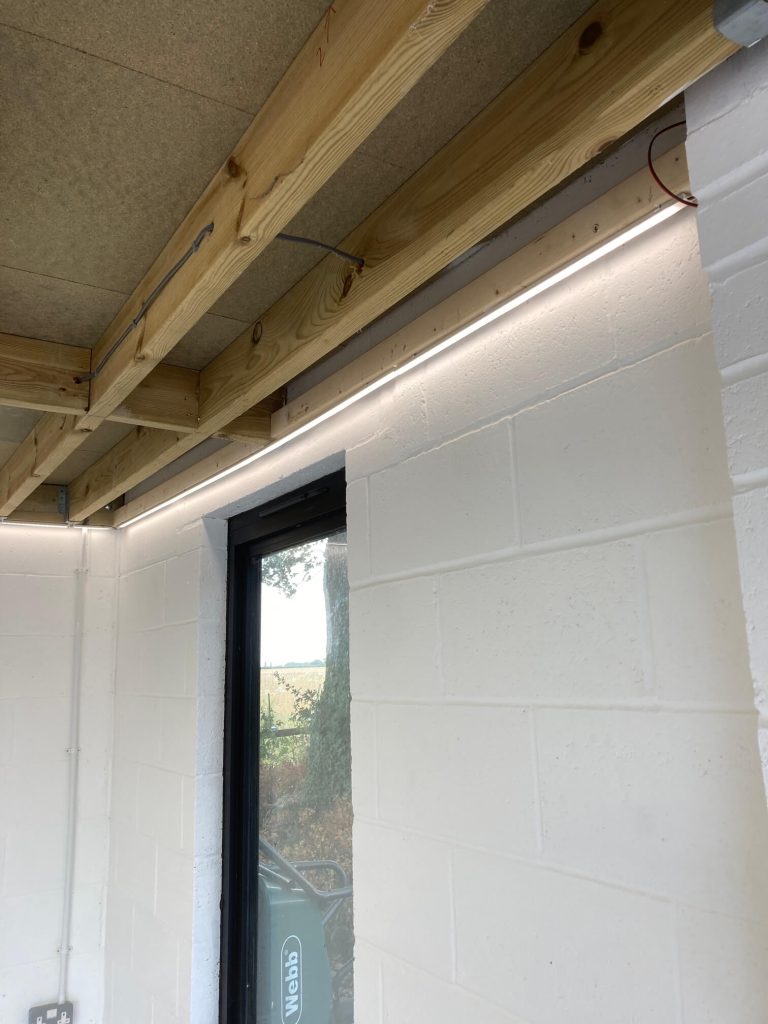
Approximately 12 metres of LED strip lighting was installed in track along the lower-floor garage ceiling. A continuous linear arrangement helps distribute light across the room more evenly than isolated fittings, making shelves, equipment and working areas easier to see.
The final photograph shows the completed lighting following the ceiling edge above the block wall. The track gives the LED strip a defined position and a cleaner appearance while helping protect it from casual contact.
LED lighting can offer useful illumination with a comparatively low connected load. For the case-study card, the installation has been estimated at approximately 120 W, based on a representative 10 W per metre strip. If used for four hours per day, that would consume about 175 kWh annually. Compared with a notional 480 W conventional lighting arrangement providing a similar working period, the estimated reduction is approximately 520 kWh per year, worth around £130 at an illustrative electricity price of £0.25 per kWh.
These figures are planning estimates rather than measured savings. The exact result depends on the installed LED specification, operating hours, tariff and the lighting used for comparison. Homeowners considering a comparable improvement can explore Electric11’s indoor and exterior lighting services.
Additional Electrical Alterations in the House
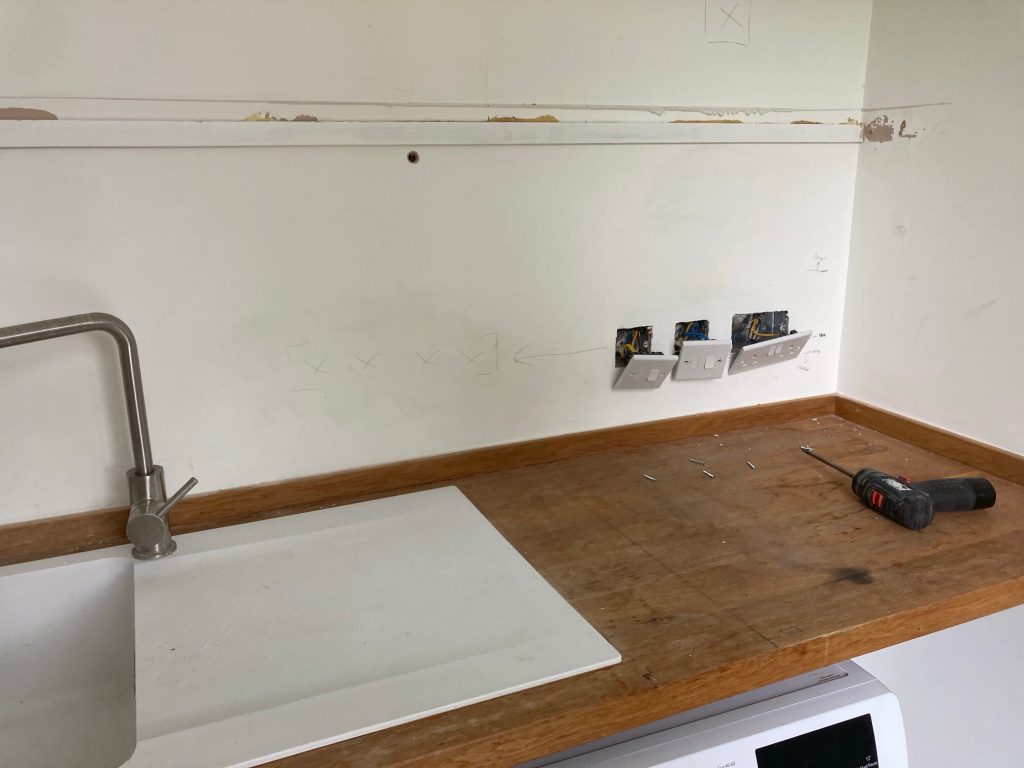
The job extended beyond the garage. The work notes record three sockets repositioned on the same wall in the main house, helping the electrical layout suit the room arrangement more effectively.
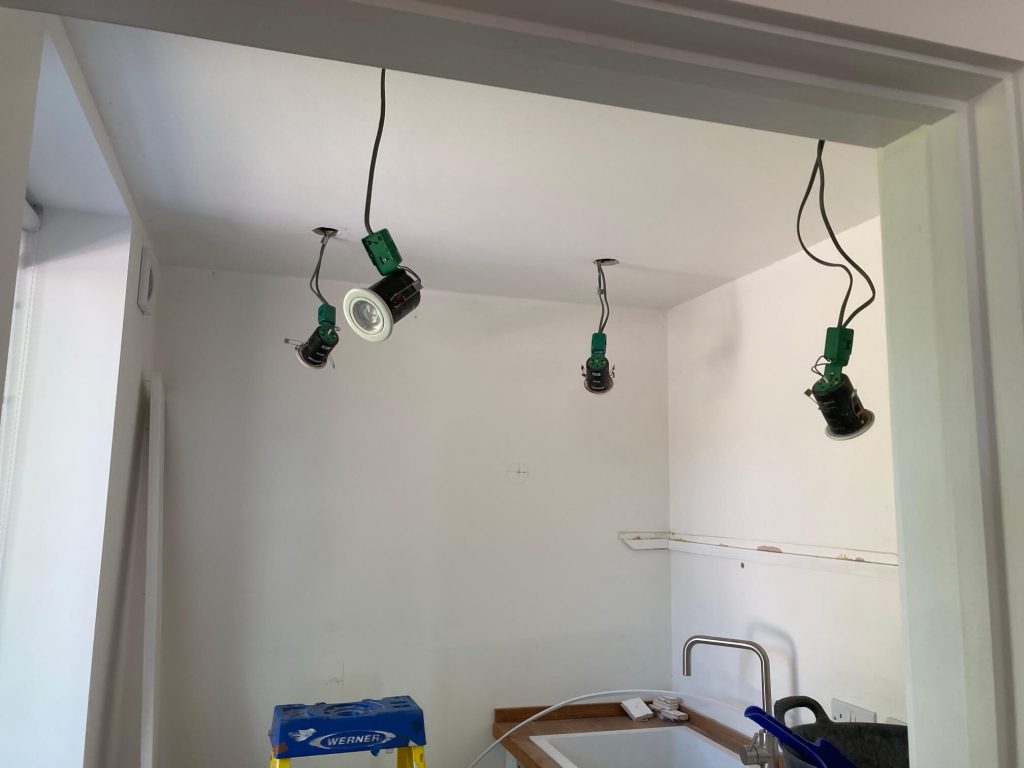
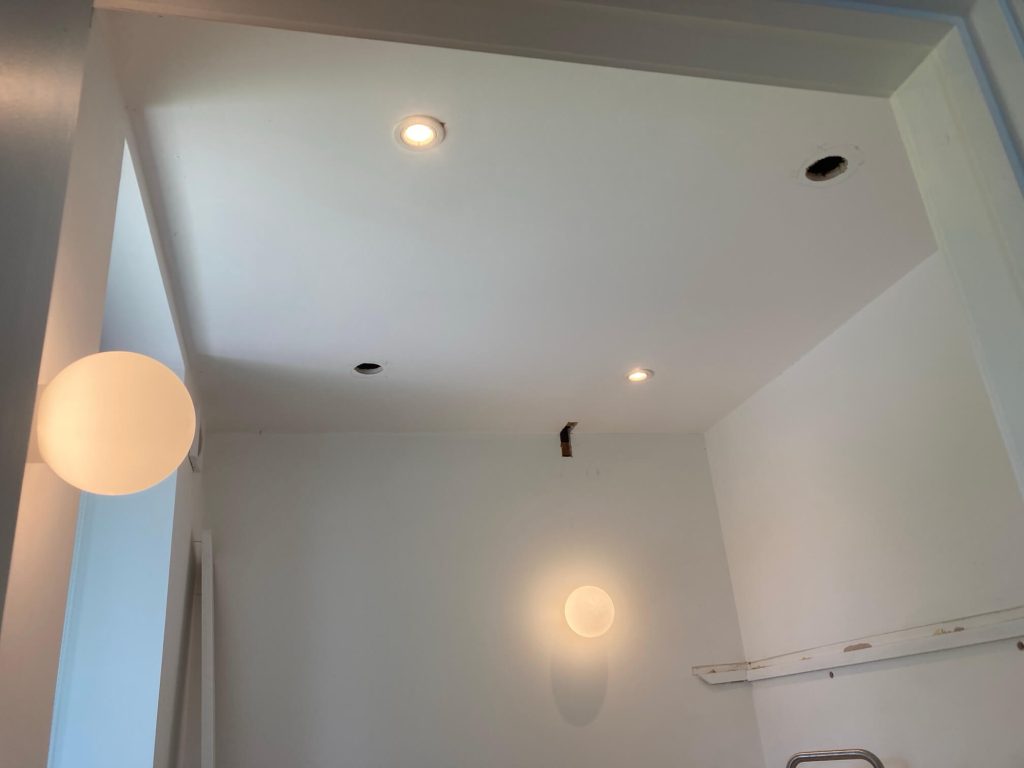
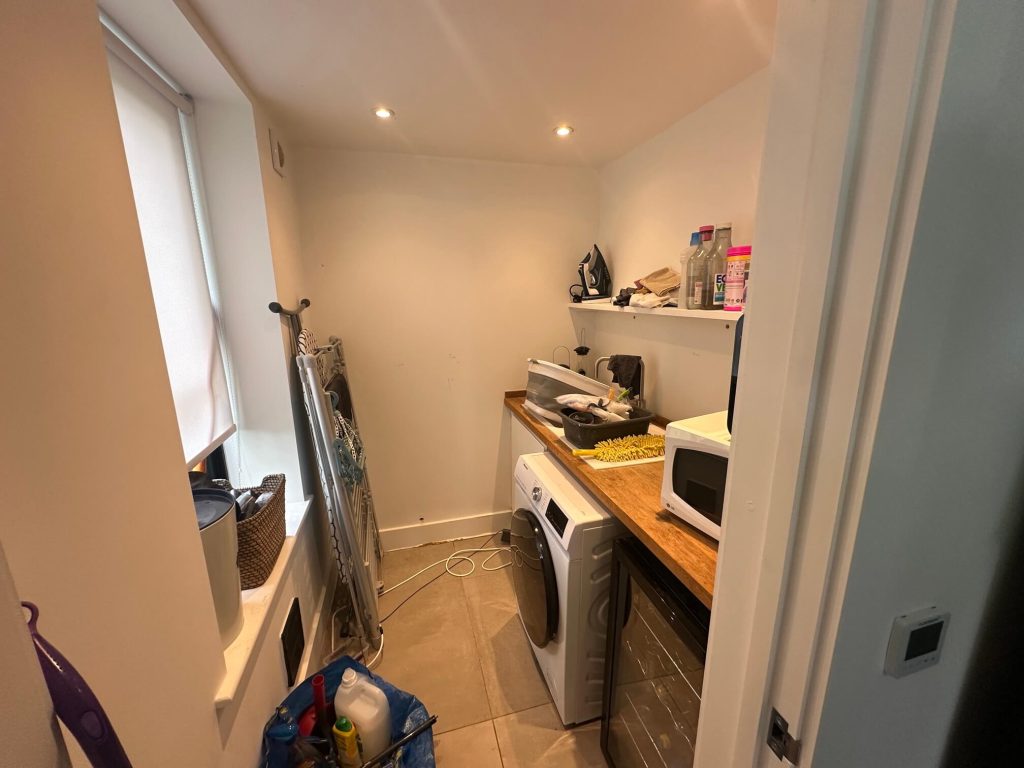
Electric11 also removed two downlights and prepared the cabling for wall lights supplied by the customer. Moving a light switch and an extractor-fan isolator formed part of the related alterations. The photographs show the utility area during the lighting alterations, with ceiling cabling prepared for the next stage.
Coordinating these smaller tasks within the same project reduced the need for separate appointments and allowed the altered circuits to be assessed and tested together. Electric11’s Norwich-area electrician service covers planned domestic electrical improvements throughout Norwich and the surrounding Norfolk area.
Inspection, Testing and Certification
After the installation work was completed, the new and altered wiring was inspected and electrically tested. The project records identify a TN-C-S earthing arrangement and an insulation-resistance result of 999 MΩ.
Inspection and testing are essential when sockets, lighting points or fixed wiring are added or relocated. The electrician checks that protective conductors remain continuous, connections are secure, insulation is satisfactory and the altered circuit is suitable for service.
A Minor Electrical Installation Works Certificate was issued for the completed scope. This gives the customer a formal record of the work and the associated test information. Property owners who need a broader assessment of an existing installation can also arrange an EICR in Norfolk.
The Completed Result
The completed project gives the customer a more useful electrical layout across the garage and selected areas of the house. The garage now has additional galvanised double sockets, integrated USB-A/C charging points and relocated outlets positioned around the space. White surface conduit keeps the new wiring supported and visually organised against the painted blockwork.
The 12-metre LED installation provides a continuous lighting line along the ceiling, improving general visibility with an efficient connected load. Inside the house, the altered sockets, lighting cables and controls were repositioned to suit the customer’s requirements.
Most importantly, the work was followed by testing and certification, giving the customer a documented record of the completed electrical alterations.
You can view further examples of completed work in Electric11’s electrical case studies or contact the team to discuss a similar project.
Request a Garage Electrical QuoteElectric11 is composed of a team of local electricians based in Attleborough, offering coverage to the entire Norfolk region. Moreover, through our extensive network, we have forged strong connections with quality tradesmen representing various disciplines in our area.
The Electric11 Installation Process
Garage upgrades depend on clear planning, practical accessory positions and suitable cable routes. Electric11 follows a structured process to keep the work aligned with the customer’s intended use of the space while ensuring the completed alterations can be inspected, tested and documented.
Site and Scope Assessment
The electrician reviews the existing garage distribution board, circuit arrangement, earthing system and the proposed positions for sockets and lighting. Access restrictions, wall construction, equipment locations and cable routes are identified before the scope is finalised.
Clear Quote and Installation Plan
The customer receives a clear quotation setting out the agreed accessories, lighting work, containment and related alterations. Socket positions and conduit routes can then be coordinated around shelving, appliances, doors and the way the garage will be used.
Coordinated Installation
The electrician installs the surface conduit, routes the 2.5 mm² cables, fits the galvanised sockets and completes the LED lighting. Related socket, switch and lighting alterations in the house are completed as part of the agreed programme.
Inspection, Testing and Handover
The completed work is visually inspected and electrically tested. Results are recorded, the installation is left operational and a Minor Electrical Installation Works Certificate is provided for the certified scope.
Frequently asked
questions
Can’t find what you’re looking for?
Get in touch with any questions.
Yes. The existing supply, distribution board, circuit capacity, earthing and cable route must first be assessed. Where the installation is suitable, additional sockets can be connected using an appropriate wiring method and tested after completion.
Surface conduit supports and contains the cable without chasing into blockwork. It keeps the route visible and accessible, making it a practical choice for garages, workshops, utility spaces and outbuildings.
Integrated USB-A/C outlets allow compatible equipment to be charged without occupying both standard socket positions. They can be useful for phones, rechargeable lights and other low-voltage devices used around the garage.
The case-study estimate is approximately 520 kWh per year compared with a notional conventional lighting load. It assumes around 12 metres of 10 W-per-metre LED strip used for four hours per day. Actual savings depend on the product, usage and previous lighting.
Yes. New and altered fixed wiring should be inspected and tested to confirm that the work is safe and the circuit remains suitable for service. Relevant results are recorded on the appropriate certificate.
The project records state that a Minor Electrical Installation Works Certificate was issued for the completed scope in accordance with the applicable BS 7671 requirements.
Yes. Combining related tasks can simplify planning and reduce disruption. The electrician will confirm the exact scope, circuit arrangements and certification requirements before work begins.

