
Myenergi Zappi EV Charger Relocation in Norwich




Electric11 relocated an existing Myenergi Zappi EV charger by approximately 20 metres at a residential property in Norwich. The work included extending the protected charging circuit, routing new cable through and around the garage, reconnecting the charger in its more practical position, completing detailed electrical tests and issuing a Minor Works Certificate.
Project Overview
| Project detail | Information |
| Project type | Existing EV charger relocation and circuit extension |
| Location | Norwich, Norfolk |
| Charger | Tethered Myenergi Zappi |
| Approximate relocation distance | 20 metres |
| Distribution board reference | DB1 |
| Circuit number | 4 |
| Live conductor | 6 mm² |
| Circuit protective conductor | 2.5 mm² |
| Circuit protection | Type B, 32 A |
| RCD protection | Type A, 30 mA |
| Earthing arrangement | TN-C-S |
| Certification | Minor Electrical Installation Works Certificate |
Moving the Charger to a More Practical Position
The customer wanted the existing Zappi charger moved from its previous position to the outside of a timber garage, closer to the parking area. Relocating an EV charger requires more than moving the enclosure: the circuit route, conductor size, protective devices, earthing arrangement and final test results must remain suitable for the charging load.
Electric11 planned an approximately 20-metre extension that crossed the rear garage wall, continued externally and followed the established edges of the property. Customers considering a new or relocated charging point can learn more about EV charger installation in Norwich. For related electrical alterations, a qualified electrician in Norwich can assess the existing supply and recommend the appropriate work.
Extending the Existing EV Charger Circuit
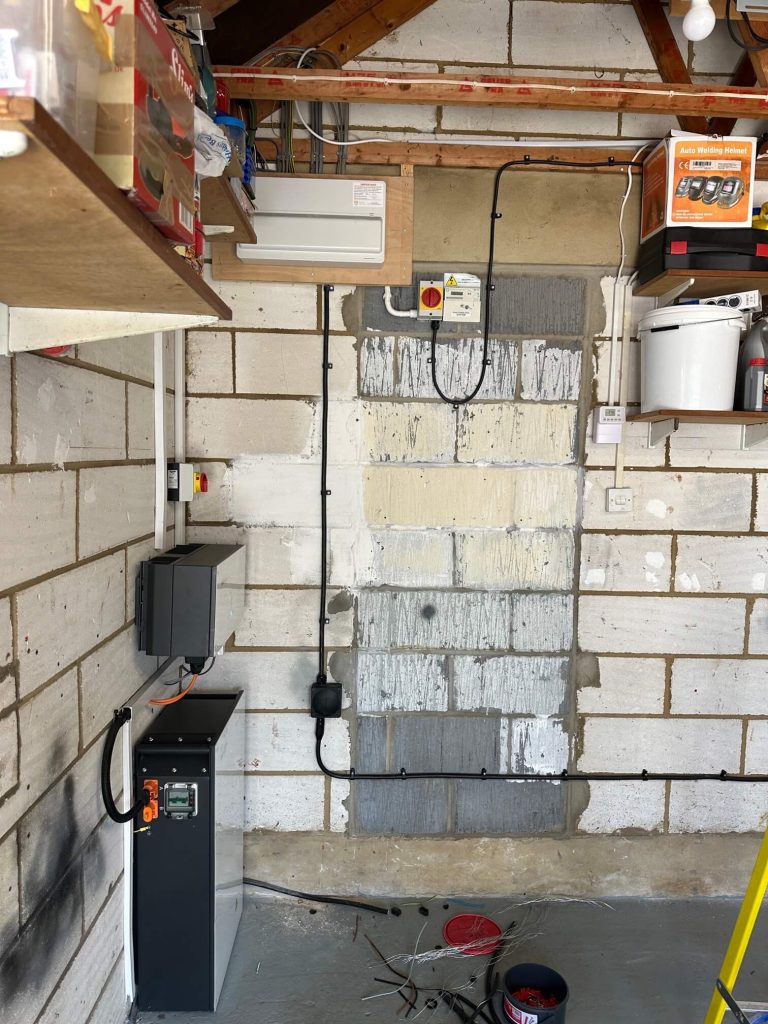
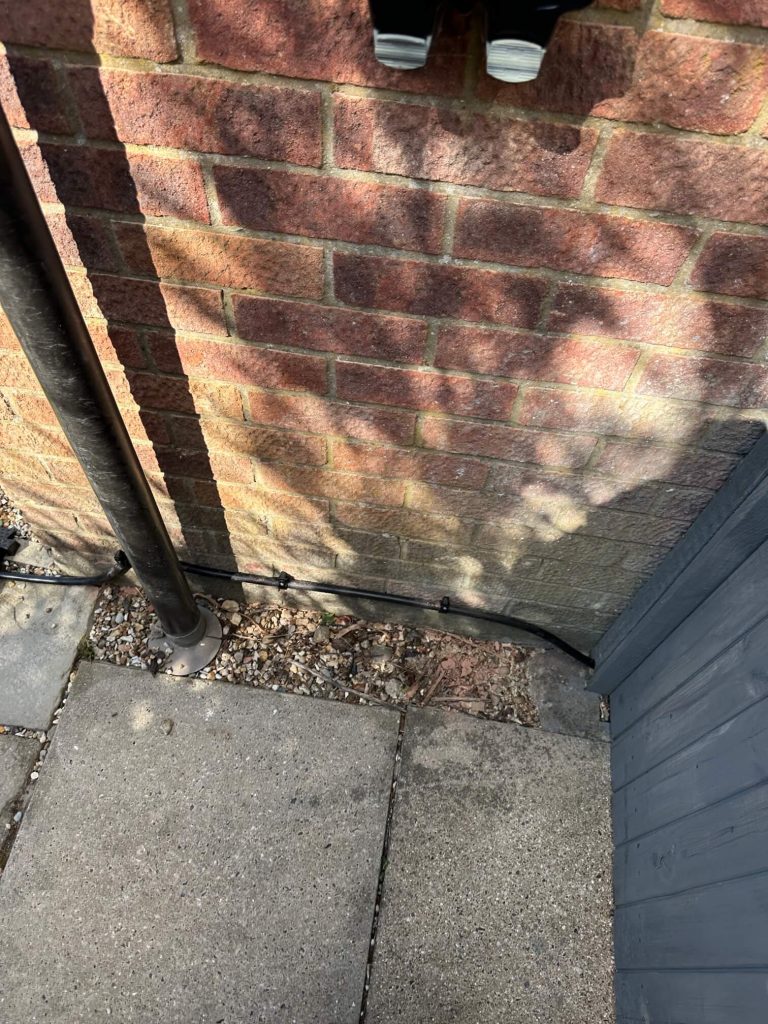
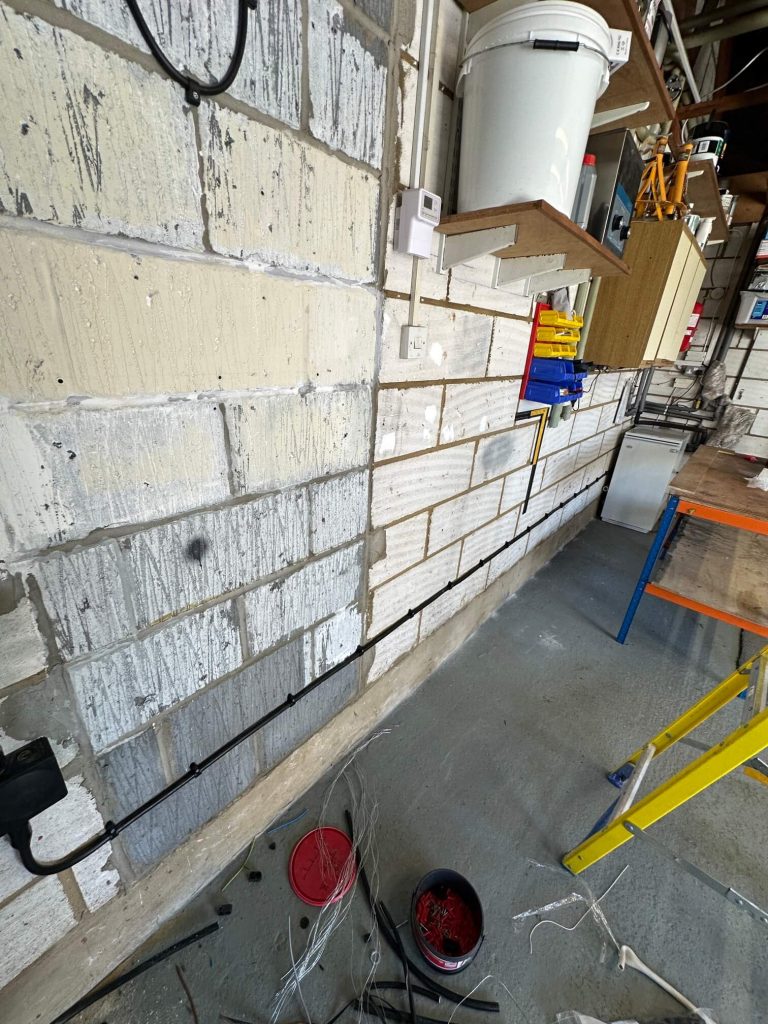
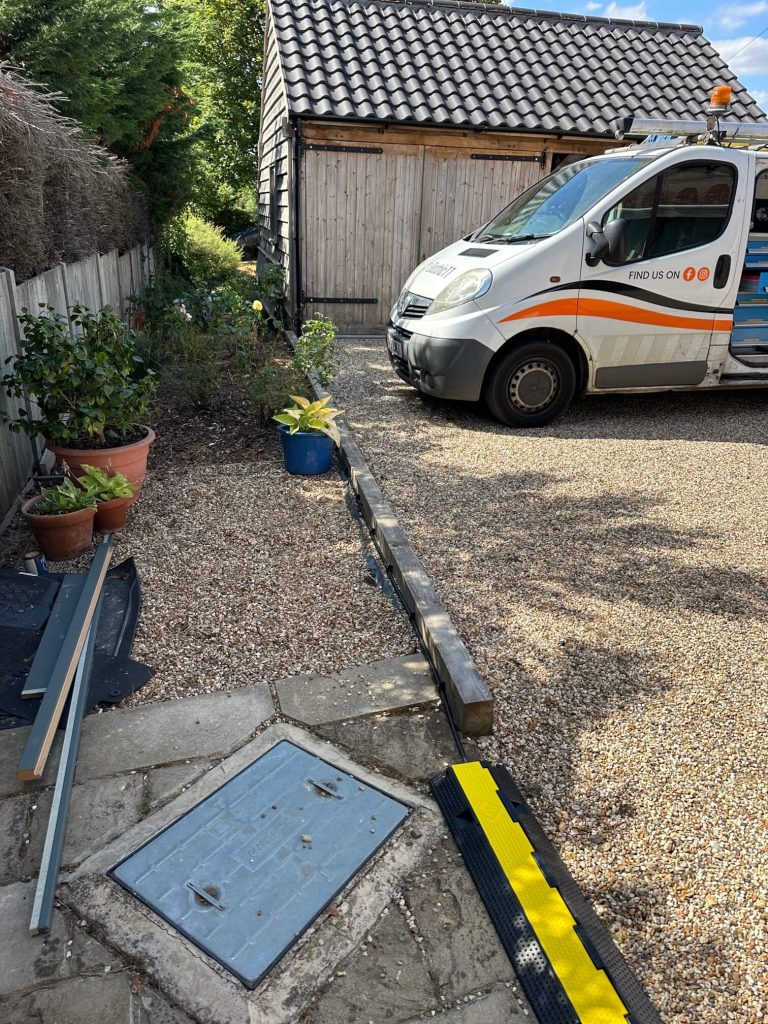
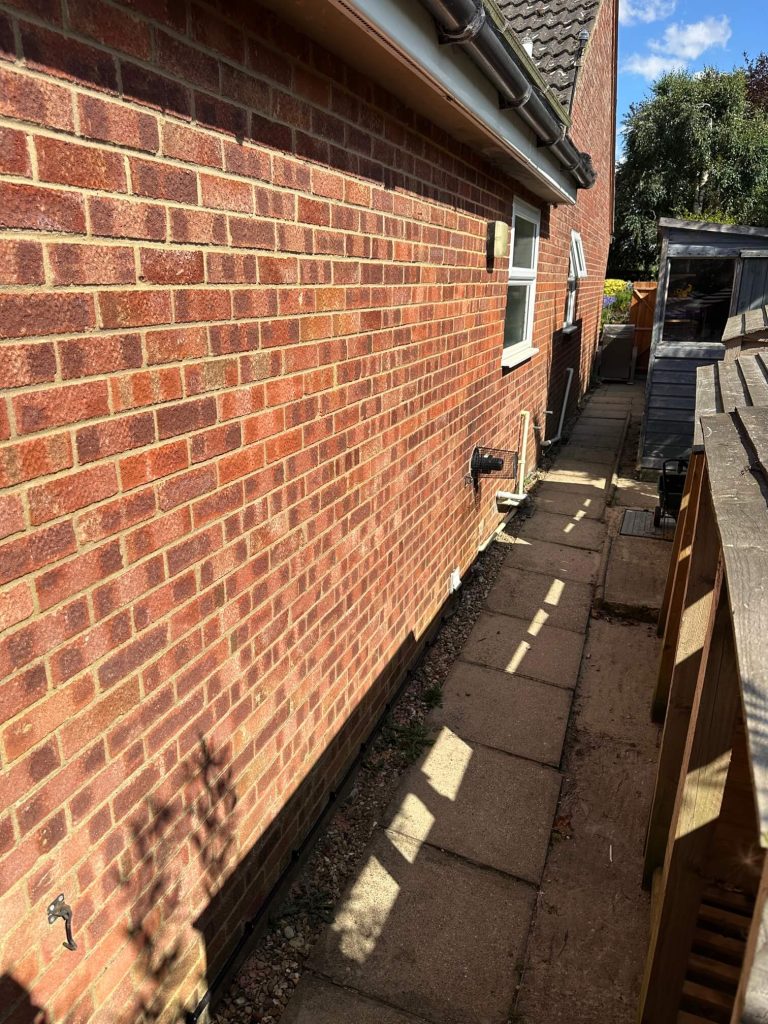
The extended circuit used a 6 mm² live conductor with a 2.5 mm² circuit protective conductor. Cable was secured through the garage and along the external route, including low-level sections beside the brick wall and timber railway sleepers.
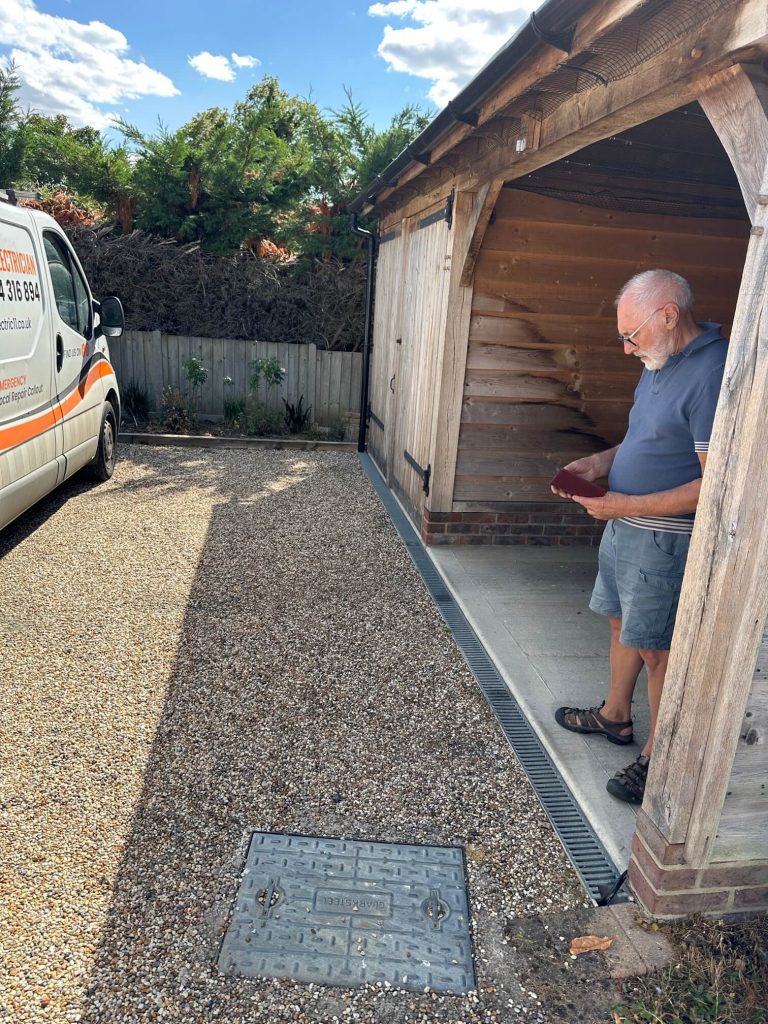
Careful fixing was important because the route crossed working and outdoor areas where loose or poorly positioned cable could be vulnerable to movement or accidental damage. The photographs show the black cable following the perimeter of the building and driveway before reaching the new charger position.
The existing installation remained connected to DB1, circuit 4, with Type B 32 A circuit protection and a Type A 30 mA RCD. Myenergi’s Zappi specification lists a 7 kW single-phase model with a maximum current of 32 A, which is consistent with the recorded circuit details. The exact charger nameplate should still be checked if the published page needs a definitive output rating.
Relocating and Reconnecting the Myenergi Zappi
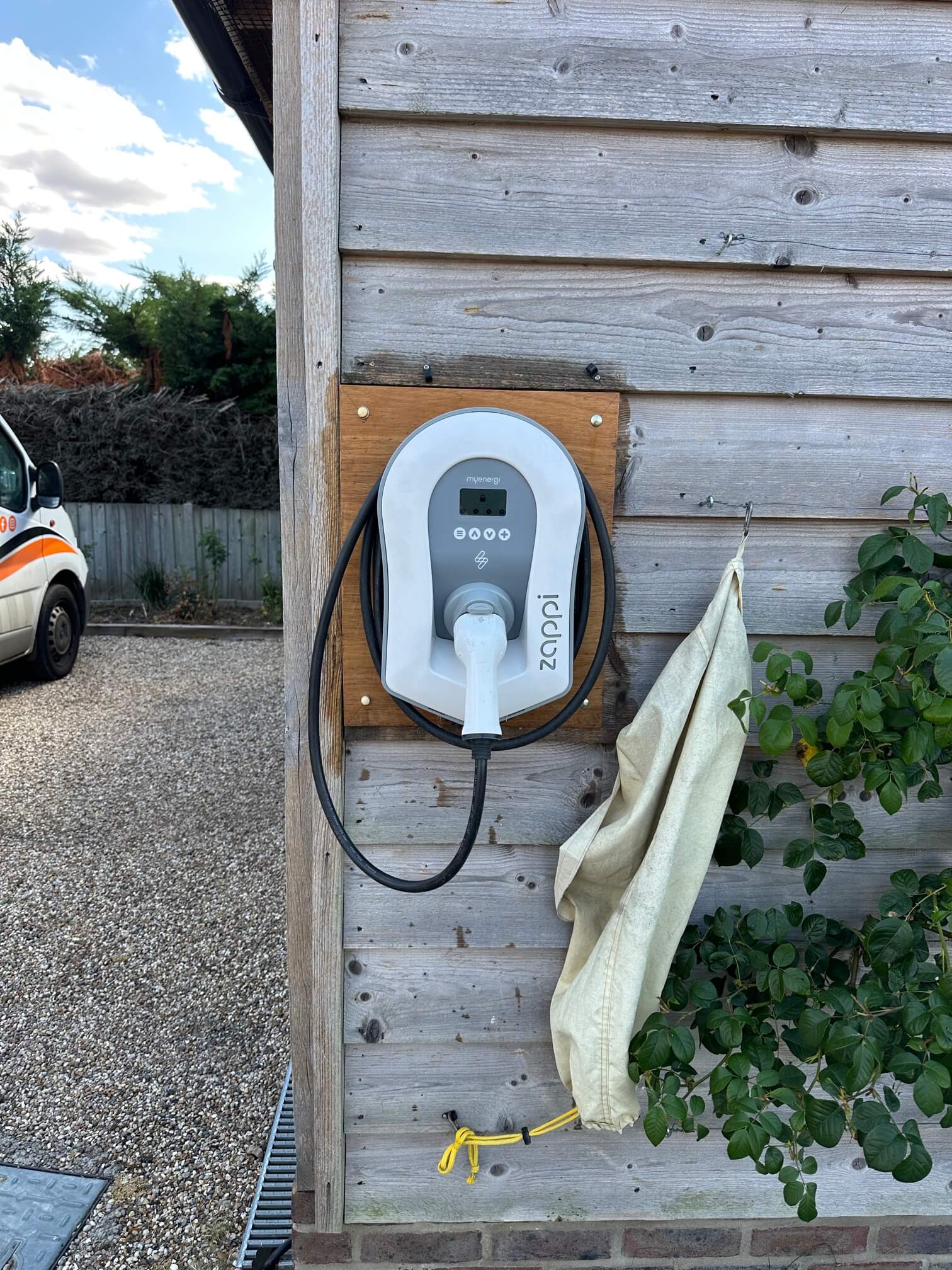
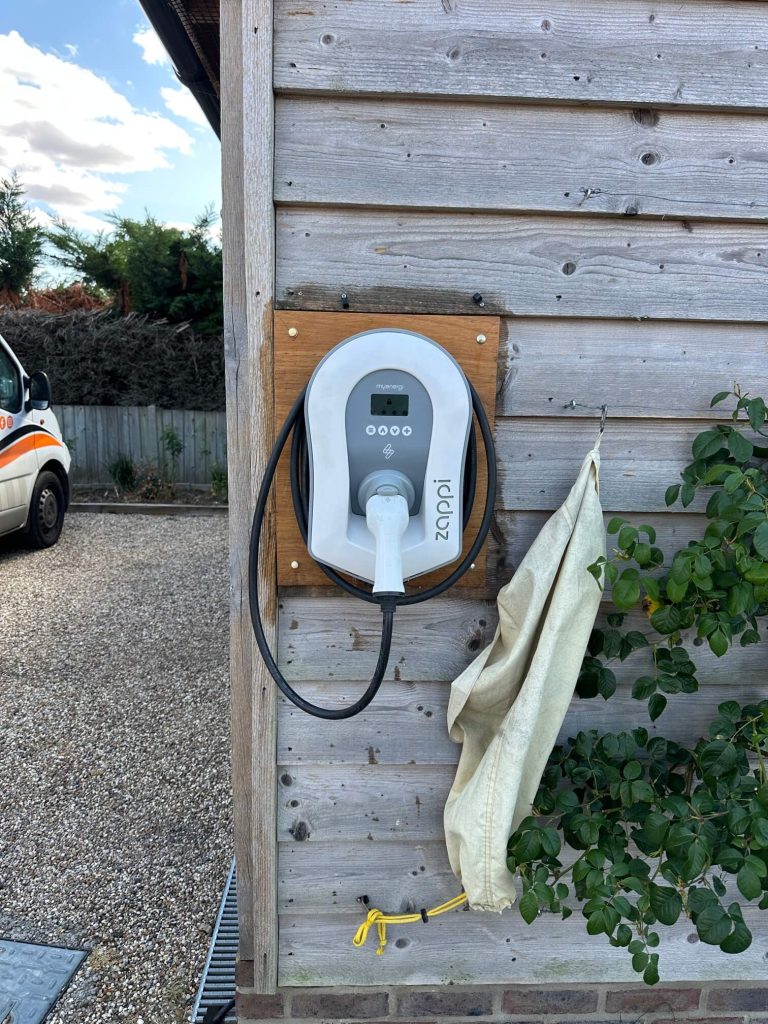
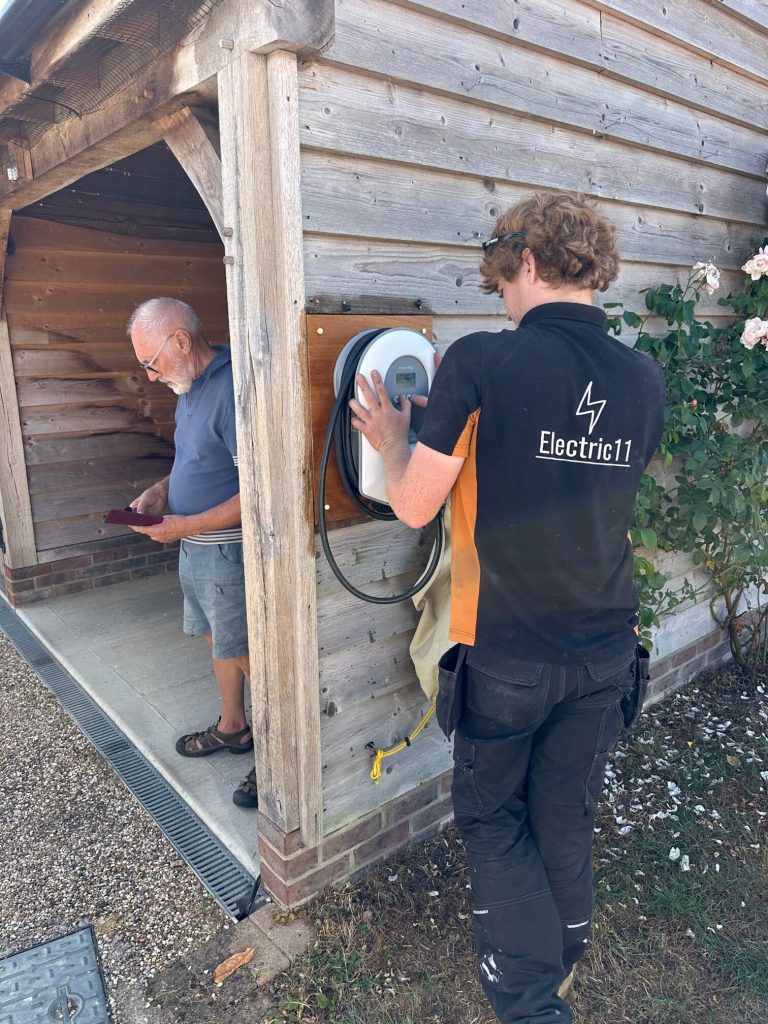
Electric11 mounted the tethered Zappi charger on a timber backing board attached to the garage wall. The selected location provides convenient access from the gravel parking area while keeping the charging cable stored against the building when it is not in use.
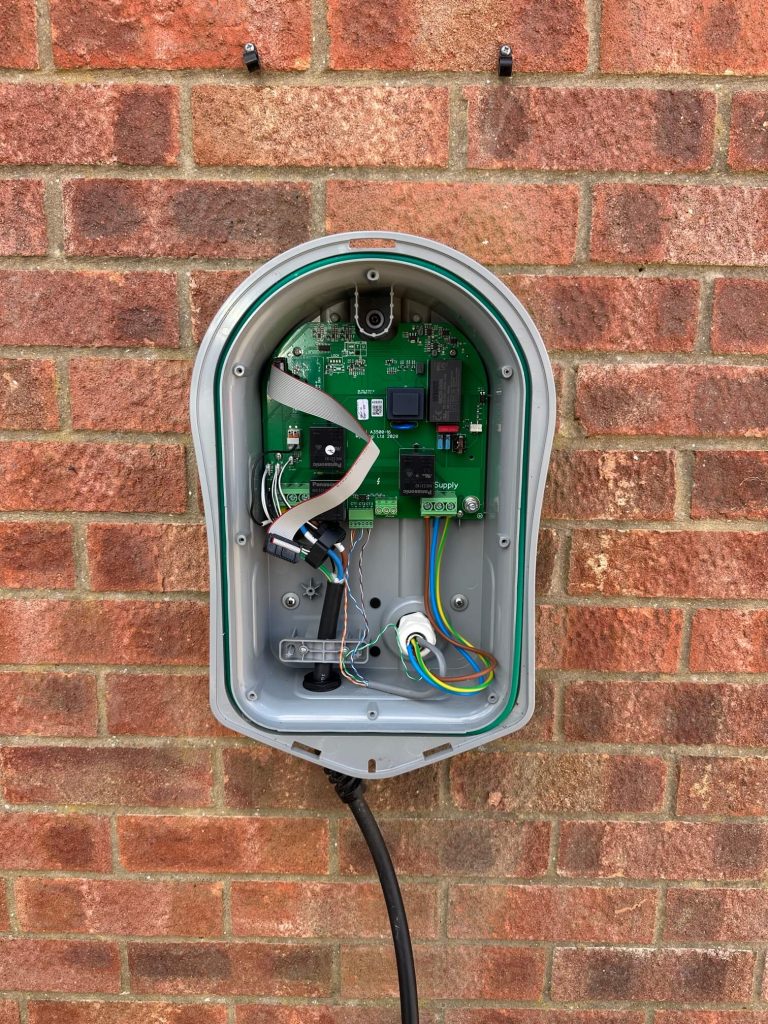
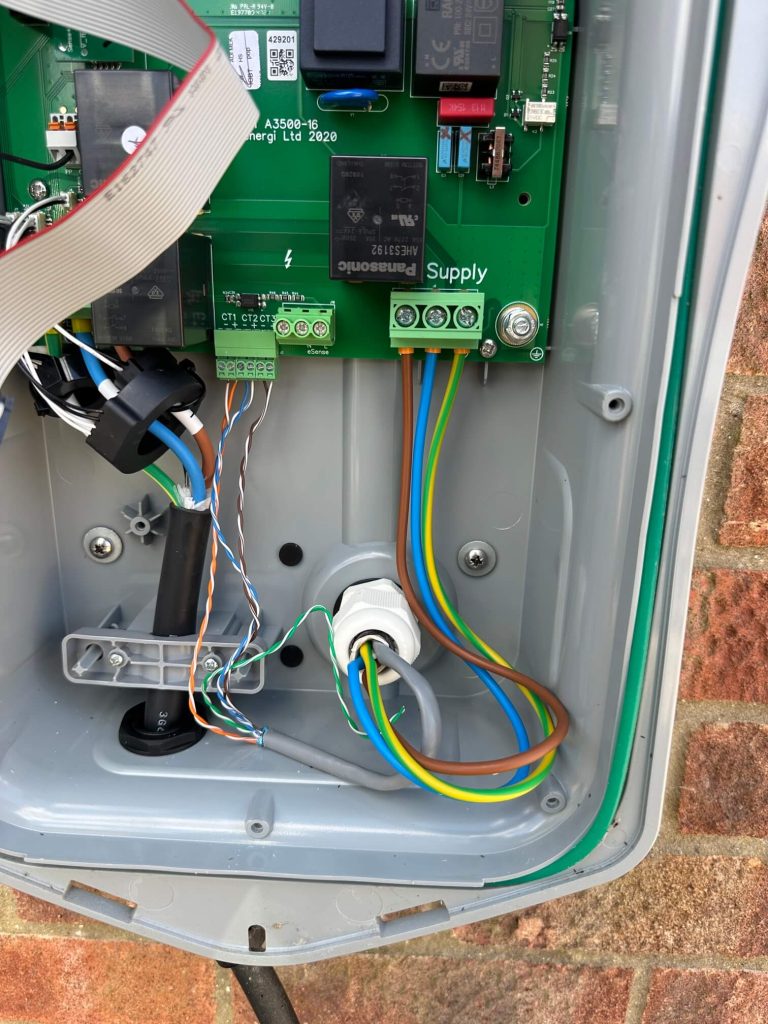
The cover was removed so the extended supply and control wiring could be terminated inside the charger. Photographs document the internal connections, protective earth conductor and control terminals before the enclosure was closed and the charging point was configured.
If an existing distribution board cannot support an EV charging circuit safely, Electric11 can also assess whether consumer unit replacement in Norwich is required before or alongside the charger work.
Electrical Testing and Recorded Results
The extended circuit and relocated charger were tested before being returned to service. The completion record includes the following measurements:
| Test | Recorded result |
| Earth fault loop impedance at DB1 | 0.13 Ω |
| Maximum measured earth fault loop impedance | 0.59 Ω |
| Protective conductor continuity, R1 + R2 | 0.46 Ω |
| RCD disconnection time | 27.3 ms |
These measurements document continuity, fault-loop conditions and RCD operation after the circuit alteration. Electric11 issued a Minor Electrical Installation Works Certificate under BS 7671 for the completed relocation and extension.
Customers who need a broader assessment of their fixed electrical installation can separately arrange an EICR certificate in Norwich.
Work Completed
- Relocated the existing tethered Myenergi Zappi charger by approximately 20 metres.
- Extended the existing EV charging circuit from DB1, circuit 4.
- Routed the cable across the rear garage wall and along the external property route.
- Secured external cable along the brickwork and timber sleepers.
- Mounted the charger on a timber backing board at the new garage position.
- Reconnected the charger using the recorded 6 mm² live and 2.5 mm² protective conductors.
- Retained Type B 32 A circuit protection and Type A 30 mA RCD protection.
- Tested circuit continuity, earth fault loop impedance and RCD disconnection.
- Issued a Minor Electrical Installation Works Certificate.
The Result
The customer can now access the existing Zappi charger from a more convenient position beside the parking area. The extended circuit is securely routed through the garage and around the property, with the charger mounted on the timber outbuilding and the tethered cable stored neatly against the wall.
Because this project moved an existing charger rather than installing additional charging capacity, no incremental yearly savings, energy use or CO₂ reduction have been assigned. Its value lies in improved accessibility, practical cable management and certified electrical work.
Need to Move or Install an EV Charger in Norwich?
Electric11 can assess your parking arrangement, existing charger, consumer unit and proposed cable route before recommending a safe solution. Contact Electric11 to request an EV charger assessment and a clear, no-obligation quote.
Get an EV Charger QuoteElectric11 is composed of a team of local electricians based in Attleborough, offering coverage to the entire Norfolk region. Moreover, through our extensive network, we have forged strong connections with quality tradesmen representing various disciplines in our area.
The Electric11 EV Charger Relocation Process
EV charger relocation depends on careful route planning, suitable circuit protection and complete testing after the alteration. Electric11 follows a structured process designed to keep the charger convenient to use without compromising electrical safety or the long-term condition of the circuit.
Site and Circuit Assessment
The electrician reviews the charger, parking position, existing distribution board, protective devices, earthing arrangement and proposed new location. Cable length, conductor sizing, access restrictions and exposed outdoor sections are considered before the relocation scope is finalised.
Route Planning and Clear Quote
Electric11 agrees the cable route, mounting position and required electrical work with the customer. The quotation sets out the circuit extension, containment, protective equipment, testing and certification so the customer understands what will be completed.
Circuit Extension and Charger Relocation
The circuit is safely isolated before the existing charger is disconnected and moved. New cable is routed and securely fixed through the property, then the charger is mounted and reconnected at the agreed position. For this project, the approximately 20-metre route crossed the garage and continued around the exterior to the timber outbuilding.
Inspection, Testing and Certification
The altered circuit is inspected and tested before the charger is returned to service. Electric11 records the relevant continuity, earth fault loop and RCD results and issues the applicable electrical certificate for the completed work.
Electric11 relocated the existing Zappi charger by approximately 20 metres, extending the circuit through the garage and along the exterior of the property.
The completion record lists a 6 mm² live conductor, 2.5 mm² circuit protective conductor, Type B 32 A protective device and Type A 30 mA RCD.
Electric11 recorded protective conductor continuity, earth fault loop impedance and RCD disconnection time. The maximum measured loop impedance was 0.59 Ω, R1 + R2 was 0.46 Ω and the recorded RCD time was 27.3 ms.
Yes. Electric11 issued a Minor Electrical Installation Works Certificate under BS 7671 for the altered EV charger circuit.
The project relocated and extended the existing charging circuit rather than upgrading the charger. The 32 A circuit is consistent with a 7 kW single-phase Zappi, but the charger nameplate should be checked for the exact model rating.
Yes. Electric11 can assess the charger, circuit, proposed position and cable route before confirming whether relocation is practical and what electrical alterations are required.

