

How Much Does It Cost to Install Solar Panels? (2026 Norfolk Price Guide)



Solar panel installation in Norfolk typically costs from around £3,000–£4,000 for a small system, £5,000–£8,500 for a mid-size domestic roof system, and more for larger or ground-mounted setups. The final price depends on your system size, roof type, access, inverter choice, and whether you add battery storage. This guide breaks down the main cost factors, real Norfolk installation examples, and what to consider before requesting a solar quote.
Energy bills aren’t getting any cheaper, and more Norfolk homeowners are looking at solar as a way to take back some control. But before committing to anything, most people want a straight answer to one question: what’s this actually going to cost?
This guide breaks down real solar panel installation costs in Norfolk, what changes the price up or down, and how battery storage, VAT, and government schemes fit into the picture.
Quick Cost Overview
There’s no single price for “solar panels” — it depends on system size, whether you add a battery, and whether panels go on the roof or the ground. As a general guide:
| System type | Typical starting cost |
| Small system (1.8–2kW, e.g. shed or outbuilding) | From roughly £3,000–£4,000 |
| Mid-size domestic roof system (3.5–4.5kW) | Typically £5,000–£8,500 |
| Solar with battery storage added | From around £4,500 |
| Battery storage alone (retrofit, no panels) | From £2,500 (currently VAT-exempt) |
| Larger ground-mounted or solar farm systems (6kW+) | Priced individually based on site survey |
These figures sit in line with Electric11’s solar panel installation service, where every job starts with a free, no-obligation survey of your roof space, energy usage, and electrical capacity before a fixed quote is given.
Get a personalised solar installation estimate.
What Affects the Cost of Solar Panel Installation
A handful of factors push the price up or down from the baseline:
- System size (kW). More panels mean more generation, but also a higher upfront cost. Most homes land somewhere between 3kW and 6kW depending on roof space and usage.
- Roof type and pitch. Straightforward pitched roofs with good south-facing aspect are quickest and cheapest to fit. Flat roofs, multiple roof faces, or unusual angles can add time and mounting hardware.
- Panel type. Standard panels are the most cost-effective; full-black, higher-efficiency panels (commonly used by Electric11 for a neater finish) cost a little more per panel.
- Inverter choice. A hybrid inverter (needed if you want battery storage now or in future) costs more than a standard string inverter.
- Battery storage. Adding a battery lets you store unused daytime generation for the evening, but adds a separate cost on top of the panels themselves — see below.
- Roof-mounted vs ground-mounted. Ground-mounted solar panels are easier to maintain and clean since there’s no roof access needed, but require suitable outdoor space and a separate mounting structure.
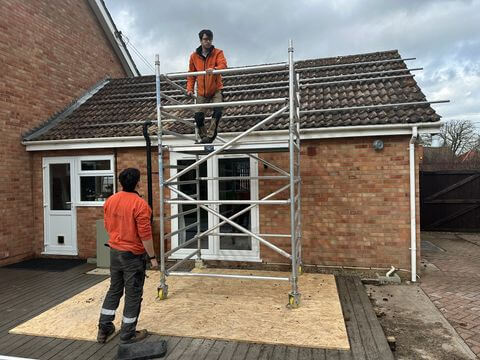
- Scaffolding and access. Difficult access, steep roofs, or properties needing scaffolding will add to labour costs.
Real Norfolk Solar Installation Examples
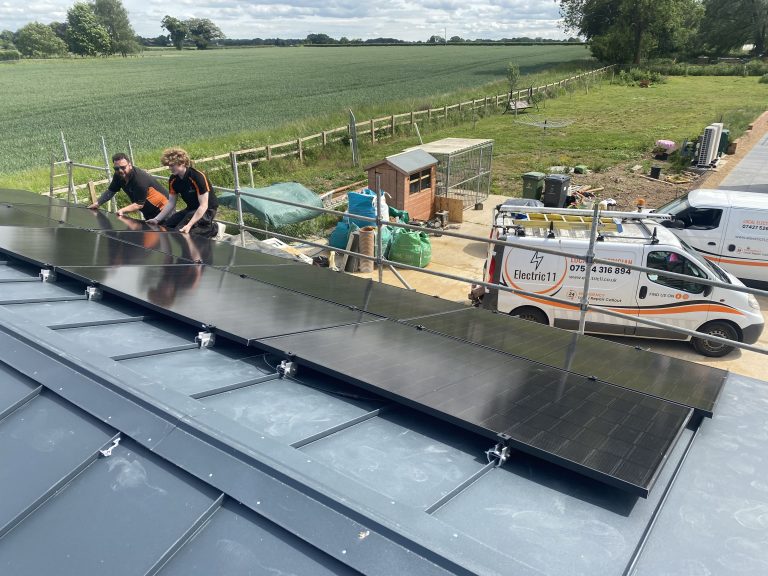
Rather than guessing, it helps to see what similar properties have actually paid for and generated. Electric11 publishes real completed project data from across Norfolk, including:
- A 3.9kW bungalow installation in Attleborough (12 panels, hybrid inverter, 5kWh battery) generating around 3,400 kWh a year, saving an estimated £918 annually and cutting the property’s grid reliance by roughly 70%.
- A 1.82kW shed/outbuilding system in Attleborough (4 panels, no battery) generating around 1,300 kWh a year and saving roughly £351 annually — a useful example of a smaller, lower-cost setup.
- A 6.2kW ground-mounted solar farm in Breckland (14 panels across three arrays, hybrid inverter, 5.18kWh battery) generating an estimated 5,706 kWh a year, with annual savings around £601 and a 67% cut in grid reliance.
- A 4kW carport solar array, generating around 3,224 kWh a year with estimated annual savings of £576.
These examples show how much system size, battery inclusion, and property type affect both the upfront cost and the ongoing savings — which is why a proper site survey matters more than a generic price list.
Solar Plus Battery Storage: Is It Worth the Extra Cost?
A battery isn’t compulsory, but it changes how much value you get from your panels. Without one, electricity your panels generate during the day that you don’t use immediately is exported back to the grid — often for a small payment, but far less than what you’d save by using it yourself. With a battery, that surplus is stored and used in the evening instead.
Electric11’s home battery storage service starts from £2,500 for a standalone retrofit, and battery storage is currently VAT-exempt — meaning the headline price is the price you pay. Combined solar-plus-battery installations typically start from around £4,500 depending on system size.
VAT, Grants, and Export Payments
A few financial details are worth knowing before you get quotes:
- 0% VAT on residential solar and battery installations. Most home solar PV and battery storage installations in the UK currently qualify for 0% VAT — a significant saving compared to the standard rate. This relief is time-limited, so it’s worth checking current eligibility before committing.
- MCS certification matters. Installers certified under the Microgeneration Certification Scheme (MCS) — the UK’s official quality mark for small-scale renewable installations — meet recognised standards for design, installation, and performance, and MCS certification is usually required to access government-backed schemes.
- Smart Export Guarantee (SEG). Once your system is installed by an MCS-certified installer, you can apply to an energy supplier for Ofgem’s Smart Export Guarantee, which pays you for any surplus electricity you export back to the grid. Rates vary by supplier, so it’s worth comparing tariffs once your system is live.
Don’t Forget Ongoing Maintenance
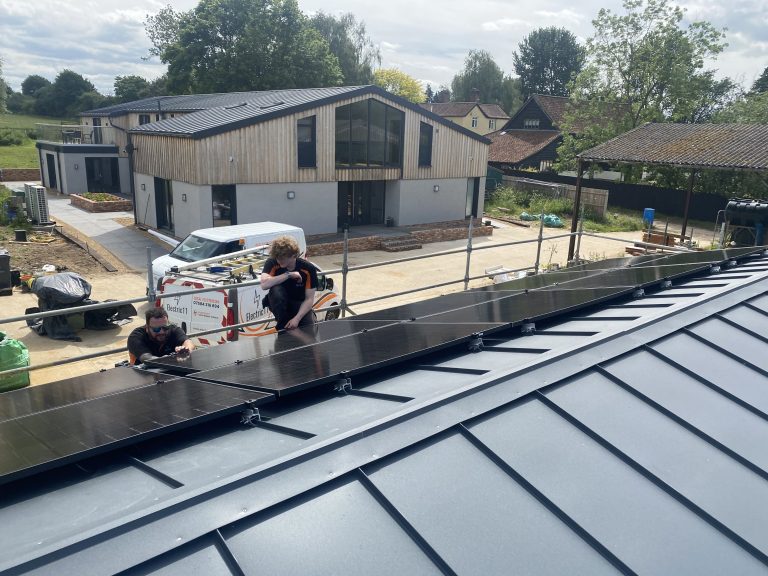
Solar panels are low-maintenance, but not zero-maintenance. A yearly check helps catch small issues — loose connections, reduced output, debris build-up — before they become bigger (and more expensive) problems. Electric11’s solar panel maintenance service is a fixed-price annual service, which is worth budgeting for alongside your installation cost.
Planning Ahead: Solar, Batteries, and EV Chargers Together
If you’re already investing in solar, it’s worth thinking about how it fits with other electrical upgrades. Many Norfolk homeowners pair solar and battery storage with an EV charger installation, so daytime solar generation can be used to charge a car instead of being exported for a fraction of the value. Planning these together — even if you install in stages — can avoid paying twice for electrical groundwork.
FAQs
How long does solar panel installation take? Most domestic roof installations are completed in a day or two, depending on system size and access. Ground-mounted systems and larger commercial installations take longer due to groundwork and array assembly.
Do I need a battery to install solar panels? No — solar panels work without a battery, exporting unused electricity to the grid. A battery simply lets you use more of what you generate yourself, which usually improves the financial return over time.
Is my roof suitable for solar panels? Most pitched roofs with reasonable sun exposure are suitable. A site survey will confirm roof condition, orientation, shading, and structural suitability before any quote is finalised.
How much can I save with solar panels? Savings depend on system size, household usage, and whether you have a battery. Real Norfolk installations Electric11 has completed show annual savings ranging from roughly £350 for a small system to over £900 for a mid-size domestic system with battery storage.
What’s the difference between roof-mounted and ground-mounted solar? Roof-mounted systems use existing roof space and are the most common choice for homes. Ground-mounted systems sit at ground level, which makes cleaning and repairs easier, but they need suitable outdoor space.
Get a Free Solar Quote for Your Norfolk Property
Every property is different, which is why Electric11 starts every solar enquiry with a proper site survey rather than a generic quote. As an MCS-qualified installer covering Attleborough, Norwich, Wymondham, and the wider Norfolk area, Electric11 can talk you through system size, battery options, and realistic costs for your home or business.
Contact Electric11 today for a free, no-obligation solar quote.
Send us a message
"*" indicates required fields

