
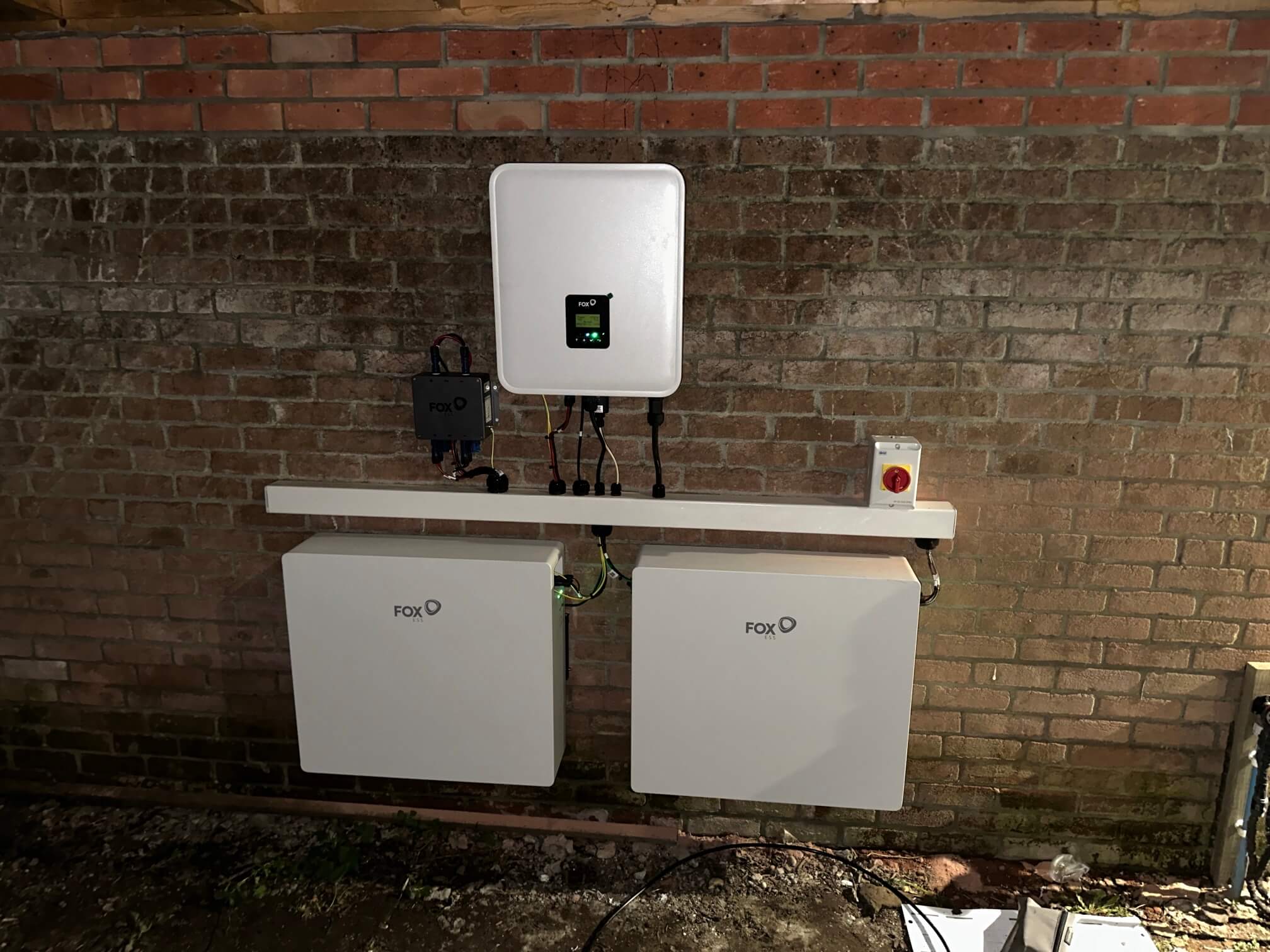
Can You Add a Battery to Existing Solar Panels? A Norfolk Homeowner’s Guide




Yes, you can often add a battery to existing solar panels without replacing the panels themselves. The right approach depends on your current inverter, the condition of the installation and what you want the battery to do.
For many Norfolk homeowners, the question arises after living with solar for a while. Your panels may generate electricity while you are at work, but your household uses more power after you get home. A battery can help shift some of that daytime generation into the evening.
However, compatibility is only the starting point. You also need to consider storage capacity, installation costs, electricity tariffs and whether you want backup power during an outage.
This guide explains the main ways to add a battery to existing solar panels, the checks an installer should make and how to decide whether an upgrade makes sense for your property.
What changes when you add battery storage?
Without a battery, solar electricity is available to your household as it is generated. Electricity you do not use may be exported to the grid.
Battery storage gives you another option: keeping some of that surplus for later.
Imagine a household in Attleborough where the property is largely empty during the day. Solar generation may be strongest when demand is low. In the evening, the family returns home and switches on lights, cooking appliances and entertainment equipment.
A suitably designed battery system can move some electricity between those two periods. It does not make the panels generate more; it changes when the household can use the energy.
Some systems can also charge from the grid during cheaper tariff periods. Whether that is worthwhile depends on the tariff, charging losses and how the battery is controlled.
The first question to ask is therefore practical: when are you exporting electricity, and when are you buying it back?
How can you add a battery to existing solar panels?
There are two common approaches to a solar battery retrofit: adding an AC-coupled battery system or connecting a compatible battery through a hybrid inverter.
AC and DC describe different forms of electricity. Your panels produce direct current, or DC. Your household electrical system uses alternating current, or AC. Inverters manage the conversion between them.
Option one: add an AC-coupled battery system
An AC-coupled battery storage system uses a battery inverter alongside the existing solar inverter.
This can be a practical retrofit route when your current solar equipment works well and you want to retain it. GivEnergy, for example, identifies its AC-coupled inverter as an option for adding storage to existing solar installations. GivEnergy’s battery system information
In this arrangement, the solar inverter continues converting panel output into electricity for the property. The battery system connects on the AC side and manages charging and discharging through its own equipment.
Keeping the existing inverter can reduce the extent of changes to the solar installation. However, the installer still needs to check system controls, metering, electrical protection and any network requirements.
Ask how the proposed battery will detect surplus generation and how its monitoring will work alongside your existing solar app.
Option two: use a compatible hybrid inverter
A hybrid inverter combines solar and battery functions. A compatible battery can connect through it, allowing the system to manage generation and storage together. GivEnergy’s hybrid inverter information
If your existing inverter already supports batteries, adding storage may be relatively straightforward. The exact inverter model still matters: a battery connector or “battery-ready” description does not establish compatibility with every battery.
If your current inverter cannot support a suitable battery, replacing it with a hybrid model may be worth considering. That decision should account for its age, condition, remaining warranty and the cost of the complete upgrade.
Which approach is better for your home?
Neither route is automatically best for every installation.
| Consideration | AC-coupled retrofit | Hybrid inverter approach |
|---|---|---|
| Existing solar inverter | Can often remain in place | May remain if compatible, or require replacement |
| Equipment arrangement | Separate solar and battery conversion equipment | Solar and battery functions managed through a hybrid inverter |
| Main question | How will the new battery work alongside the existing system? | Which batteries and panel configurations does the inverter support? |
| Worth discussing when | Existing solar equipment is working well | The inverter is compatible, ageing or due for replacement |
Compare complete designs, rather than choosing solely by the coupling method.
What must an installer check before recommending a battery?
A useful assessment starts with the equipment you already own and the way your household uses electricity.
Your inverter and existing solar equipment
Have the inverter make, model and installation date available if possible. Photographs of its label and your original installation documents can help.
The installer should establish:
- Whether the inverter supports compatible batteries.
- Whether an independent battery system would be more suitable.
- Whether existing faults need attention.
- Whether proposed changes affect warranties or monitoring.
- Whether the solar configuration suits any replacement inverter.
If generation has dropped unexpectedly, investigate the cause first. Adding storage will not correct a fault that is reducing the electricity available to store. Electric11 provides solar panel maintenance in Norfolk for existing installations.
Your electrical installation
The assessment should include the relevant electrical supply, protective equipment, earthing arrangements and cable routes.
A battery retrofit does not automatically mean replacing your consumer unit. Equally, a quote should not assume that every existing installation can accept new equipment without changes.
Ask the installer to explain any additional work and why it is necessary.
Your generation and consumption patterns
Annual electricity consumption alone cannot show how useful a battery will be.
Two households can use the same annual amount while having very different routines. Someone working from home may already use much of their solar generation directly. A household that is empty until late afternoon may export more and buy more electricity in the evening.
Useful information includes electricity bills, smart-meter consumption data, solar monitoring records and export readings. Several months of data are more informative than a single sunny day.
What size battery do you need?
The right battery size depends on the energy available to charge it and the demand it is intended to cover.
Understand capacity and power output
Battery capacity is measured in kilowatt-hours, or kWh. It describes an amount of stored energy.
Power output is measured in kilowatts, or kW. It describes how quickly the system can supply that energy.
A battery can have enough capacity for an evening’s consumption but still be unable to meet every appliance’s demand at once. If the oven, kettle and other equipment operate together, the grid may supply part of the load.
Ask about both usable capacity and continuous discharge power. Also ask whether keeping a reserve for backup reduces the capacity available for everyday use.
Size storage around evidence
Suppose your monitoring shows regular daytime exports followed by substantial evening imports. That is a useful starting point for modelling storage.
The installer should consider how often a proposed battery would fill, how often it would discharge and whether the household could use its stored energy.
Future plans matter too. An electric vehicle or heat pump may change demand, but the design should reflect a realistic plan rather than an assumed future purchase.
A larger battery may offer flexibility, yet unused capacity still costs money.
How much does a solar battery retrofit cost?
There is no reliable single price for adding storage to every existing solar installation.
The total depends on the battery, inverter arrangement, installation location and any additional electrical work. Backup capability can also change the scope.
When comparing solar battery retrofit cost, ask for a written breakdown covering:
- Battery model and usable capacity.
- Battery inverter or hybrid inverter, where required.
- Installation, cabling and protective equipment.
- Monitoring and control equipment.
- Any electrical remedial work.
- Network application or notification responsibilities.
- Backup equipment and circuits, if included.
- Testing, commissioning and applicable certification.
- VAT treatment and exclusions.
A low equipment price is not necessarily the complete installed cost.
Likewise, two batteries advertised with similar capacities may have different output limits, warranties and operating features. Compare what each proposal will deliver in your property.
Is adding a battery worth it financially?
The financial case depends on how much useful energy you can shift and the value of doing so.
Storing electricity can reduce later grid purchases, but it may also reduce export income. Charging and discharging involves losses, and tariffs can change.
Energy Saving Trust’s research highlights that adding a battery can improve bill savings without necessarily recovering its cost within its expected lifetime, particularly where a household has a favourable export tariff. Energy Saving Trust’s technology and tariff research
Compare avoided imports with lost export income
Consider this simplified, hypothetical example:
- Exported electricity earns 15p per kWh.
- Imported electricity costs 30p per kWh.
- One kWh sent into storage delivers 0.9kWh back to the home.
Using that stored electricity avoids 27p of imports, while giving up 15p of export income. The difference is 12p before considering the equipment cost, degradation and other expenses.
These are illustrative figures, not current tariff rates or an Electric11 savings estimate. They show why storing electricity is not automatically better than exporting it.
Look at the whole tariff
A suitable battery may also charge during cheaper grid periods. However, compare the whole tariff, including peak rates, standing charges, export terms and eligibility requirements.
Request a savings estimate based on your own consumption and generation records. It should explain its assumptions and distinguish predicted annual savings from guaranteed outcomes.
A useful proposal will also show how the result changes if prices or household routines change.
Will a solar battery work during a power cut?
Battery storage does not automatically provide backup power.
A system designed for everyday energy management may stop supplying the property when the grid fails. Backup requires compatible equipment and an installation designed for that purpose.
Tesla’s UK guidance illustrates the distinction: its Powerwall 3 non-backup configuration does not supply the home during an outage. Tesla’s backup and non-backup guidance
If backup matters to you, ask:
- Which circuits would remain powered?
- Is switching automatic?
- What is the maximum backup output?
- Can solar continue charging the battery during an outage?
- How much energy will be reserved?
- Which appliances should remain switched off?
Keeping lights, a router and refrigeration running is a different requirement from supporting all household appliances.
Discuss the required duration as well. Backup time depends on available stored energy and the loads operating during the outage.
What about network requirements and solar payments?
Adding a battery can change the grid connection assessment
Do not assume that the approval or notification for your original solar installation covers every future battery upgrade.
The installer needs to assess the combined system and establish the applicable connection process. Energy Networks Association identifies G98 and G99 as connection requirements relevant to electricity storage. Energy Networks Association’s storage guidance
Ask who will handle the paperwork and whether any approval is required before installation.
Check Feed-in Tariff metering before changing equipment
If your panels receive Feed-in Tariff payments, mention this early.
Ofgem explains that adding storage need not affect payments provided eligible generation, and metered export where applicable, can still be measured accurately and separately from other sources. Ofgem’s guidance for FIT generators
Have the proposed arrangement checked before equipment is changed, particularly where grid charging is included. If you receive export payments under another tariff, confirm your supplier’s terms for the proposed storage setup.
Planning a battery retrofit for a Norfolk property
Location and layout can make a significant difference to installation.
A detached property near Diss may offer different cable routes and mounting options from a terraced home in Norwich. A garage might be convenient, but its suitability still requires assessment.
Ask the installer to explain the proposed location, including access, equipment clearances, environmental conditions and applicable safety requirements. Choose the position through the survey rather than treating any available wall as suitable.
Seasonal performance also deserves attention. For an October assessment, use records covering different parts of the year. A battery sized around summer exports may behave differently during periods of lower solar generation.
If winter operation relies partly on off-peak grid charging, that should be clear in the design and savings estimate.
A local example of upgrading existing battery storage
Electric11’s published Pylontech battery storage upgrade in Wymondham describes adding storage to an existing Victron installation.
This was an expansion of a system that already had batteries, rather than a first battery added to a solar-only home. It offers a useful example of why the existing equipment matters: an upgrade should work with the installation’s controls and configuration.
For homeowners considering a first battery, the same assessment principle applies. Identify what is already installed, establish compatibility and design around the intended use.
Electric11’s home battery storage in Norfolk service covers both new installations and existing solar setups, with its website identifying MCS-certified solar and battery specialists.
What should you prepare before requesting a quote?
Gather the information you have, without worrying if some original paperwork is missing:
- Inverter make, model and photographs.
- Solar installation date and available certificates.
- Recent electricity bills and tariff details.
- Generation and export records.
- Details of any FIT or export payments.
- Likely locations for the new equipment.
- Your main goal: evening energy use, tariff savings, backup or future expansion.
Then ask the installer to explain why the recommended approach suits those goals.
When deciding whether to add a battery to existing solar panels, the strongest starting point is your current system and household data. Those details make it possible to compare a practical upgrade with leaving the installation as it is.
Frequently asked questions
Can you add a battery to existing solar panels without replacing them?
Yes, in many cases the existing panels can remain. An installer may recommend an AC-coupled battery system alongside the current solar inverter, or a compatible battery connected through a hybrid inverter. The appropriate route depends on the equipment, electrical installation and intended use. Panel replacement is not an automatic requirement for adding storage.
Do I need a new inverter for a solar battery?
Not always. An AC-coupled retrofit can often retain the existing solar inverter and add separate battery equipment. If your current hybrid inverter supports a suitable battery, replacement may also be unnecessary. Ask the installer to verify the exact model and compatibility rather than relying on a general “battery-ready” description.
Can I add a battery to an older solar installation?
Possibly. The age of the panels alone does not determine suitability. The installer should check the inverter, system condition, electrical connections and metering arrangements. For older installations receiving Feed-in Tariff payments, accurate measurement of eligible generation is especially relevant. Existing faults should be investigated before making a storage investment.
Will adding a battery eliminate my electricity bill?
No. You may still import electricity when the battery is depleted, when demand exceeds its output or when solar generation is insufficient. Standing charges can also remain. The financial outcome depends on capacity, tariffs, losses and household routines, so a quote should use your own data rather than promise a zero bill.
Can a solar battery charge from the grid in winter?
Many systems support grid charging, but this must be confirmed for the proposed equipment and configuration. A suitable tariff may allow charging during cheaper periods for use later. Compare the overall tariff and account for charging losses. Also check that the arrangement is compatible with any existing generation or export payment scheme.
How do I arrange a solar battery assessment in Norfolk?
Contact Electric11 with your inverter details, recent bills and any generation records. Explain whether you want to use more solar electricity, explore off-peak charging or discuss backup power. Electric11 provides home battery storage services for Norfolk properties and can discuss options for existing solar installations. Call 01953 661 155 or email electric11@electric11.co.uk.
Discuss battery storage for your existing solar panels
If you want to add a battery to existing solar panels, Electric11 can assess your Norfolk property and discuss a suitable approach to compatibility, capacity and installation.
Explore home battery storage in Norfolk, call 01953 661 155, or email electric11@electric11.co.uk. Share your inverter details and what you want the upgrade to achieve so the discussion starts with your home’s needs.
Send us a message
"*" indicates required fields

