
Pump Supply Investigation and Trenching in East Runton




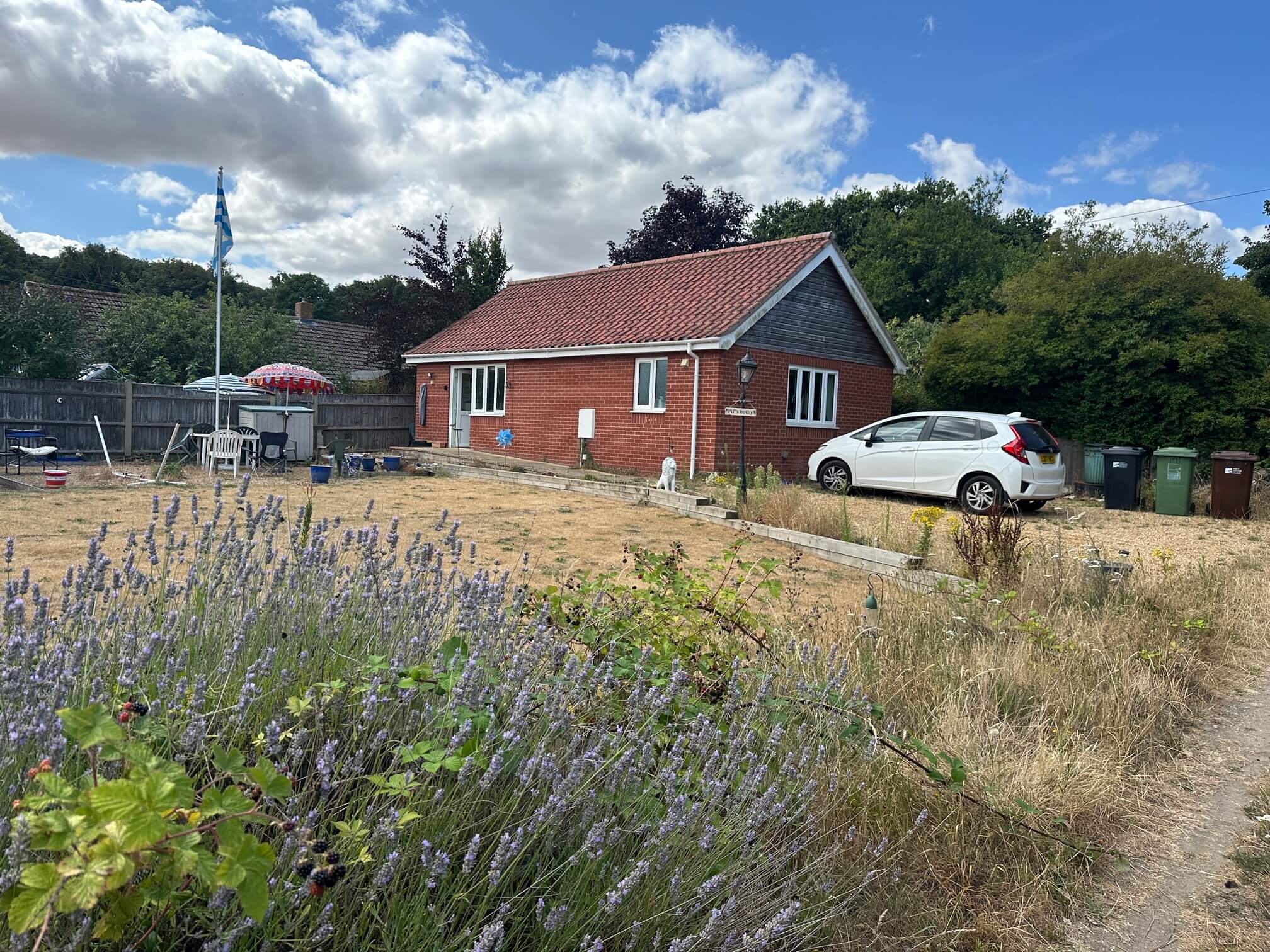
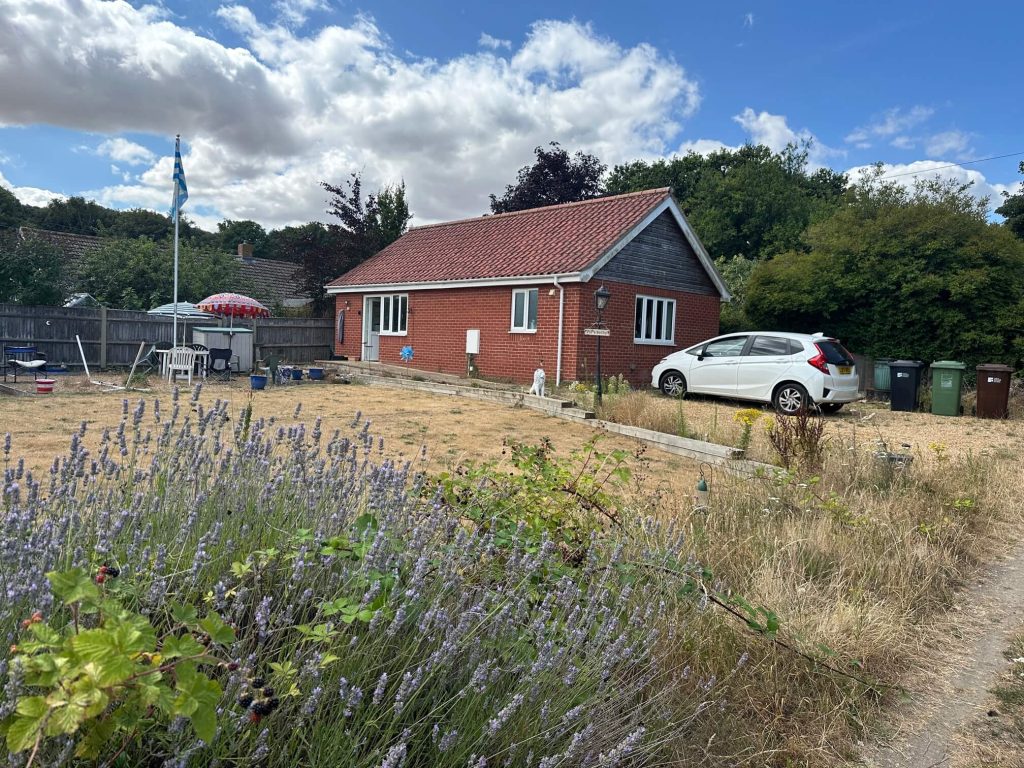
Electric11 completed trenching for a proposed outdoor pump supply at Pip’s Bothy in East Runton and inspected the existing pump and electrical equipment. The work established a protected route between the property and the underground pump chamber while documenting the 1.1 kW pump, incoming supply, earthing arrangement and cable condition. Final connection, protection and certification details still require confirmation from the completion records.
This type of project needs more than a convenient outdoor connection. Cable routing, mechanical protection, isolation, earthing and circuit protection all have to suit the environment and the connected equipment. Electric11’s power supply services cover new and altered electrical supplies for equipment in domestic and commercial settings.
Project Overview
| Detail | Information |
| Location | Pip’s Bothy, Lower Common, East Runton |
| Property type | Detached residential bungalow |
| Job type | Outdoor pump electrical installation works |
| Main equipment | Existing MEG Enviro 100 single-phase water pump |
| Pump input rating | 1.1 kW |
| Confirmed completed work | Trenching for the pump installation |
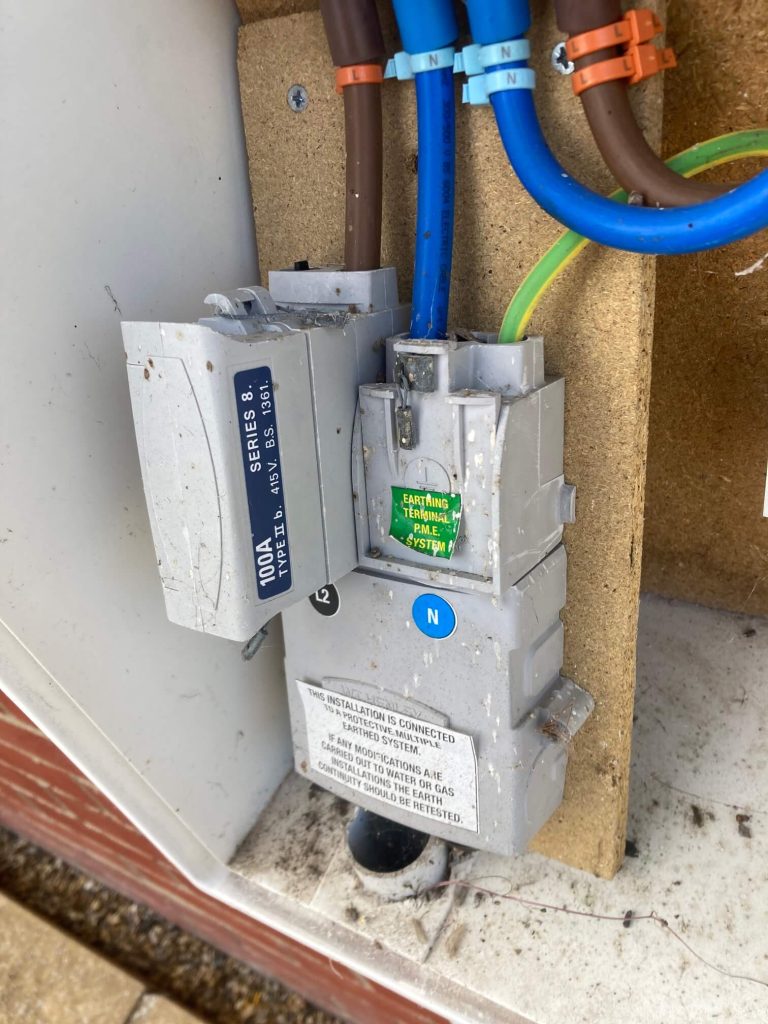
| Additional documented work | Inspection of the pump chamber, cable, meter, main switch and PME earthing arrangement |
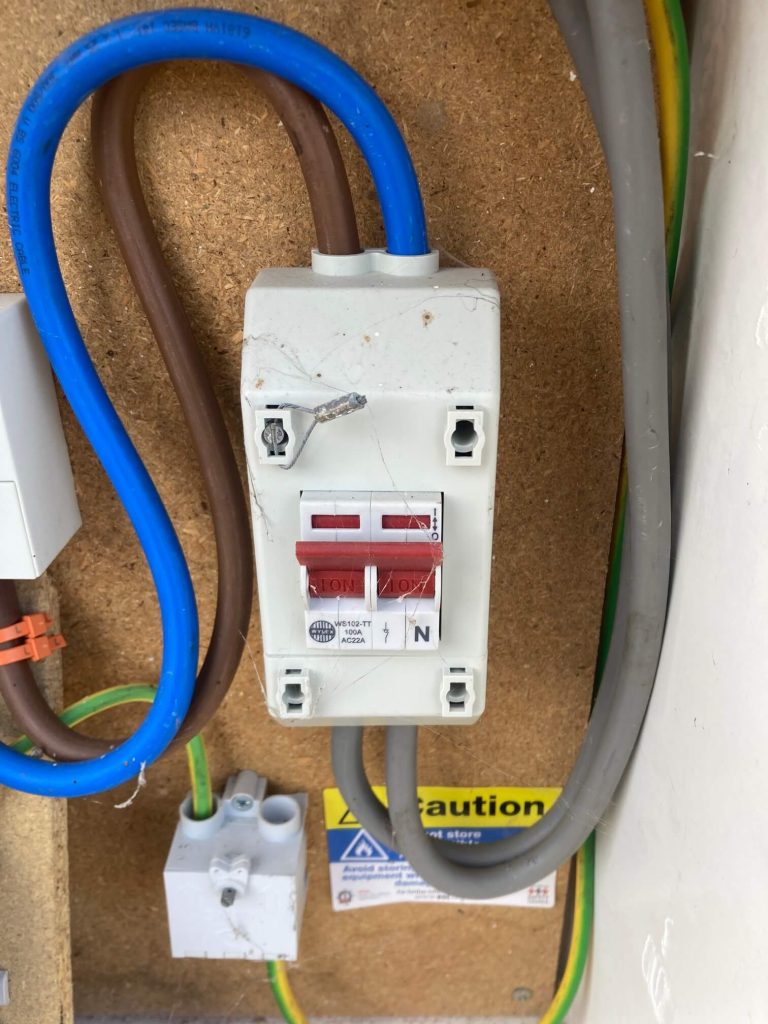
| Switch-fuse scope | A switch fuse for the pump is listed in the job brief; final specification requires confirmation |
The challenge
The pump equipment was positioned away from the house in an underground chamber. Supplying equipment in this location called for a protected cable route across the grounds, accessible isolation and careful coordination with the existing electrical intake.
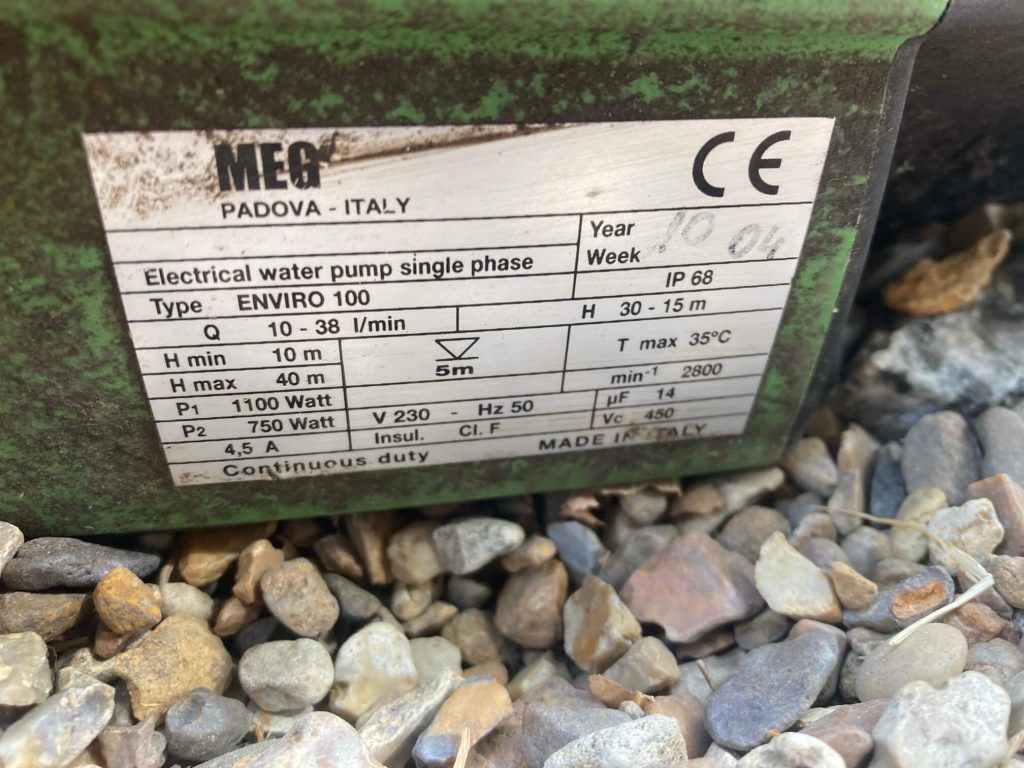
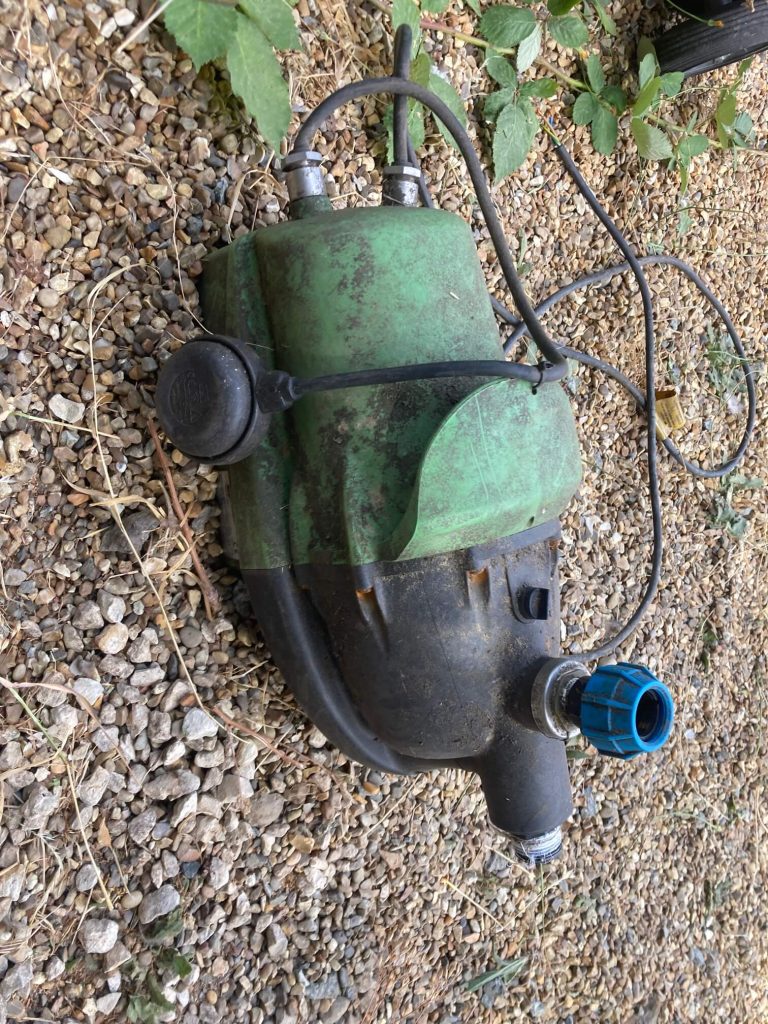
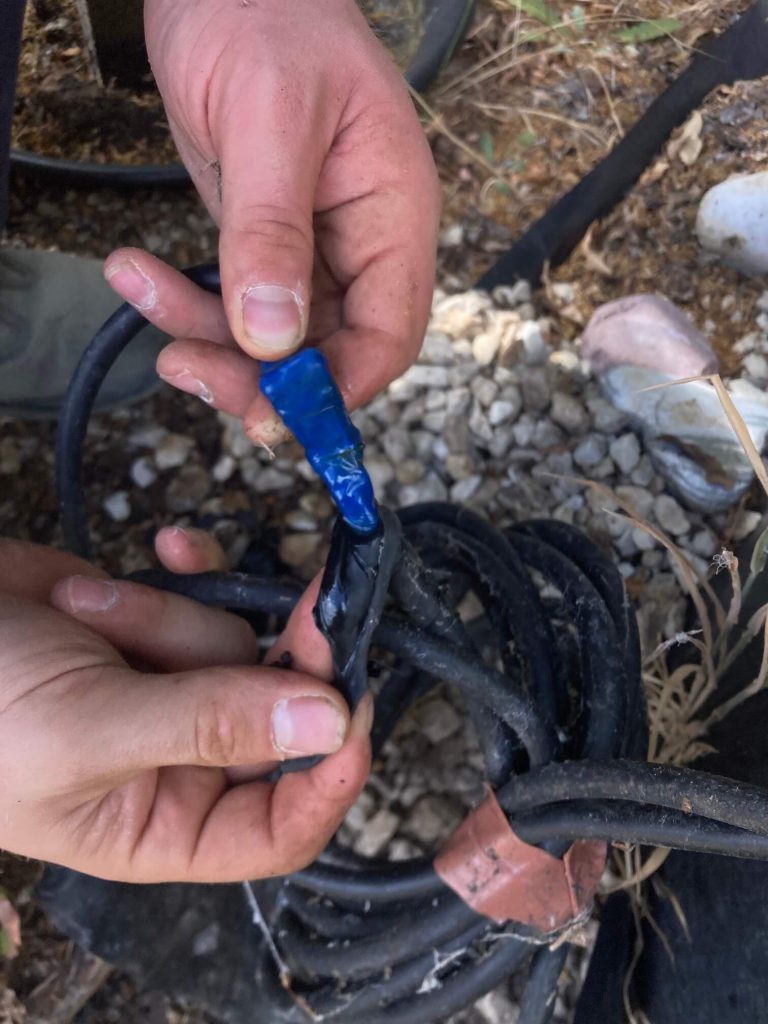
The follow-up photographs also show an older MEG Enviro 100 pump and a taped cable joint. Equipment exposed to damp, soil and mechanical movement can deteriorate over time, so the condition of the cable and connections had to be considered alongside the new route.
The available job record confirms the trenching work but does not state the final cable type, burial depth, switch-fuse rating, circuit test results or certification. Those details should be checked against the electrician’s completion records before publication.
The Electric11 solution
Electric11 approached the work as a complete supply-route and equipment assessment rather than treating the pump as an isolated appliance. The recorded stages established a practical route and documented the existing installation for the next phase of work.
Route assessment and trenching
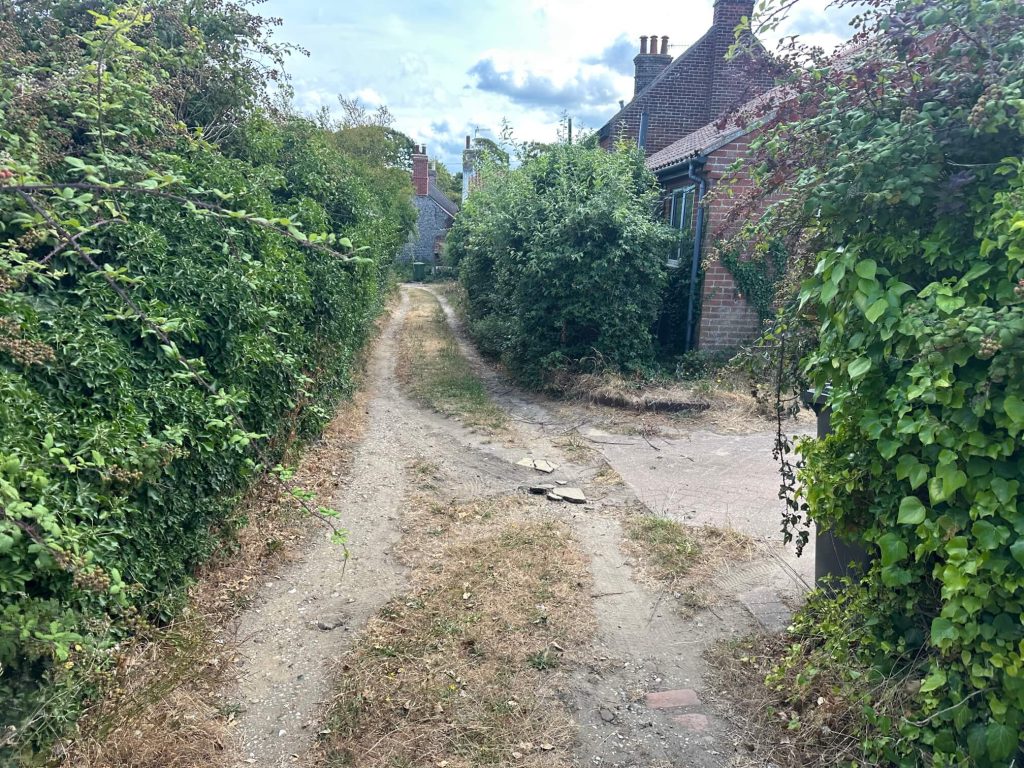
The team assessed the distance between the property and the pump area before opening a trench for the proposed supply route. This created a defined path for the electrical cable and helped keep it separated from normal garden activity.
Careful route planning is especially important at rural properties, where access, mature planting, existing services and uneven ground can influence the installation method.
Existing supply and earthing inspection
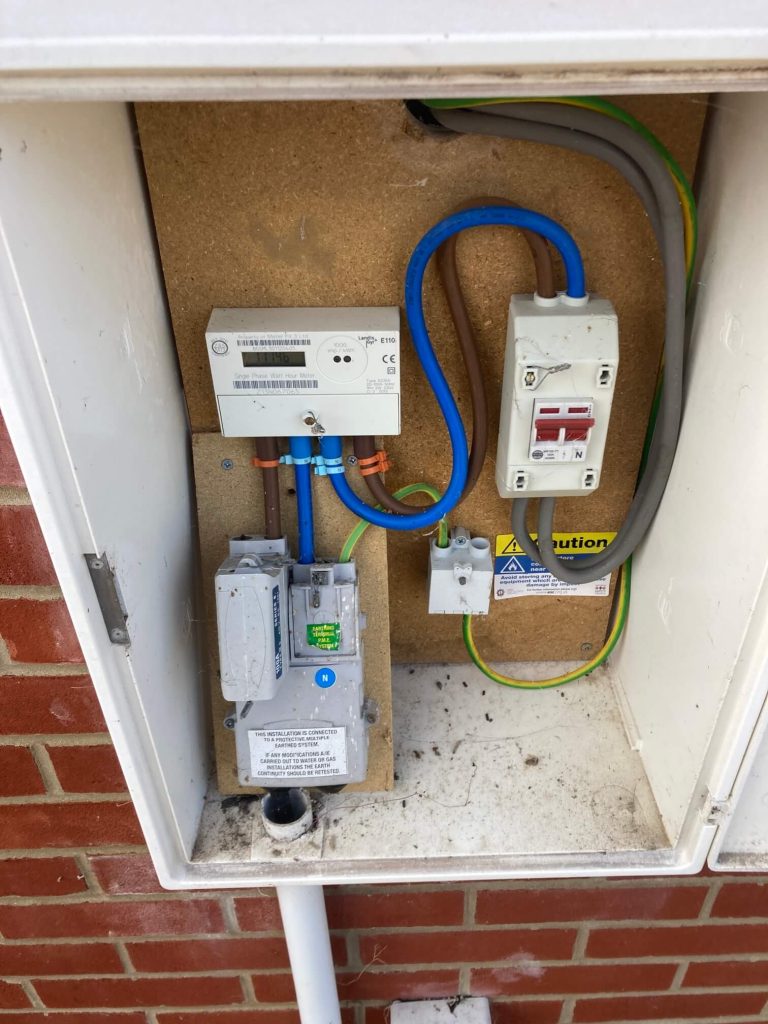
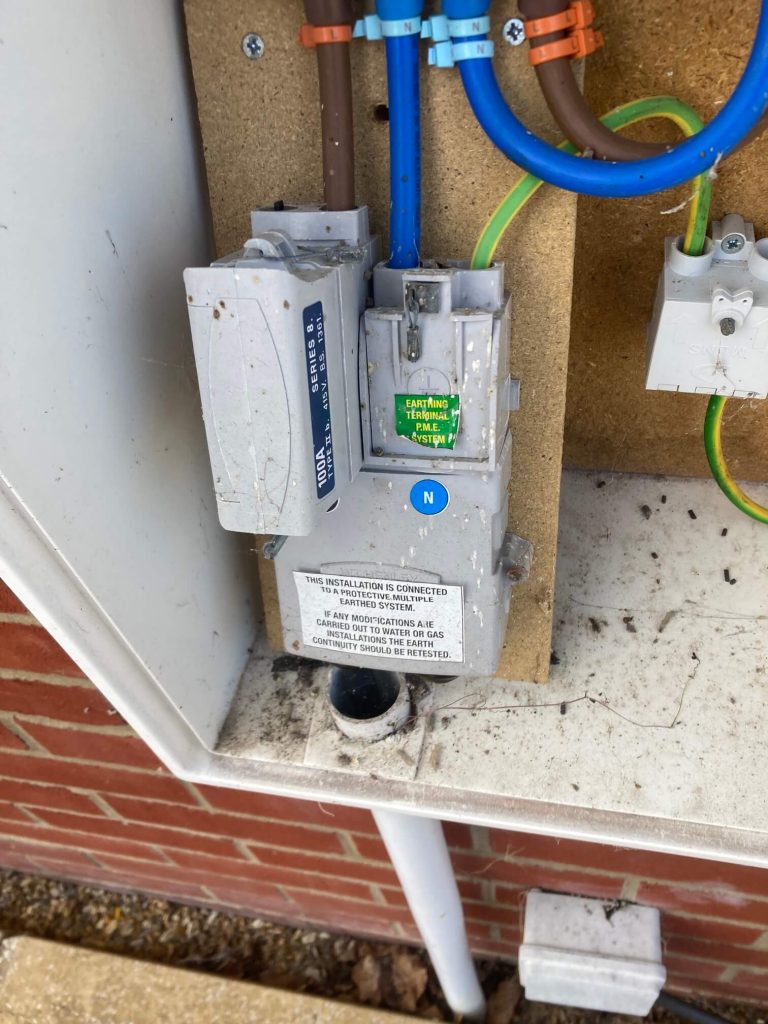
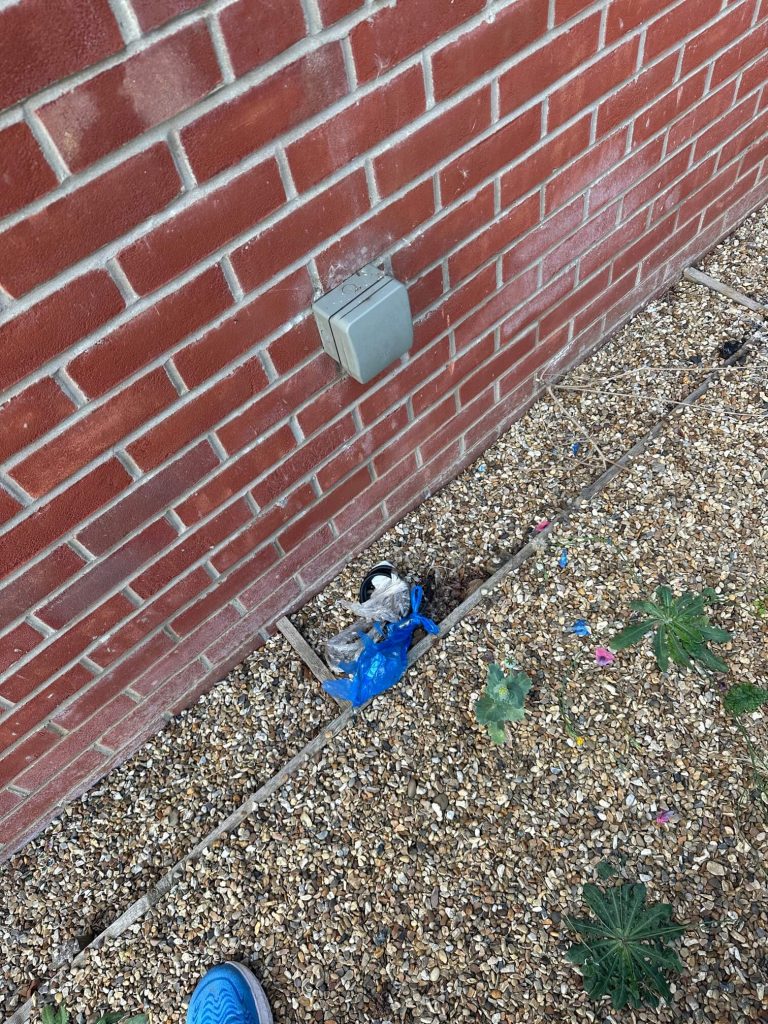
The external intake equipment was visually inspected, including the meter, 100 A main switch and PME earthing arrangement. This information is needed when selecting protection and isolation for an additional fixed load.
For older installations or wider concerns about existing wiring, an Electrical Installation Condition Report can provide a structured assessment of the property’s electrical condition.
Pump and cable fault investigation
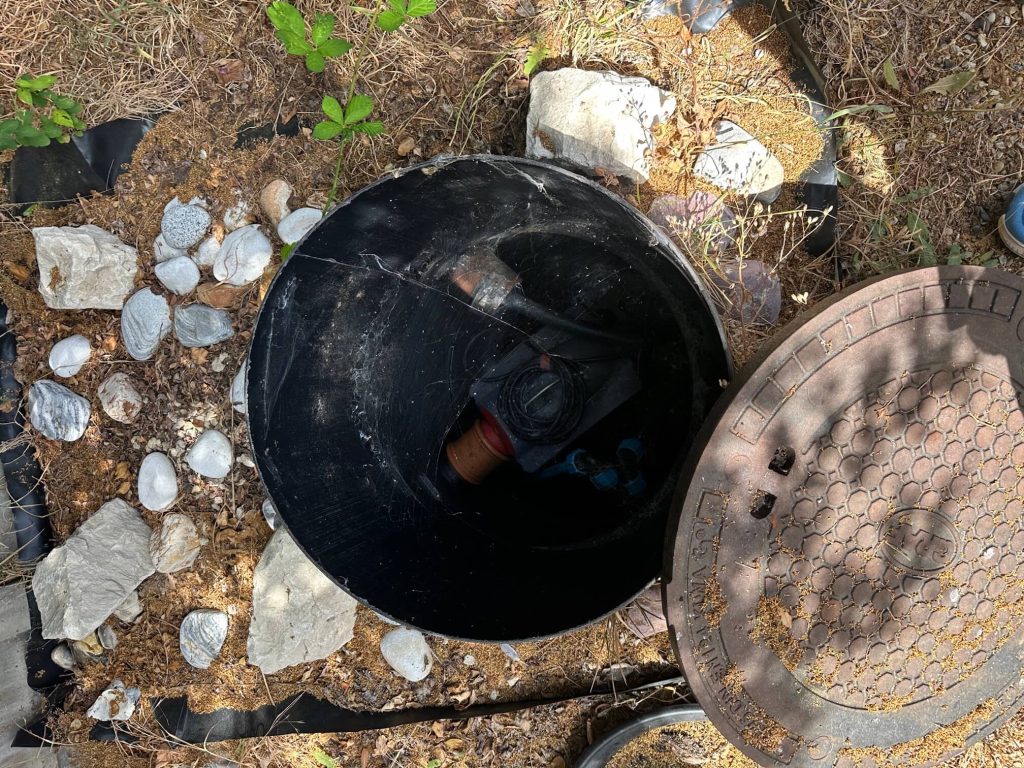
The existing pump chamber and MEG Enviro 100 pump were opened for inspection. The pump rating plate confirmed a 1.1 kW input and continuous-duty designation, while the cable photographs documented a taped joint requiring attention.
This evidence-led approach mirrors Electric11’s wider electrical fault-finding work: identify the condition, record the relevant equipment and avoid assumptions about hidden wiring.
Defined next steps
The site information established what needed to be confirmed for the final electrical connection: the protective device and switch-fuse specification, cable type and route, termination method, testing and certification.
Customers can review Electric11’s services and pricing before requesting a tailored quotation for comparable supply or remedial work.
The outcome
The confirmed trenching provided a route for the pump supply and reduced uncertainty around how the outdoor equipment could be connected. The later inspection also documented the pump’s rating, existing intake arrangement and cable condition, giving the electrician clear information for any repair or final installation work.
This case study deliberately avoids claiming that the final switch fuse, new cable or pump repair was commissioned, because those details are not present in the supplied completion record. Once the certificate and final specification are confirmed, this section can be updated with the installed device rating, cable details and test outcome.
Estimated yearly impact
This project was electrical infrastructure and fault-investigation work rather than a renewable-energy or energy-efficiency installation. It therefore carries no calculated annual energy generation, financial saving or CO2 reduction.
The pump’s photographed data plate shows a 1.1 kW input rating. Its actual annual consumption would be calculated as 1.1 kW multiplied by its total operating hours, adjusted for the real control cycle and measured demand. No operating-hours record or tariff was supplied, so an annual consumption estimate would be speculative.
Related electrical guidance
Outdoor equipment supplies need protection against environmental exposure as well as electrical faults. A site-specific design should consider the connected load, route length, voltage drop, automatic disconnection, RCD requirements, earthing and the suitability of every enclosure and joint.
Comparable work can be seen in Electric11’s commercial workshop electrical installation, where planning the distribution and protected final circuits was central to the result.
Book a pump supply assessmentElectric11 is composed of a team of local electricians based in Attleborough, offering coverage to the entire Norfolk region. Moreover, through our extensive network, we have forged strong connections with quality tradesmen representing various disciplines in our area.

The Electric11 pump electrical installation process
Outdoor pump projects vary according to distance, ground conditions, equipment rating and the existing supply. Electric11 uses a staged process so that the route, protection and final handover can be planned around the site.
Site and pump assessment
An electrician inspects the pump location, existing intake, earthing arrangement and proposed cable route. The pump rating and operating requirements are recorded before protection or cable sizes are selected.
Clear scope and quotation
Electric11 sets out the proposed trenching, cable route, isolation, protective devices and testing requirements in a transparent quotation. Any groundworks or equipment limitations are identified before installation begins.
Trenching and protected supply route
The route is prepared with suitable mechanical protection and separation from other services. External terminations, isolators and enclosures are selected for their environment and positioned for practical maintenance access.
Testing, labelling and handover
The completed circuit is inspected and tested, protective devices are verified, and the installation is labelled before energisation. The customer then receives the relevant certification and guidance for safe isolation and maintenance.
The job record confirms trenching for a pump supply, with a switch fuse listed in the scope. The photographs also document inspection of the pump chamber, cable and intake equipment.
The existing MEG Enviro 100 pump label states 1.1 kW input power. This is an equipment demand rating, not a solar generation capacity.
Trenching created a route for the pump supply cable between the property and the outdoor pump area, allowing the cable to be protected and kept away from routine garden use.
Not responsibly from the available records. Annual use depends on pump operating hours, control settings, water demand and the customer’s tariff, so no yearly saving or consumption claim is made.
Confirm the final switch-fuse specification, cable type and route, test results, certification and if the photographed cable repair formed part of the completed work.

