




You should rewire your house in Norfolk when the electrical system shows signs of widespread deterioration, recurring faults or can no longer safely support modern usage—common warning signs include frequent tripping, flickering lights, burning smells and outdated wiring. This guide explains the key indicators to watch for, how electricians assess your installation, and when a partial or full rewire may be the safest and most practical solution.
Rewiring is a significant project, so the decision should be based on the condition of the installation rather than the age of the house alone. A well-maintained older system may remain serviceable, while poorly installed or repeatedly altered wiring can become unsafe much sooner.
When Should You Rewire Your House?
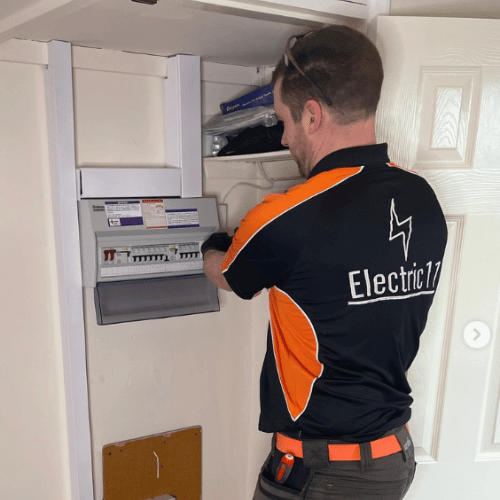
A house normally needs rewiring when faults or deterioration affect multiple circuits rather than one isolated socket, switch or appliance.
The clearest answer comes from an electrical inspection. An electrician can test the circuits, assess the consumer unit, inspect accessible wiring and identify weaknesses that are not visible during everyday use.
An Electrical Installation Condition Report can reveal damaged wiring, poor earthing, overloaded circuits, missing protective devices and unsafe alterations. The findings will help determine whether targeted repairs are sufficient or whether replacing the installation offers better long-term value.
1. Your Circuit Breakers Keep Tripping
Circuit breakers and residual current devices are designed to disconnect the electricity when they detect certain electrical problems. An occasional trip caused by a faulty appliance may not indicate a problem with the house wiring.
Repeated tripping deserves further investigation, particularly when:
- The same circuit trips regularly
- The power goes off when several appliances are used
- A breaker will not reset
- The cause cannot be linked to one appliance
- The problem affects several areas of the house
Frequent tripping can result from an overloaded circuit, damaged cable, loose connection, moisture ingress or faulty equipment. It does not automatically mean the whole house needs rewiring, but it should not be treated as a normal inconvenience.
Electric11 provides professional electrical fault finding across Norfolk to trace the cause before recommending repairs or replacement work.
2. Lights Flicker or Dim Regularly
A light that briefly flickers because the bulb is loose is usually easy to resolve. Flickering across several fittings or rooms can point to a deeper problem.
Pay attention when lights:
- Dim as appliances are switched on
- Flicker without an obvious pattern
- Become brighter or darker unexpectedly
- Stop working even after bulbs are replaced
- Flicker alongside buzzing or crackling sounds
These symptoms can be caused by loose connections, damaged wiring, overloaded circuits or a problem with the electrical supply. A qualified electrician should test the installation rather than relying on repeated bulb or fitting replacements.
3. You Notice Burning Smells or Scorch Marks
A burning smell near a socket, light switch or consumer unit should be treated seriously. Heat damage may indicate loose connections, overloaded wiring or failing accessories.
Other urgent warning signs include:
- Brown or black marks around a socket
- Melted plastic
- A switch or socket that feels unusually hot
- Smoke from an electrical fitting
- A persistent hot-plastic smell
- Crackling from the consumer unit
Stop using the affected circuit or appliance where it is safe to do so. Do not remove the socket or attempt to inspect the wiring yourself.
Electric11 offers 24-hour emergency electrical support in Norfolk for burning smells, sparking, exposed wiring, power loss and other immediate hazards.
4. Sockets or Switches Buzz, Crackle or Spark
Electrical accessories should operate quietly. Buzzing, crackling or repeated sparking can indicate a loose connection, damaged accessory or deteriorated wiring behind the fitting.
A tiny flash may occasionally be visible when plugging in certain appliances, but persistent or large sparks require investigation. The risk is greater when sparking occurs alongside heat, discolouration, smoke or a burning smell.
Replacing the visible socket may resolve an isolated fault. When similar symptoms appear around the property, the electrician may need to inspect the wider circuit and determine whether the cabling has deteriorated.
5. Your Property Has an Old Fuse Box
An old fuse box does not prove that the entire house needs rewiring, but it can indicate that the electrical installation has not received a major upgrade for many years.
Features associated with older installations include:
- Rewireable fuses
- Ceramic fuse carriers
- A wooden-backed fuse box
- No visible RCD protection
- Limited circuit separation
- Unclear or missing circuit labels
- Several generations of additions around the fuse board
A modern consumer unit provides improved circuit protection, but replacing the board alone will not repair defective wiring. The existing circuits need to be tested before or during the upgrade.
In some homes, a replacement consumer unit in Norfolk may be all that is required. In others, testing may identify widespread faults that make partial or full rewiring the more practical option.
6. You Find Rubber, Fabric or Lead-Covered Wiring
Modern domestic cables are normally insulated with PVC. Older installations may contain rubber-insulated, fabric-covered or lead-sheathed cables.
These materials can deteriorate over time. Rubber insulation may become brittle and crack when disturbed, while much older cable types may no longer provide dependable protection for contemporary household use.
You may notice outdated wiring:
- Near the consumer unit
- Inside accessible loft spaces
- In a garage or outbuilding
- Behind a removed switch or light fitting
- During kitchen or bathroom renovations
- Under floorboards opened for other work
Do not handle or bend questionable cables. Their visible condition may not reflect deterioration elsewhere on the circuit.
NICEIC advises that wiring deteriorates over time and that rewiring involves replacing old, outdated or faulty cabling with modern alternatives. Read its homeowner guide to rewiring a house for further independent guidance.
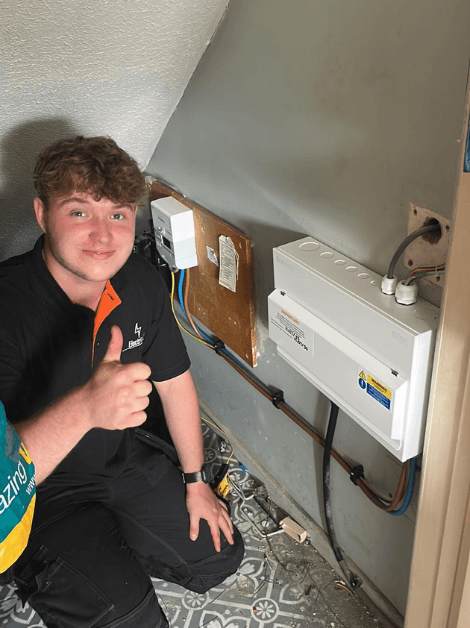
7. Your Home Relies Heavily on Extension Leads
Older homes were often designed with fewer sockets because households used fewer electrical appliances. Modern kitchens, home offices, entertainment systems and charging devices place much greater demands on the installation.
Using several extension leads does not necessarily mean the existing cables are unsafe. However, it can show that the electrical layout no longer suits the household.
Common signs of an outdated layout include:
- One socket serving several high-demand appliances
- Extension leads running permanently between rooms
- Multiple adaptors connected to one outlet
- No sockets near desks, beds or entertainment equipment
- Too few kitchen circuits
- Outbuildings powered by unsuitable temporary leads
A rewire gives you the opportunity to redesign the layout, add circuits and position sockets where they are actually needed. This can be safer and more convenient than repeatedly adding surface-mounted extensions to an outdated system.
8. An EICR Identifies Widespread Defects
An EICR assesses the condition of the fixed electrical installation and records defects using classification codes.
The most important observations include:
C1 – Danger present: Immediate action is required.
C2 – Potentially dangerous: Urgent remedial work is needed.
FI – Further investigation: Additional testing is required without delay.
A report containing C1, C2 or FI observations is normally considered unsatisfactory. However, an unsatisfactory result does not always mean the property needs a complete rewire.
One or two isolated issues may be resolved through remedial work. Rewiring becomes more likely when the report identifies problems across numerous circuits, such as:
- Deteriorated cable insulation
- Inadequate earthing or bonding
- Unsafe DIY alterations
- Multiple overloaded circuits
- Heat damage
- Poor connections throughout the installation
- Numerous circuits lacking suitable protection
Electrical Safety First explains that an EICR documents deterioration, defects, dangerous conditions and non-compliances that may create a risk. Its periodic inspection and testing guidance provides further information about the inspection process.
9. You Are Planning a Major Renovation
The best time to rewire is often when the property is already empty or undergoing substantial renovation.
Rewiring typically requires access beneath floors, above ceilings and within walls. Completing the work before plastering, decorating or installing a new kitchen can reduce duplicated labour and disruption.
Consider an electrical assessment before:
- Renovating an older property
- Installing a new kitchen
- Converting a loft
- Building an extension
- Refurbishing several rooms
- Adding electric heating
- Installing high-demand equipment
- Moving into a property with no electrical records
Planning early also lets you decide where sockets, switches, data points and lighting controls should be installed.
Does an Old House Automatically Need Rewiring?
No. The age of a property does not reveal when its wiring was installed or how well it has been maintained.
A Victorian house may have been completely rewired within the last decade. A newer property may contain poor alterations, damaged cables or unsuitable DIY work.
Useful indicators include:
- The date on the consumer unit or electrical certificates
- The type and condition of visible cables
- Whether RCD protection is present
- The number of previous additions
- The results of the latest EICR
- Whether circuits support current electrical demand
When no installation certificate, EICR or renovation record is available, arrange an inspection rather than estimating the condition from the property’s age.
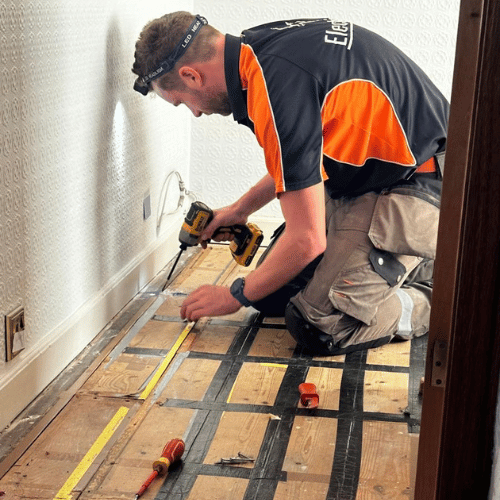
Partial Rewire vs Full Rewire
Not every electrical problem requires replacing all the wiring.
| Partial rewire | Full rewire |
| Replaces selected circuits or sections | Replaces wiring throughout the property |
| Suitable for isolated deterioration | Suitable for widespread deterioration |
| May cover one extension, kitchen or floor | Covers sockets, lighting and fixed circuits |
| Usually causes less disruption | Requires broader access to walls and floors |
| Retains circuits that pass inspection | Creates a coordinated modern installation |
A partial rewire may be appropriate when the main installation is satisfactory but one area is outdated or damaged.
A full rewire is more likely when faults affect multiple circuits, the cables are obsolete, the layout is inadequate or years of uncoordinated alterations have made the system difficult to repair reliably.
Electric11 provides full and partial home rewiring in Norfolk based on the property’s condition and the results of electrical testing.
What Happens During a House Rewire?
A rewiring project normally begins with a survey and a discussion about how the property will be used.
The electrician will plan:
- Socket and switch positions
- Lighting points and controls
- Dedicated appliance circuits
- Smoke and heat alarm supplies
- Outdoor power requirements
- Data or network cabling
- Future EV charger, solar or battery requirements
- Consumer unit capacity
During the first-fix stage, new cables and back boxes are installed. This may require lifting floorboards, accessing loft spaces and cutting channels into walls.
During the second-fix stage, sockets, switches, light fittings and the consumer unit are connected. The completed installation is then inspected, tested and certified.
Rewiring work in a dwelling must comply with electrical safety requirements under Part P of the Building Regulations. The government’s Approved Document P guidance explains notification, inspection, testing and certification requirements in England.
Is Rewiring Necessary Before Installing an EV Charger?
Not always. An EV charger requires a dedicated circuit, but many existing installations can support one after the correct assessment and protective equipment are installed.
A broader upgrade may be needed when:
- The consumer unit has insufficient capacity
- The existing supply is already heavily loaded
- Earthing or bonding is inadequate
- The cable route relies on deteriorated wiring
- Testing finds defects on existing circuits
- Other major electrical upgrades are planned
The same principle applies to solar panels, battery storage, electric heating and other higher-demand equipment. Planning these additions during a renovation or rewire can reduce the need for further disruption later.
Can You Live in a House While It Is Being Rewired?
It may be possible to remain in the property when the work is carefully staged, but living there can make the project slower and more disruptive.
Power may be unavailable in sections of the house, furniture must be moved, floors may be lifted and walls may need chasing. Dust and noise are also difficult to avoid.
An empty property gives electricians easier access and can simplify the schedule. When possible, complete the rewire before moving into a newly purchased home or before major decorating begins.
Your electrician should explain:
- Which rooms need to be cleared
- When circuits will be disconnected
- Whether temporary power will be available
- How floors and furnishings will be protected
- Which surfaces will require making good
- What testing and certification you will receive
What to Do When You Suspect Your House Needs Rewiring
Do not wait for visible damage to become an emergency. Arrange an electrical assessment when you notice recurring problems, have concerns about old wiring or plan a major renovation.
An electrician can then recommend one of four practical options:
- No immediate work beyond routine monitoring
- Targeted repairs to individual faults
- A consumer unit or circuit upgrade
- A partial or full rewire
This evidence-led approach prevents unnecessary rewiring while identifying hazards that should not be ignored.
Book a Home Wiring Assessment in Norfolk
Knowing when to rewire your house in Norfolk starts with professional inspection and testing. Electric11 can assess your circuits, consumer unit, electrical demand and future plans before recommending repairs, a partial rewire or complete replacement.
Our local electricians support homeowners across Norwich, Attleborough, Wymondham, Thetford, Diss and surrounding Norfolk communities. Contact Electric11 to arrange an assessment and receive a clear, no-obligation quote for your property.
Send us a message
"*" indicates required fields

