
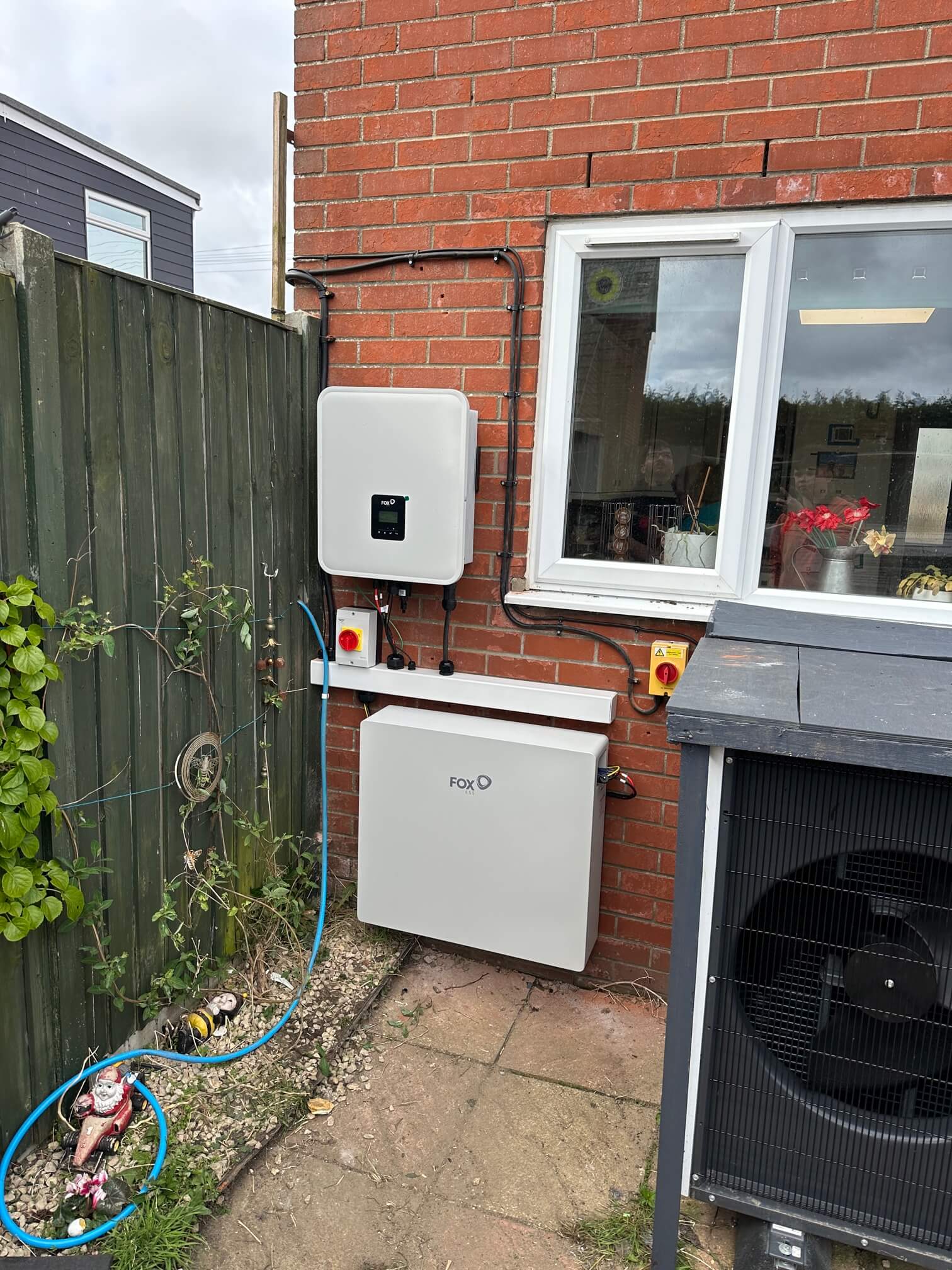
Fox ESS Solar Battery Storage Installation in California, near Great Yarmouth




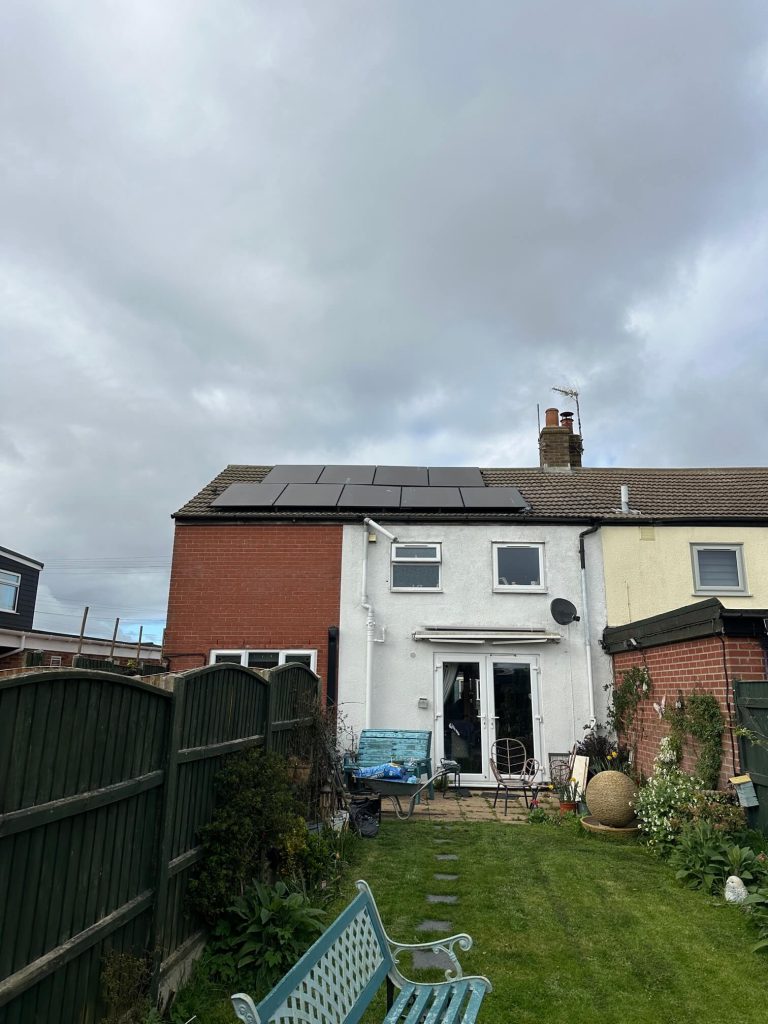
Electric11 added an 11.52 kWh Fox ESS battery and 7 kW hybrid inverter to an existing solar-powered home in California, near Great Yarmouth. The retrofit allows more surplus solar electricity to be stored for later household use while working alongside the property’s air-source heat pump. Cable alterations, dedicated protection, isolation and system commissioning formed part of the completed upgrade.
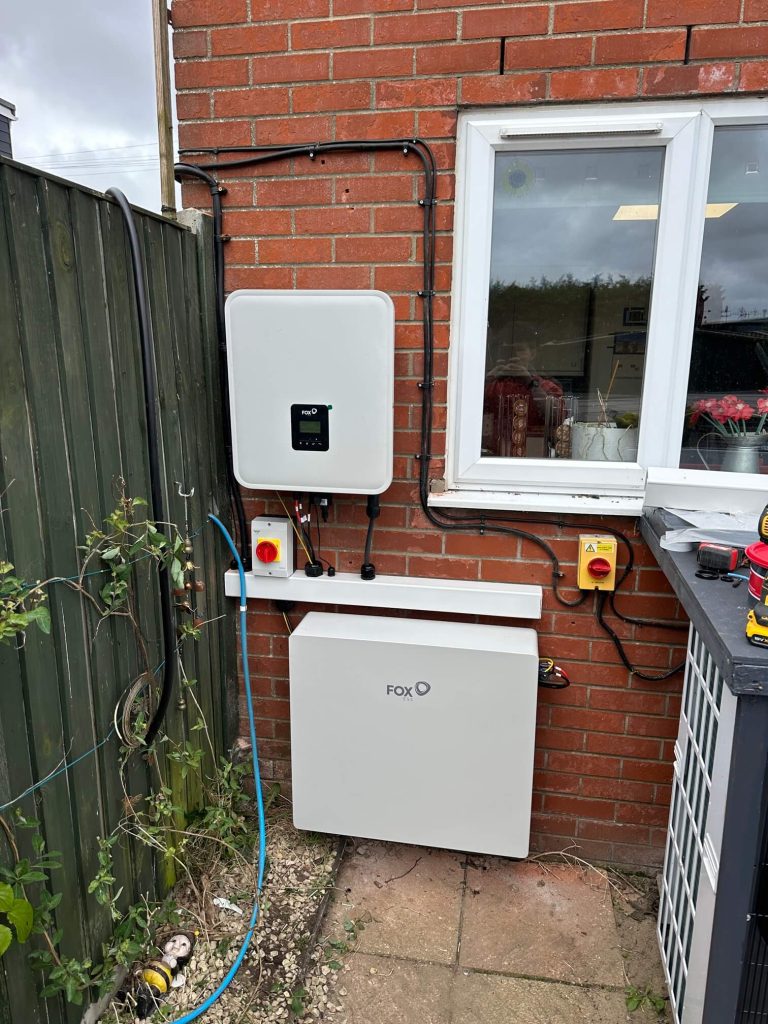
The project involved more than mounting the new equipment. The team assessed the existing electrical arrangement, altered the heat-pump supply cables to release a suitable section of wall, added dedicated protection and isolation, connected the battery system and commissioned the installation. The finished setup brings the existing solar array, home battery and heat-pump loads into a more practical energy system.
Homeowners considering a similar retrofit can learn more about home battery storage in Norfolk or review Electric11’s wider solar panel installation service.
Project Overview
The customer already had rooftop solar panels and an air-source heat pump. The aim was to add substantial battery capacity without replacing equipment that could remain in service. A Fox ESS hybrid system was chosen to manage solar generation, battery charging and household demand from one coordinated platform.
Project at a glance
- Location: California, near Great Yarmouth
- Property type: Domestic home
- Project type: Retrofit solar battery storage installation
- Existing equipment: Rooftop solar PV array and air-source heat pump
- Hybrid inverter: Fox ESS, rated at 7 kW
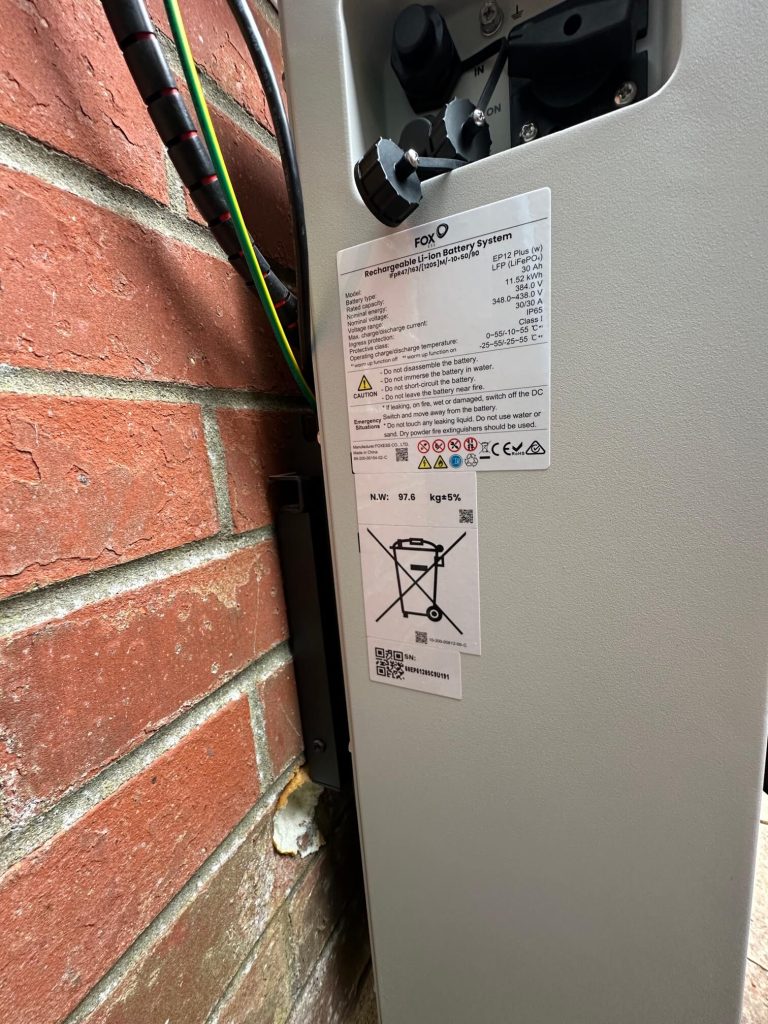
- Battery: Fox ESS EP12 Plus heated lithium iron phosphate battery
- Battery capacity: 11.52 kWh nominal
- Battery protection: IP65, as shown on the equipment label
- Related electrical work: Repositioning of existing heat-pump supply cables
- Protection and isolation: Dedicated external distribution, surge protection and local isolators
- Monitoring: Fox ESS inverter display and compatible Fox ESS monitoring
- Certification: Installation testing and certification in line with BS 7671
The original job record contains conflicting information about network notification and export limits. No DNO application status or export-cap figure should be published until the project file has been checked.
The customer’s goal
The existing solar panels could generate electricity during daylight hours, but production and household demand do not always occur at the same time. Adding battery storage gives the home a way to retain more available solar energy for use later in the day, including periods when the heat pump and other household loads are operating.
Making better use of existing solar generation
The customer wanted to increase on-site use of the electricity already produced by the roof array. The EP12 battery can charge when suitable energy is available and discharge to support household demand under the configured operating mode.
This type of upgrade is useful for homes that already have solar PV but export a proportion of their daytime generation. Electric11’s guide to solar installation costs and battery options explains how battery storage can be added as part of a new system or as a separate retrofit.
Accommodating the heat-pump installation
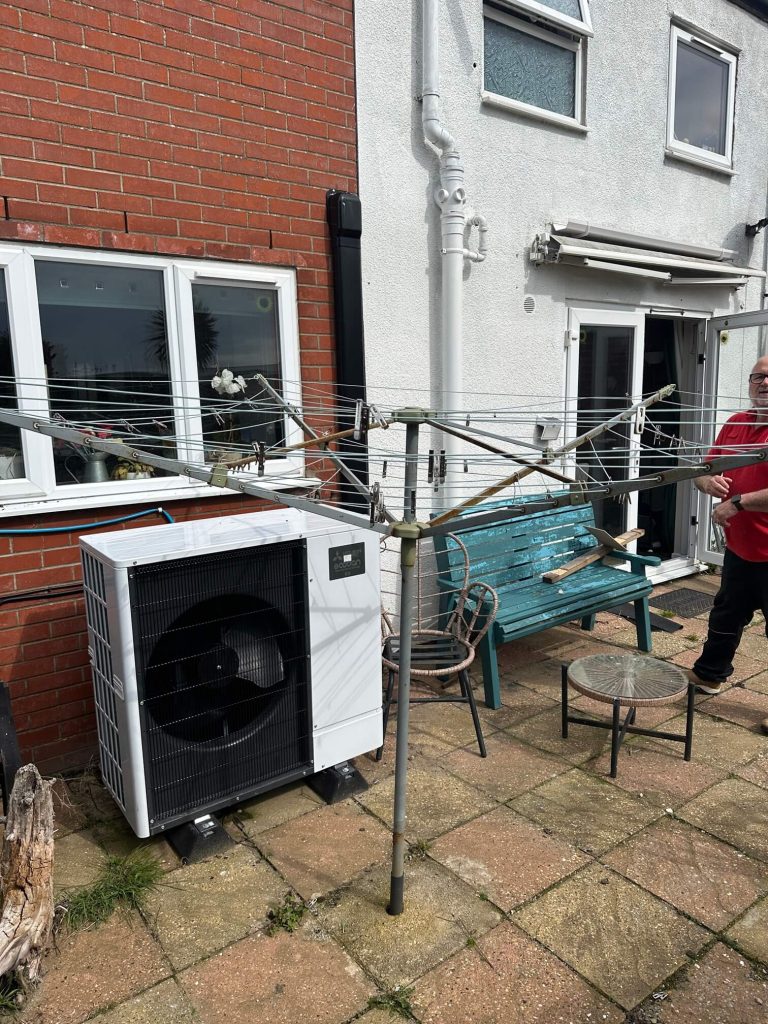
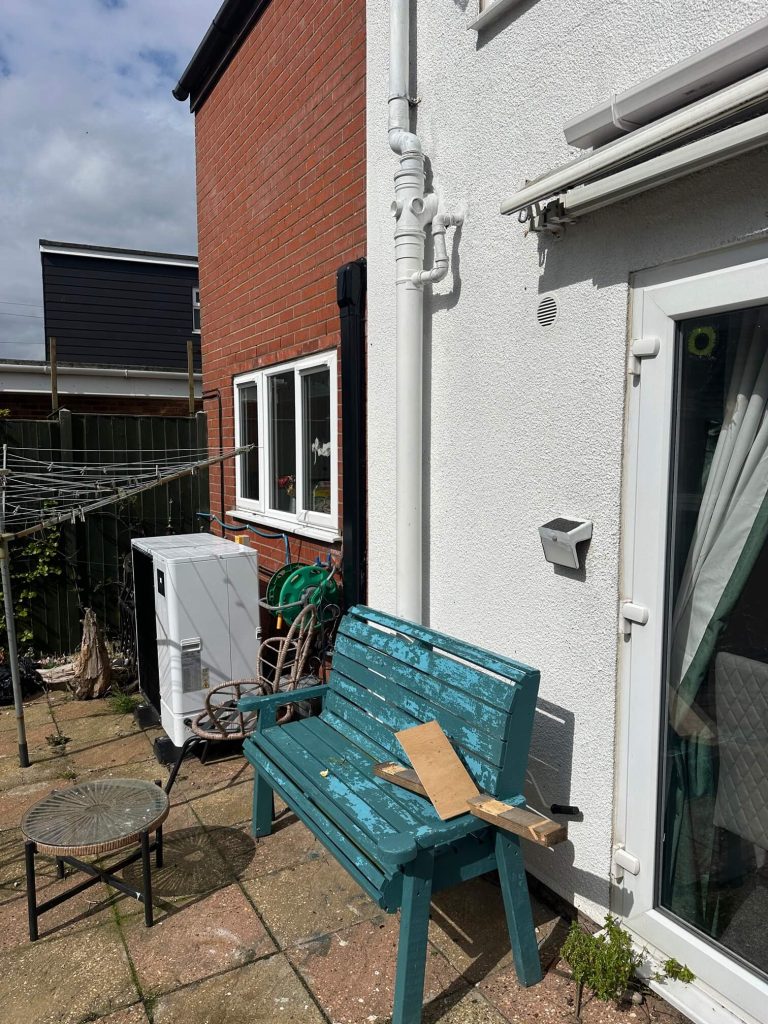
The selected wall area already served an outdoor heat-pump unit. Existing supply cables occupied part of the proposed battery and inverter route, so the team repositioned them before mounting the new equipment. This created a clearer working area and allowed the solar, battery and heat-pump circuits to be arranged with suitable protection and access.
The Electric11 solution
The completed system combines a high-capacity heated battery with a 7 kW hybrid inverter. External mounting placed the main equipment close to the meter and existing energy infrastructure while keeping it out of the home’s living space.
7 kW Fox ESS hybrid inverter
The hybrid inverter manages energy movement between the existing solar array, the battery, household loads and the grid connection. Its 7 kW rating describes the inverter’s power capability and should not be presented as the output of the existing solar array, because the panel wattage and verified PV capacity were not recorded in the supplied job summary.
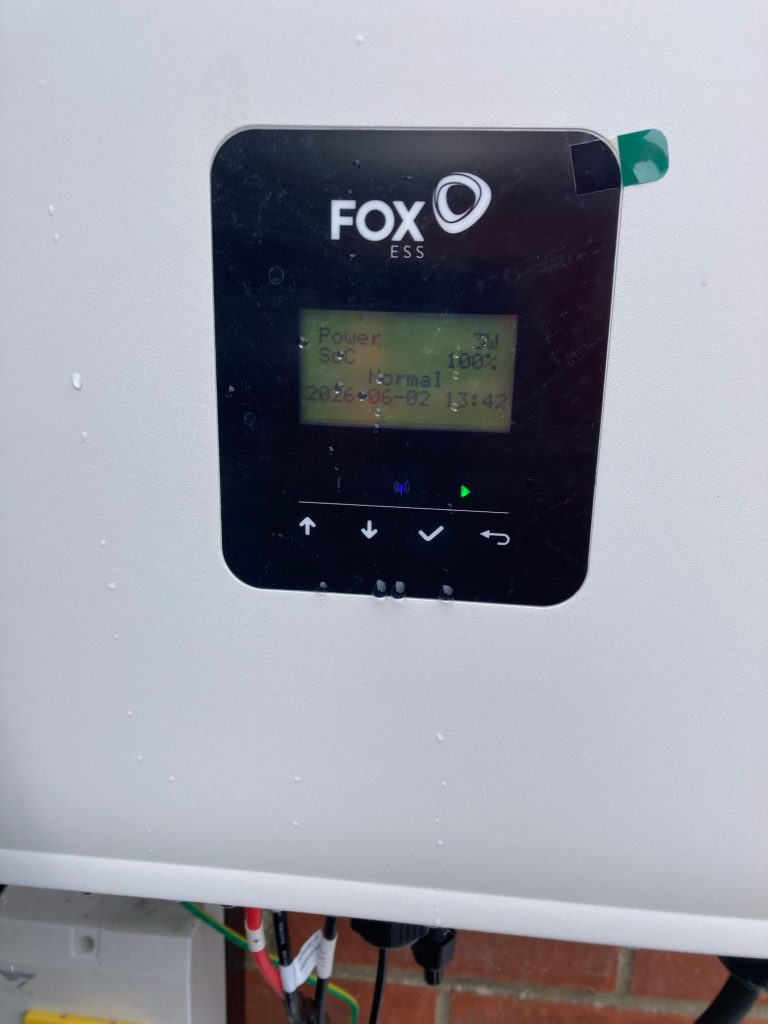
The later commissioning photograph shows the inverter reporting normal operation and a battery state of charge of 100%. Customers can also use the Fox ESS app setup guide to understand generation, battery charge, grid import and household consumption data available through compatible monitoring.
11.52 kWh heated Fox ESS EP12 battery
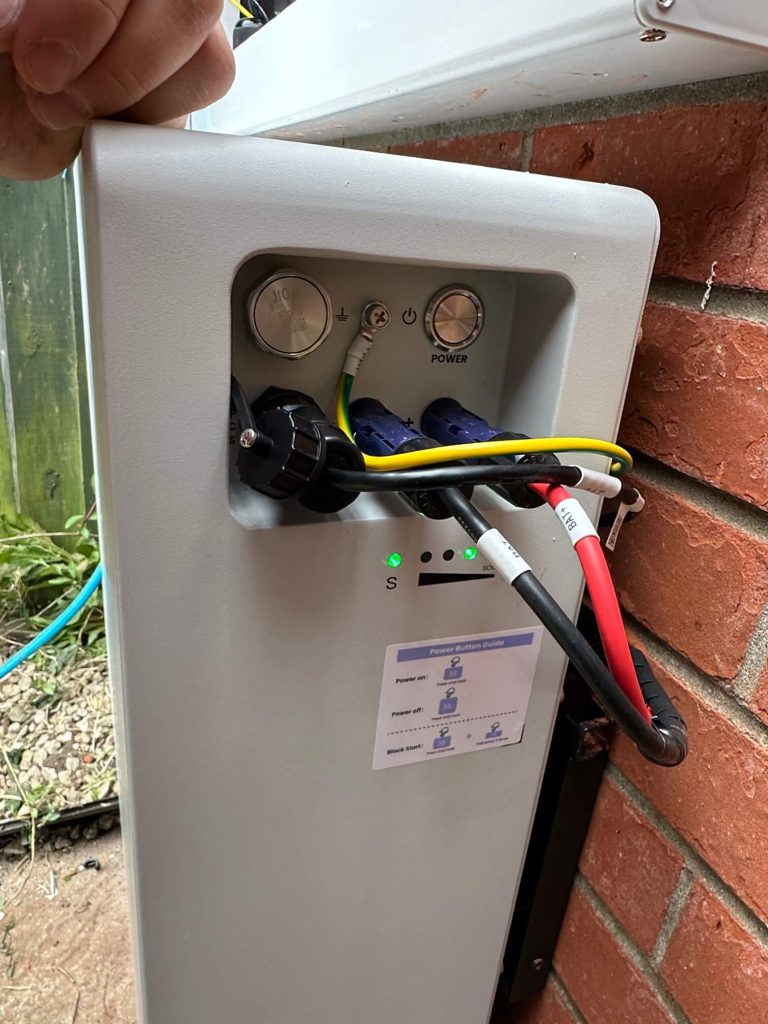
The wall-mounted Fox ESS EP12 Plus battery provides 11.52 kWh of nominal storage. The equipment label identifies lithium iron phosphate chemistry, IP65 protection and a heated operating specification, making careful external siting possible when the manufacturer’s clearances and installation requirements are followed.
Battery capacity is stated in kWh because it measures stored energy. The 7 kW inverter figure measures power—the rate at which energy can be converted. Keeping these units separate gives readers a more accurate description of the system.
Dedicated electrical protection and isolation
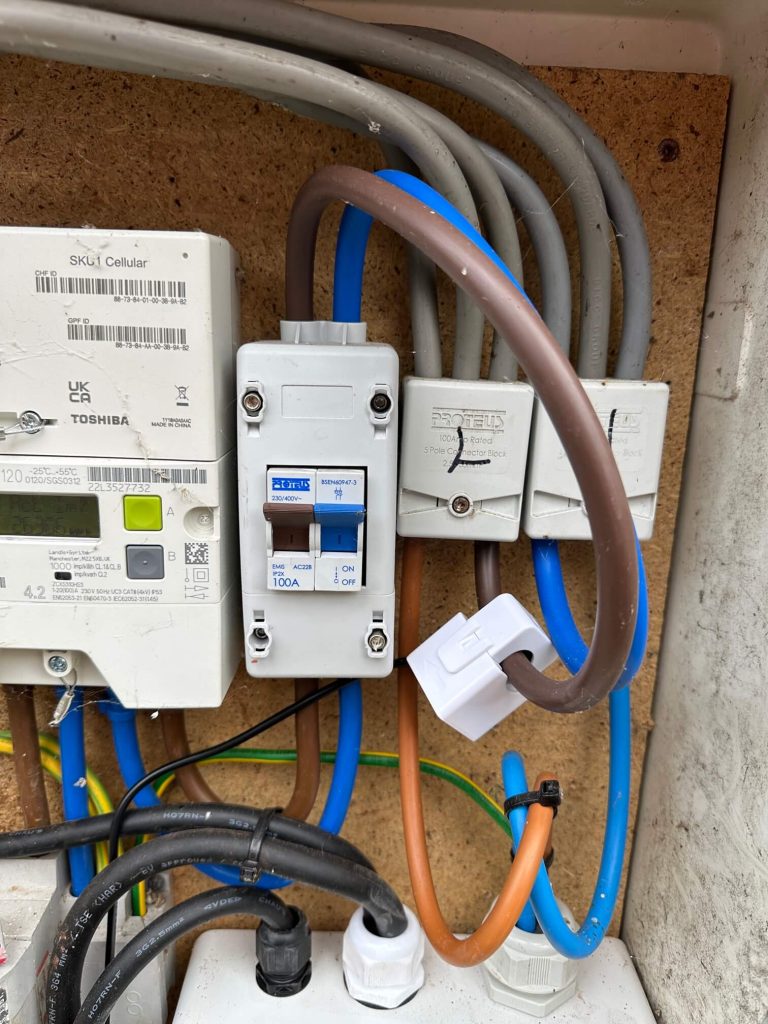
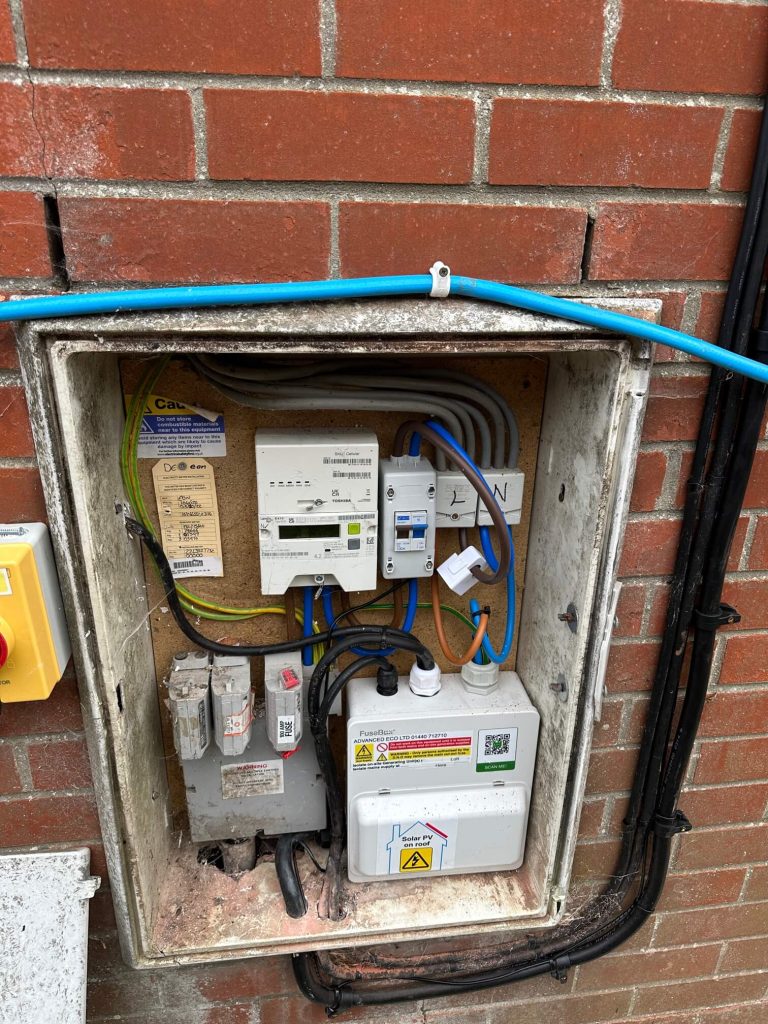
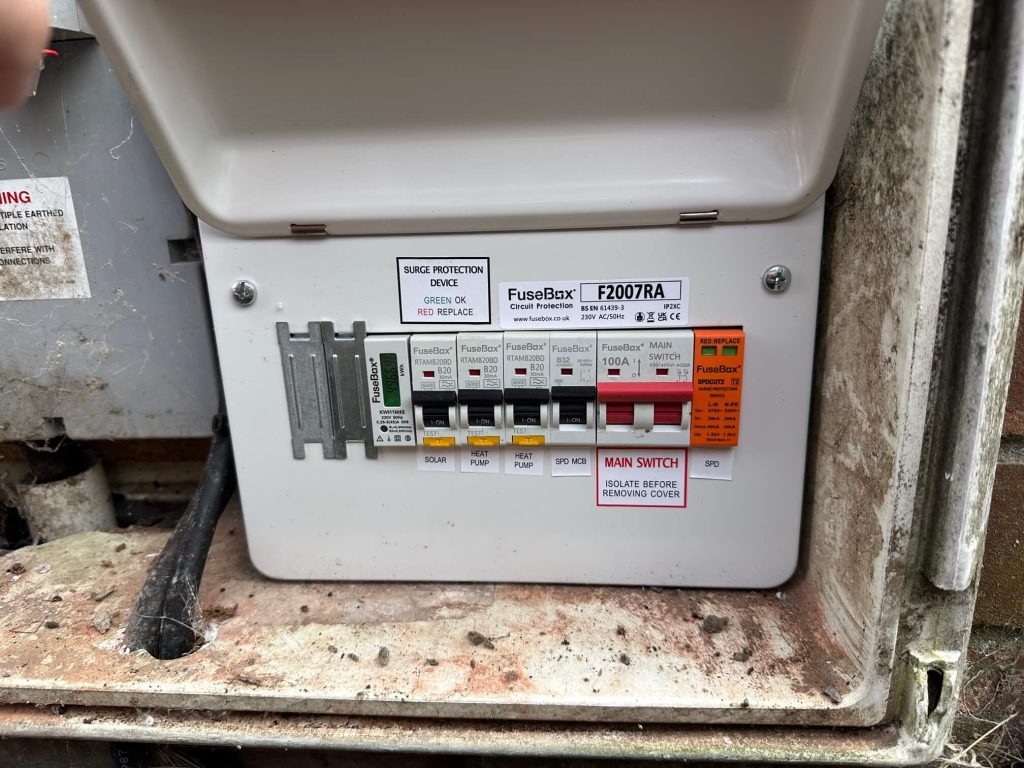
The external electrical arrangement includes dedicated circuit protection, surge protection and labelled isolation for the solar and heat-pump supplies. The meter cabinet was also integrated with the battery monitoring arrangement. These components support safe operation, maintenance access and clear identification of the connected circuits.
Homes with older or unsuitable distribution equipment may need an upgrade before renewable technology is connected. Electric11 offers consumer unit replacement and wider electrical services alongside solar and battery work.
Cable alterations for a tidy retrofit
The heat-pump supply cables were moved to release the wall space needed for the new inverter and battery. Cable routes were then secured around the installation area, with local isolation positioned alongside the equipment. The final arrangement keeps the battery, inverter, heat pump and meter connections accessible for inspection and maintenance.
Projected performance
Battery storage does not generate electricity. It stores energy from the solar array or, where configured and suitable, from the grid for later use. The figures below therefore estimate battery throughput and its potential value rather than claiming new renewable generation.
Book a Free Solar SurveyElectric11 is composed of a team of local electricians based in Attleborough, offering coverage to the entire Norfolk region. Moreover, through our extensive network, we have forged strong connections with quality tradesmen representing various disciplines in our area.

Installation process for this battery retrofit
A retrofit has to work with the equipment already at the property. For this project, the installation sequence covered the existing solar array, heat-pump circuits, meter position, external wall space and the new Fox ESS equipment as one coordinated system.
Existing-system assessment
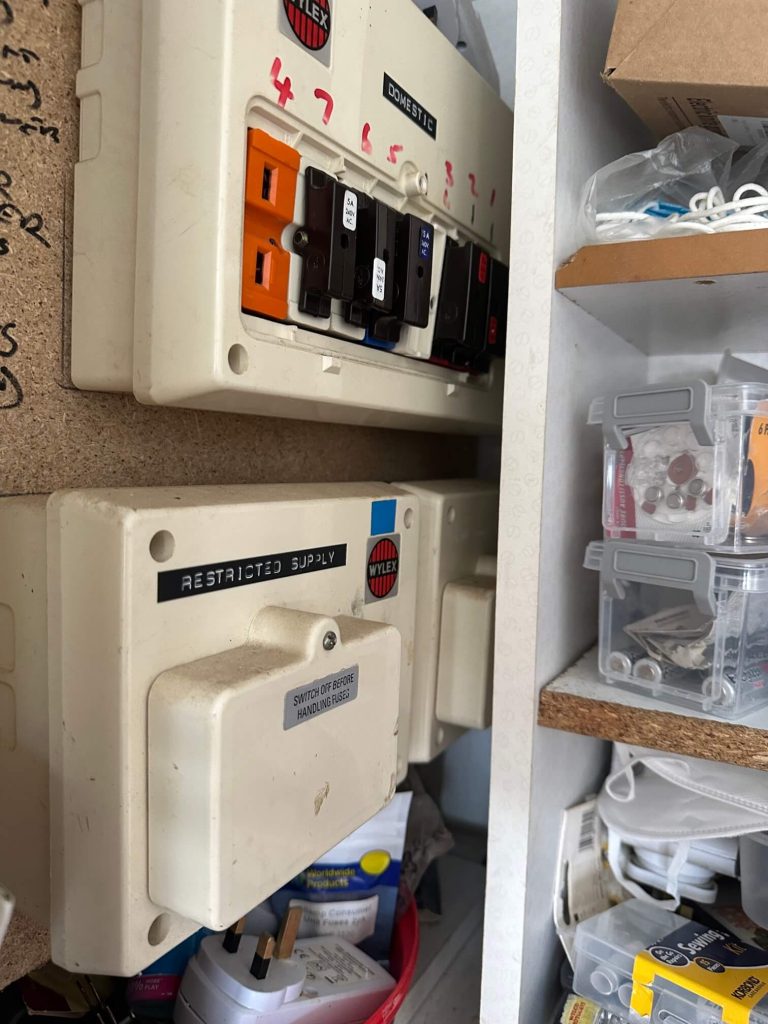
Electric11 reviewed the existing solar PV, heat pump, meter cabinet, fuse boards and available wall space. The assessment identified the need to move heat-pump supply cables and helped establish suitable positions for the hybrid inverter, battery, protection and isolators.
Clear technical plan and quotation
The proposed arrangement set out the Fox ESS equipment, cable alterations, dedicated protection, isolation, testing and certification required for the retrofit. Network notification and export settings remain subject to confirmation from the final project documentation.
Battery installation and cable alterations
The team repositioned the existing heat-pump cables, mounted the 7 kW Fox ESS hybrid inverter and 11.52 kWh EP12 battery, installed the necessary external protection and connected the system to the existing solar and household electrical infrastructure. Cable management and labelled isolators created a neat, serviceable finish.
Testing, commissioning and certification
The completed installation was electrically tested and commissioned, with the inverter later recorded in normal operation. The customer is to receive the appropriate installation certification in line with BS 7671, together with access to system monitoring where configured.
For ongoing checks, Electric11 also provides solar panel maintenance in Norfolk, covering PV performance, inverter operation, battery efficiency, electrical connections and protective devices.
Yes. Many homes can have battery storage retrofitted to an existing solar array. The installer must check compatibility, the electrical supply, protective devices, meter arrangement, available space and the intended operating mode before specifying equipment.
Electric11 installed a 7 kW Fox ESS hybrid inverter and a heated Fox ESS EP12 Plus lithium iron phosphate battery with 11.52 kWh nominal capacity. The work also included cable alterations, dedicated protection, isolation, commissioning and certification.
Both figures describe different parts of the system. The hybrid inverter is rated at 7 kW, which is a measure of power. The battery stores 11.52 kWh of energy. The existing solar-array capacity was not confirmed in the supplied project record.
The existing cables occupied part of the wall needed for the battery system. Repositioning them created a suitable equipment area and allowed the new inverter, battery, protection and isolators to be arranged clearly.
The equipment label identifies IP65 protection and a heated operating specification. External placement still requires an installer to follow the manufacturer’s siting, clearance, temperature and mounting requirements for the specific property.
The Fox ESS inverter has a local display, and compatible systems can use Fox ESS monitoring to view battery charge, solar generation, household use and grid flow. App access depends on successful account, inverter and communications setup.
The installation is to receive the appropriate electrical certification following testing and commissioning in line with BS 7671. Any network notification or export-limit statement should be taken from the confirmed final project documents.
No. They are modelled planning estimates. Real performance depends on solar generation, consumption patterns, heat-pump demand, battery settings, import and export tariffs, system losses and grid carbon intensity.

