
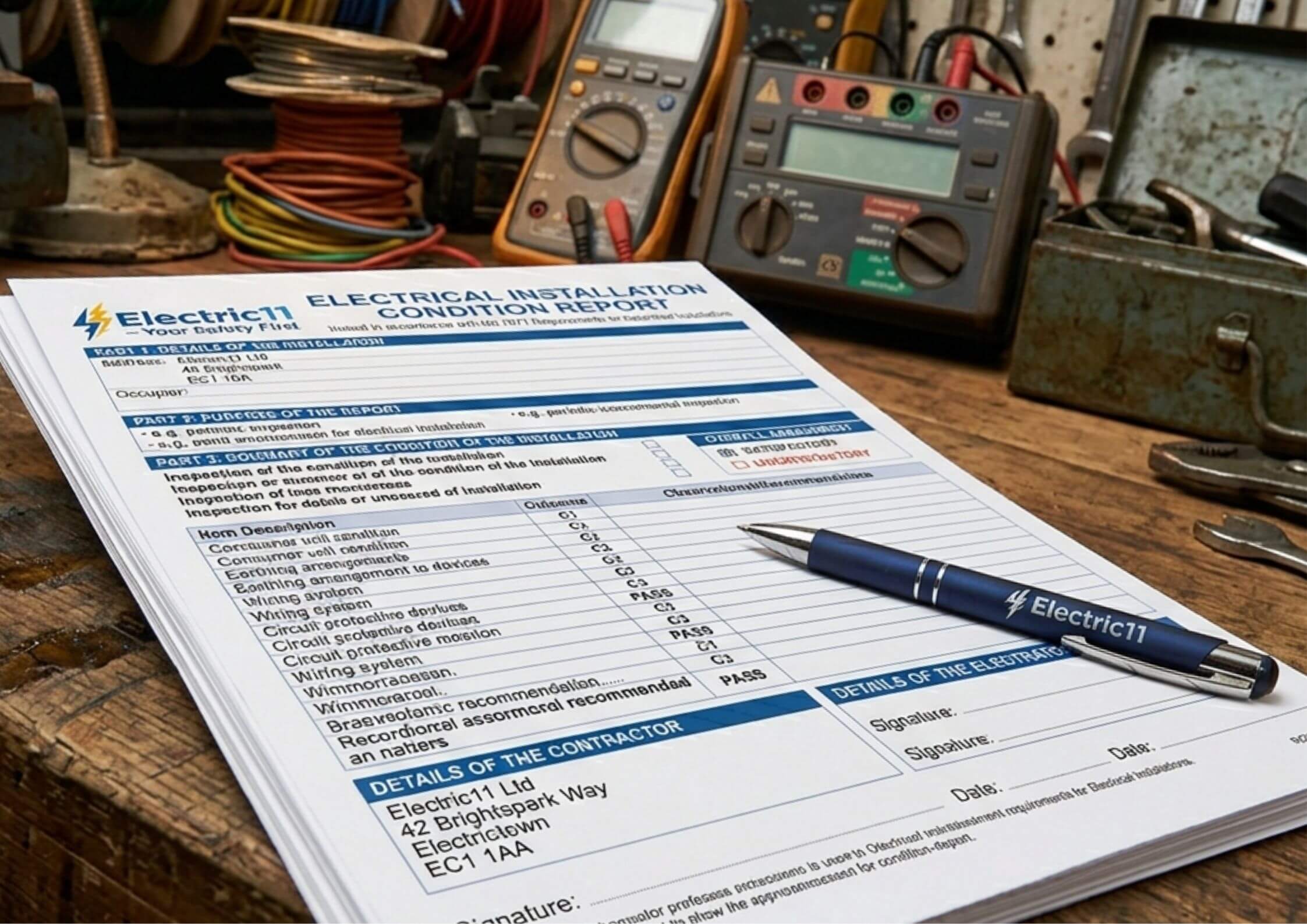
EICR Before Buying a House: A Buyer’s Checklist Before Exchange




A house can look ready to move into while leaving important questions about its electrics unanswered. Fresh paint, new sockets and a working kitchen tell you little about the condition of the wiring behind them.
Arranging an EICR before buying a house helps you investigate those questions before committing to the purchase. It gives you information about the existing electrical installation, any defects identified and what action may be needed.
The most useful time to obtain that information is usually before exchanging contracts, with enough time to review the report and obtain repair quotations if necessary.
For buyers in Norwich, Attleborough, Wymondham and across Norfolk, the process starts with three practical tasks: request the seller’s electrical paperwork, establish what your property survey covers and agree access for any further inspection.
This guide explains how to work through those steps and use the findings to make a better-informed purchase.
What Does an EICR Tell a Homebuyer?
An Electrical Installation Condition Report assesses the condition of an existing fixed electrical installation. Its findings can help you understand whether the installation is satisfactory for continued use and whether defects require attention.
For a buyer, that information contributes to decisions about safety, repair budgets and the timing of work after moving in.
However, the report needs to be read in context. Check its scope, limitations and observations alongside the overall outcome. A satisfactory result does not promise that every concealed component has been examined or that future faults cannot occur.
Electrical Safety First identifies buying a previously occupied property as an appropriate occasion for inspection and testing. Its periodic inspection guidance explains the purpose of the assessment.
If you need a fuller explanation of the document itself, read Electric11’s guide to what an EICR certificate is.
Does a House Survey Check the Electrics?
A property survey and a pre-purchase electrical inspection answer different questions.
Your surveyor assesses the building within the agreed survey scope. They may comment on visible electrical equipment, missing documentation or the need for specialist investigation. That does not mean they have tested the wiring and protective devices.
For example, RICS describes a Level 2 Home Survey as including a visual inspection of accessible services, without testing the installations or appliances.
If your survey recommends an electrical inspection, ask the surveyor what prompted the recommendation. It might relate to visible concerns, the apparent age of the installation or the absence of recent evidence.
Then send the relevant survey extract to the electrician. This helps them understand the question you need answered.
A useful approach is to check the survey’s terms before assuming that any particular electrical checks are included.
When Should You Arrange an EICR Before Buying a House?
Aim to arrange the inspection after your offer has been accepted and before exchange, once the seller has agreed access.
Booking early leaves room for more than the appointment itself. You may need time to receive the report, ask questions, arrange further investigation and obtain a quotation for repairs.
GOV.UK’s conveyancing guidance explains that exchanging contracts makes the agreement legally binding. Discuss unresolved electrical concerns with your conveyancer before reaching that point.
Start With the Paperwork
Ask for existing reports and certificates as soon as the purchase progresses. An electrician may be able to review those documents before advising whether a fresh inspection would be useful.
This can prevent unnecessary duplication while identifying gaps early.
Allow Time to Act on the Findings
Tell the electrician your proposed exchange date when making an enquiry. Ask when the written report is likely to be available.
Avoid assuming that an appointment immediately before exchange will leave enough time to resolve every issue. A finding that needs investigation may require another visit, and a repair quotation may depend on confirming the extent of the problem.
Which Electrical Documents Should You Request From the Seller?
Ask the estate agent or conveyancer to request the available electrical paperwork. Be specific: “the electrical certificate” can refer to several different documents.
Useful records may include:
- The latest EICR, including inspection and test schedules.
- Electrical Installation Certificates for a rewire, new installation or relevant alterations.
- Minor Electrical Installation Works Certificates for smaller changes.
- Building Regulations compliance documentation where applicable.
- Records of repairs or investigation following an earlier EICR.
- Installation records for additions such as an EV charger, solar equipment or a garden room supply.
These documents serve different purposes. An installation certificate records work completed at a particular time and within a particular scope. An EICR assesses the condition of an existing installation.
Send the complete documents rather than a photograph of the first page. Dates, circuit schedules, limitations and observations may all affect how useful the paperwork is for your purchase.
Where documentation is missing, ask your conveyancer about the transaction implications and your electrician about assessing the installation’s present condition.
Can You Rely on the Seller’s Existing EICR?
An existing report can be useful evidence, but its date alone should not determine whether you rely on it.
Ask an electrician to review the document against what is known about the property now.
Check What Was Included
Does the report cover the whole property you intend to buy? Look for references to garages, outbuildings, additional consumer units or areas that were inaccessible.
A report limited to the main house may leave unanswered questions about a separately supplied workshop or annexe.
Check What Has Changed
Ask whether electrical work has taken place since the inspection. A kitchen refurbishment, extension or new circuit could mean the earlier report no longer describes the installation as it stands.
Request the certificates for subsequent work so the records can be considered together.
Check Outstanding Observations
If the report identified defects or required further investigation, ask for evidence explaining what happened next.
A verbal assurance that “everything was sorted” leaves you with little to review. Request the relevant repair documentation and ask the electrician whether it adequately addresses the earlier findings.
Also check whether the report’s terms affect reliance by someone other than the original client. Your conveyancer can advise on any legal questions about using the seller’s documents.
How Do You Arrange Access Through the Estate Agent?
The seller’s permission and cooperation are needed for an inspection before you own the property.
Start by asking the estate agent to coordinate a suitable appointment. Explain that the electrician will need access to the installation and that parts of the testing require interruption of electrical supplies.
Confirm the following before the visit:
- Who will provide access? Establish whether the seller, occupier or agent will attend.
- Which areas are included? Identify locked rooms, garages, loft spaces and outbuildings.
- Can the equipment be reached? Ask for access around consumer units and relevant sockets.
- Are there sensitive electrical loads? Tell the electrician about equipment that needs special arrangements before power is interrupted.
- What paperwork is available? Share existing reports and certificates in advance.
- Who receives the report? Agree who commissions the work and receives the completed documents.
Avoid promising the seller that the inspection will cause no disruption. Let the electrician explain the likely requirements for that particular property.
If access restrictions remain, discuss them before booking so everyone understands what can reasonably be assessed.
What Should Your Inspection Quotation Include?
For an electrical inspection before buying a house, the quotation should make the scope and deliverables clear.
Tell the electrician the property address, its approximate size, known alterations and any additional buildings or supplies. Share the survey recommendation if one has been made.
Ask whether the quotation includes:
- The agreed inspection and testing scope.
- All identified consumer units and relevant circuits.
- The written EICR and supporting schedules.
- An explanation of observations.
- VAT and any additional attendance charges.
- A stated report delivery arrangement.
Also establish whether repairs, investigation or a return visit would be charged separately.
The inspection fee and the cost of correcting defects are separate budget considerations. For a detailed explanation of pricing, visit Electric11’s EICR cost guide for Norfolk.
How Should Buyers Read the Report?
Start with the overall assessment, then read the observations, scope and limitations.
Ask the electrician to explain any finding you do not understand. The most useful questions relate to its location, urgency, recommended action and effect on using the property.
Understand the Codes Without Making Assumptions
The main observation codes distinguish between danger present, potential danger, recommended improvement and the need for further investigation.
For a buyer, their practical meaning is:
| Code | Meaning | Question to ask |
|---|---|---|
| C1 | Danger present | What immediate action is needed to make this safe? |
| C2 | Potentially dangerous | What urgent repair is required? |
| C3 | Improvement recommended | Should this be included in my planned improvement budget? |
| FI | Further investigation required without delay | What remains unresolved, and how will it be investigated? |
The IET’s inspection and testing guidance explains these classifications.
A code does not provide a repair price. Two observations with the same classification can involve very different work.
Read the Limitations
A report may record areas or parts of the installation that could not be inspected or tested.
Ask whether those limitations leave a significant question unanswered for your purchase. For example, an inaccessible outbuilding supply could matter if you plan to use that building as a home office.
Where further access would help, discuss another visit with the seller before exchange.
What If the EICR Is Unsatisfactory?
An unsatisfactory result requires a closer look at the actual findings. It does not, by itself, tell you that the whole house needs rewiring.
Ask for an itemised explanation separating urgent repairs, further investigation and optional improvements. Then request a written quotation based on the identified work.
Consider three questions:
- What needs attention before the affected installation can be used safely?
- What will the work involve in terms of access and disruption?
- What evidence will be provided when the work is complete?
For an illustrative example, imagine you are buying a house with a garage workshop. The report identifies a potentially dangerous defect affecting the garage supply, while the main house has improvement recommendations.
You would need to understand the garage defect and its repair requirements. You would also need to decide how to budget for the separate recommendations. Treating every observation as one undifferentiated “rewire cost” would obscure those decisions.
If extensive renewal is recommended, ask why. The electrician should explain the findings supporting that recommendation and the proposed scope.
Can Electrical Findings Affect the Purchase Negotiations?
Electrical findings can provide evidence for a discussion about repairs or the purchase price. They do not guarantee that the seller will agree to either.
A useful discussion starts with the report and a quotation. These establish what was found and what the proposed work involves.
Possible outcomes include:
- The seller arranging agreed repairs before completion.
- Buyer and seller agreeing a price adjustment.
- The buyer accepting the property’s condition and budgeting for work.
- Further investigation before either party makes a decision.
Discuss any proposed agreement with your conveyancer. If the seller undertakes repairs, establish what completion evidence you need and who will review it.
GOV.UK’s guidance on making an offer explains that, in England and Wales, an offer is not legally binding until exchange and that a price may still be negotiated before that stage.
Raise evidence-based concerns promptly so there is time for a considered response.
What If the Seller Will Not Allow an Inspection?
First, find out the reason.
The concern may be appointment timing, disruption to someone working from home or uncertainty about the testing process. An explanation from the electrician and a better-timed visit may help.
If permission is still refused, ask for existing documentation and discuss the remaining uncertainty with your conveyancer and surveyor.
Refusal alone does not prove the installation is unsafe. It does mean that you may have to make the purchase decision with less information.
Ask yourself whether you have enough evidence to assess the likely work and whether your budget can accommodate unresolved concerns. An inspection after completion may still be useful, but it cannot provide information for decisions you have already made before exchange.
Planning an Inspection for a Norfolk Property
Provide details about how the property has developed over time, rather than relying only on its bedroom count.
For a house in Norwich or Wymondham, mention extensions, loft conversions and any additional electrical boards. For a property near Attleborough or elsewhere in Norfolk, identify electrically supplied garages, workshops, garden buildings and annexes.
Those features may affect the inspection scope wherever the property is located.
Also explain your intended use. If you plan to add an EV charger, convert a garage or install a new kitchen, ask about a separate assessment of the proposed work. The EICR provides information about the existing installation; future upgrades may need additional design checks.
Electric11 provides EICR inspections in Norfolk and describes its business as NAPIT certified. Sharing the property details, existing records and purchase timetable helps the team discuss an appropriate inspection.
Frequently Asked Questions
Should I Get an EICR Before Buying a House?
An EICR before buying a house is particularly useful when there is no recent report, electrical alterations are poorly documented or your survey recommends specialist checks. Start by requesting the seller’s paperwork. An electrician can review it and help you decide whether a fresh inspection would address important gaps before exchange.
Is an EICR Included in a Homebuyer Survey?
A standard property survey should not be assumed to include an EICR. For example, a RICS Level 2 survey visually assesses accessible services without electrically testing them. Check your survey’s agreed scope. If it recommends an electrical inspection, share that recommendation with a qualified electrician and arrange the specialist assessment separately.
Who Pays for an EICR When Buying a House?
Payment should be agreed between buyer and seller before the appointment. A buyer may commission the inspection, or a seller may agree to arrange one as part of the transaction. Confirm who appoints the electrician, pays the invoice and receives the report. Any contribution towards repairs needs a separate agreement.
Can I Buy a House With No Electrical Certificate?
Missing paperwork does not tell you whether the electrics are safe or unsafe. Ask your conveyancer to investigate the documentation relevant to the transaction, and speak to an electrician about assessing the installation’s current condition. A new EICR may provide useful evidence, but it does not automatically replace certificates for previous installation work.
Does an Unsatisfactory EICR Mean the House Needs Rewiring?
No. An unsatisfactory report may identify defects affecting particular accessories, protective measures or circuits. Ask for an explanation and an itemised repair quotation before assuming a full rewire is needed. Where rewiring is recommended, the electrician should explain the findings and why the proposed extent of work is appropriate.
Can I Use an EICR Supplied by the Seller?
Possibly, but review the complete report first. Check its date, scope, limitations, observations and any electrical alterations made afterwards. Ask for evidence of repairs where relevant. An electrician can assess its technical usefulness, while your conveyancer can advise on questions about relying on a report commissioned by someone else.
Can Electric11 Arrange an EICR for a House Purchase in Norfolk?
Electric11 provides EICR services across Norfolk, including Norwich, Attleborough and Wymondham. Contact the team with the property address, available electrical records, known alterations and proposed exchange date. Seller-approved access will need to be coordinated, and the inspection scope and report timing should be agreed before booking.
Arrange Your EICR Before Buying a House With Electric11
If you are considering an EICR before buying a house, give yourself time to understand the findings before exchange.
Contact Electric11 about a pre-purchase electrical inspection or call 01953 661 155. Share the property postcode, your proposed exchange date and any reports or certificates supplied by the seller so the team can discuss the next steps.
Send us a message
"*" indicates required fields

